
AAC for Autistic Toddlers: What It Is and When to Start
AAC for autistic toddlers can feel like a big topic at first, especially when parents are already trying to understand speech delays, autism evaluations, therapy options, and everyday communication frustrations. Many families hear the word “AAC” and wonder if it means their child is giving up on talking. That worry is common, but AAC is not about giving up on speech.
AAC stands for augmentative and alternative communication. In simple terms, it means giving a child another way to communicate when spoken words are hard, limited, inconsistent, or not yet available. AAC can include gestures, signs, pictures, communication boards, choice cards, or speech-generating devices.
For autistic toddlers, AAC can be especially helpful because communication is more than saying words out loud. A toddler may know what they want, understand routines, recognize favorite people, and have strong preferences, but still struggle to express those thoughts clearly. AAC gives that child a bridge between what they want to say and what others can understand.
This guide explains what AAC is, when to start AAC for an autistic toddler, how it fits with speech therapy, and what parents can do at home without feeling overwhelmed. The goal is not to rush your child or pressure them to perform. The goal is to help communication become easier, calmer, and more meaningful.
What AAC Means for Autistic Toddlers
AAC Is More Than a Device
The best AAC system is the one a child can actually use during real life. That means it needs to make sense during snack time, playtime, bath time, transitions, frustration, and moments of connection. A beautifully designed system is not helpful if it stays in a drawer or feels too hard for the family to use.
For autistic toddlers, AAC should be flexible. Some children use speech, gestures, sounds, pictures, and a device all in the same day. That is not a problem. Communication is often a mix of many tools, and AAC gives toddlers more ways to be understood.
AAC Supports Communication, Not Just Requests
An autistic toddler may use AAC to say “go,” “stop,” “all done,” “help,” “more,” “open,” “mom,” “outside,” or “uh-oh.” These little messages can make daily life feel less frustrating because the child has a clearer way to participate. Even one or two useful words on AAC can change the tone of a difficult routine.
Good AAC support looks beyond compliance. It is not just about getting a child to choose the “right” picture. It is about helping the child learn that communication has power, meaning, and connection.
AAC Does Not Stop Speech Development
Some toddlers use AAC while spoken words are still developing. Some use AAC alongside speech for years. Some may rely on AAC more heavily. The goal is not to force one communication method over another. The goal is to give the child access to communication now.
When AAC is introduced in a warm and responsive way, it can reduce frustration and increase opportunities for language learning. A toddler who can communicate “more bubbles” or “stop” is not avoiding language. They are practicing language in a way their body and brain can manage.
When to Start AAC for Autistic Toddlers
You Do Not Have to Wait for a Certain Age
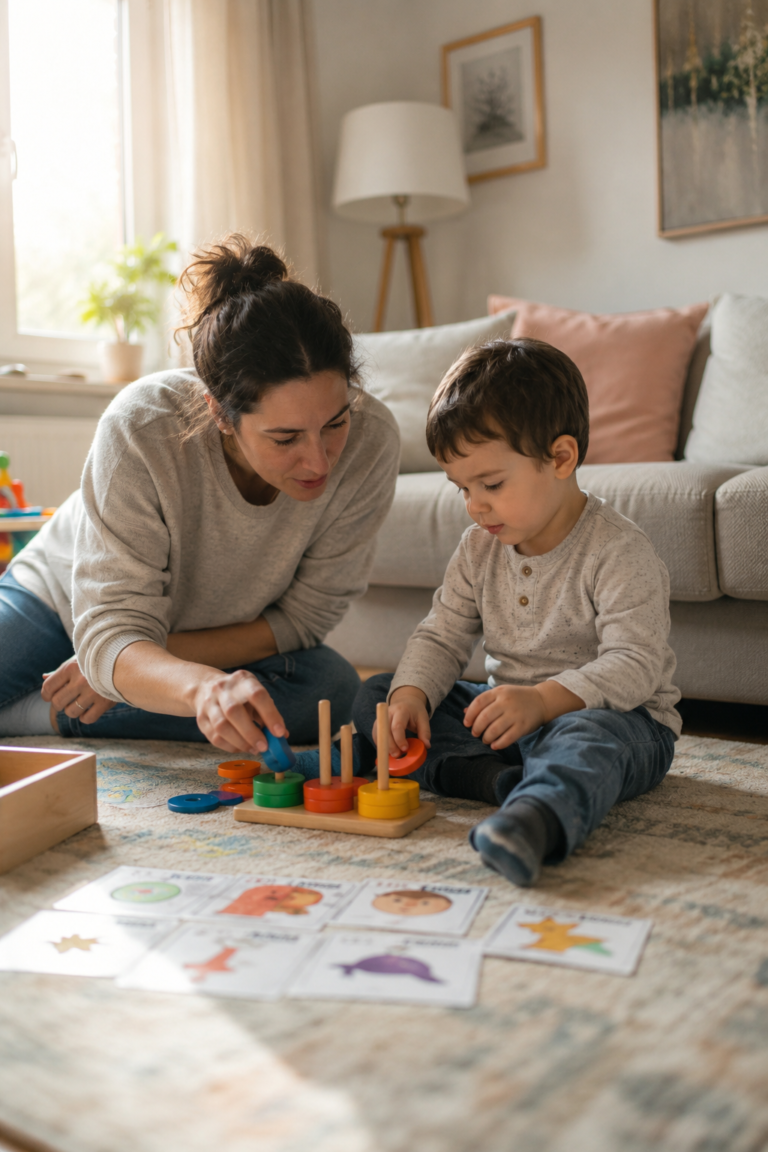
Some families are told to wait and see. Waiting can be appropriate for some developmental concerns, but communication support does not have to wait. Giving a toddler pictures, gestures, signs, or a simple communication board does not close any doors. It opens more ways to connect.
Starting early also helps parents learn how to model AAC naturally. Like spoken language, AAC takes repeated exposure. Toddlers learn by seeing adults use the system in everyday moments, not by being tested on it.

Start When Communication Frustration Is Getting in the Way
When a child has a clearer way to say “help,” “more,” “all done,” or “no,” daily routines can become easier. AAC does not magically remove every hard moment, but it can give the child and family another tool when speech is not enough.
Parents often notice that frustration decreases when a child feels understood more often. Even small communication wins matter. A toddler who can point to “outside” or tap “more” is learning that their message can change what happens next.
Start Even If Your Child Already Says Some Words
A child might say “juice” at home but not at daycare. Another child may use several words during play but lose access to speech during transitions or sensory overload. AAC can provide a backup system when spoken language is not reliable.
This is especially important because communication needs change throughout the day. A toddler does not have to choose between speech and AAC. They can use whatever method helps them communicate in that moment.
How Parents Can Support AAC at Home
Model AAC Without Pressure
Modeling means adults use the AAC system while talking. For example, a parent might say “more crackers” while pointing to “more” and “cracker,” or say “go car” while touching those words on a device. The toddler is not required to copy every time.
This matters because toddlers learn communication by watching and hearing it used in real situations. We do not expect babies to talk just because we said a word once. AAC works the same way. Children need to see it used many times before they may use it independently.
Low-pressure modeling keeps AAC positive. Instead of asking “What do you want?” over and over, parents can show the word, say the word, and respond warmly when the child communicates in any way.
Use AAC During Real Routines
Parents do not need to model every word on the system. Start with useful words that come up often, such as more, go, stop, help, open, all done, yes, no, eat, drink, play, and outside. These words are powerful because they can be used across many activities.
The goal is not a perfect therapy session at home. The goal is small, repeated moments where your child sees that AAC helps people understand each other.
Respond to All Communication
For example, if your child pulls you toward the door, you might say “outside” and touch “outside” on the AAC system. If your child pushes food away, you might say “all done” and point to “all done.” This teaches language without ignoring the child’s natural communication.
Autistic toddlers often communicate in ways that are easy to miss. A pause, a glance, a body movement, or a sound may carry meaning. AAC works best when adults stay curious and treat the child as a communicator already.
When to Seek Help With AAC for an Autistic Toddler
Getting Support Does Not Mean Something Is Wrong
A speech-language pathologist can help look at your child’s communication, motor skills, sensory needs, attention, play, understanding, and daily routines. The goal is to find a system that fits the child and family, not to force a tool that looks impressive but does not work in real life.
AAC support should also include parent coaching. Families need to know how to model words, where to keep the system, how to respond, and how to help other caregivers use it consistently.
Signs Your Toddler May Benefit From AAC Support
- Your toddler has few or no spoken words.
- Your toddler uses words sometimes but not reliably.
- Your toddler becomes very frustrated when trying to communicate.
- Your toddler pulls, cries, grabs, or screams because others do not understand.
- Your toddler has difficulty asking for help, more, all done, or a break.
- Your toddler understands more than they can express.
- Your toddler uses gestures, sounds, or body movements but needs a clearer system.
- Your toddler loses access to speech when upset, tired, or overwhelmed.
- Your family is unsure whether pictures, signs, or a device would be best.
Who Can Help You Start AAC

If your child is under age 3, you can ask about early intervention services in your state. If your child is over age 3, your local school district may be able to evaluate communication needs. Private speech therapy is another option for families who want more direct AAC guidance.
The most helpful AAC plan is one that respects your child’s communication style and your family’s daily life. Starting small is okay. A few useful words used consistently are better than a complicated system that no one feels comfortable using.
FAQ About AAC for Autistic Toddlers
Does AAC stop an autistic toddler from talking?
Many children use AAC along with spoken words, gestures, sounds, and signs. The goal is not to replace speech. The goal is to reduce frustration and increase successful communication.
When should I start AAC with my autistic toddler?
AAC can be introduced early through simple choices, pictures, signs, or a speech-generating device. A speech-language pathologist can help decide what type of AAC fits your child best.
Is my toddler too young for an AAC device?
Some toddlers begin with low-tech AAC like pictures or boards. Others may do well with a speech-generating device when adults model it consistently and keep expectations realistic.
What is the best AAC system for autism?
Some children use picture cards, some use signs, some use communication boards, and some use devices. Many children use a combination, especially as their communication grows.
Should we use AAC if my child already says a few words?
AAC can act as a backup and a language support. It can help your child communicate more clearly when speech is hard to access.
How do I teach my toddler to use AAC?
Use motivating moments like snacks, bubbles, books, music, and outdoor play. Keep it simple, repeat often, and celebrate all communication attempts.
Not Sure Where Your Child Falls?
Answer a few questions and we’ll tell you whether their development
looks on track — or whether it’s worth talking to an SLP.
A Few Final Thoughts on AAC for Autistic Toddlers
AAC for autistic toddlers is not a last resort. It is a practical, caring way to help a child communicate when spoken language is hard, limited, or still developing.
Parents do not need to wait until communication becomes extremely difficult before exploring AAC. Early support can make everyday routines feel calmer and help toddlers experience the power of being understood.
The most important thing to remember is that AAC is not one single tool. It may include gestures, signs, pictures, boards, or a device. What matters most is that your child has a reliable way to share messages with the people who love and support them.
If you are wondering whether your autistic toddler is ready for AAC, that question alone is a good reason to ask for guidance. A speech-language pathologist can help you choose a starting point that feels realistic, supportive, and right for your child.
Want to learn more? The American Speech-Language-Hearing Association (ASHA) explains augmentative and alternative communication (AAC), including how AAC can support children who have difficulty using speech.