
What the Research Says About Screens and Language Delay
Research on screen time and language development has grown rapidly over the last several years, but the findings are often more nuanced than headlines make them sound. Most studies do not suggest that every screen automatically harms development. Instead, researchers tend to focus on how much screen exposure children have, what kinds of media they use, whether adults are interacting alongside them, and what screen time may be replacing in a child’s day-to-day experiences.
Speech therapists frequently notice that children learn language best through responsive human interaction. Talking during meals, playing together on the floor, singing songs, reading books, and participating in back-and-forth conversations all help build communication skills in ways screens cannot fully replicate. That does not mean parents need to panic about every cartoon or educational video, but it does mean balance matters more than many families realize.
Understanding what the research actually says can help parents make calmer and more informed decisions. This article explores how screens may affect language development, why some children are more sensitive to heavy screen exposure than others, and what speech therapists often recommend for healthier communication habits at home.
Why Researchers Pay Attention to Early Screen Exposure
Language Develops Through Interaction
Researchers sometimes describe this process as “serve and return” interaction. A child points, babbles, or vocalizes, and an adult responds in a meaningful way. Over time, these repeated interactions support vocabulary growth, social communication, listening skills, and emotional connection. Speech therapists often encourage parents to focus on these simple daily moments because they are foundational for language learning.
Screens can interfere with this process when they replace opportunities for interaction. A child quietly watching a video for long periods may hear language, but they are not practicing communication in the same way they would during active play or conversation with another person.
What Studies Have Found About Heavy Screen Use
However, researchers are careful to point out that screen use itself is rarely the only factor involved. Family stress, sleep quality, reduced interaction time, background television, and fewer shared activities may also contribute to communication difficulties. This is one reason the conversation around screens and language delay is more complex than simply labeling screens as “good” or “bad.”
Speech therapists often look at the bigger picture when evaluating communication concerns. A child who watches occasional educational programming but also spends large amounts of time talking, reading, and playing with caregivers may have a very different developmental experience than a child who spends many hours each day passively viewing screens with limited interaction.
Background Television Matters Too
Researchers have observed that adults tend to speak less frequently and less responsively when television is running in the background. Young children may also have more difficulty sustaining attention during play when competing sounds and visual stimulation are present throughout the day.
For some families, simply reducing background media can create more natural opportunities for communication. Quiet play spaces, slower routines, and more face-to-face interaction often make it easier for toddlers to practice listening, imitation, gestures, and early words.
How Different Types of Screen Use Affect Communication
Passive Viewing Is Different From Interactive Use
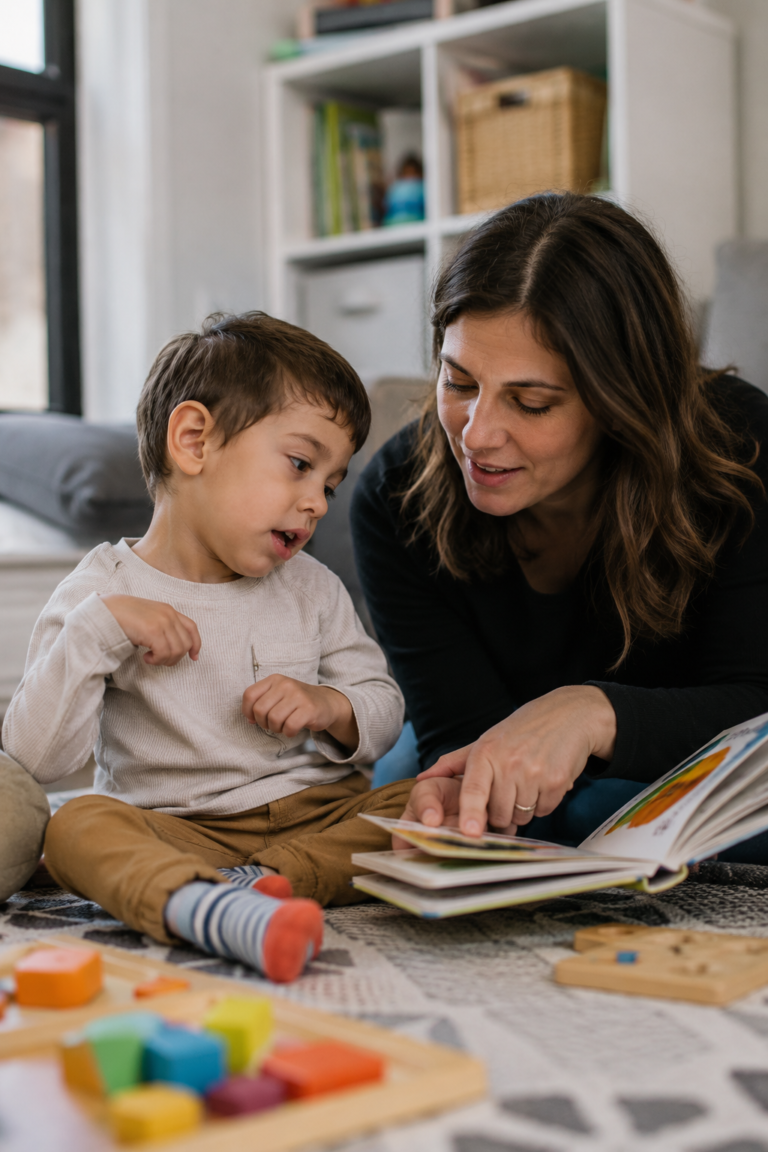
Not all screen experiences affect children in the same way. Researchers often distinguish between passive viewing and interactive engagement. Passive viewing usually refers to situations where a child watches content without meaningful participation or conversation.
Interactive use may include video chatting with relatives, watching programs alongside caregivers who talk about the content, or participating in age-appropriate educational activities with adult support. These experiences may involve more language interaction than passive viewing alone.
Speech therapists generally emphasize that human interaction remains the most important piece. Even educational content becomes more valuable when adults pause, label objects, ask simple questions, imitate sounds, and connect what is happening on the screen to the child’s real-life experiences.
For practical guidance on daily screen habits, read How Much Screen Time Is Too Much for a Toddler’s Speech?
Very Young Children Learn Best From Real People
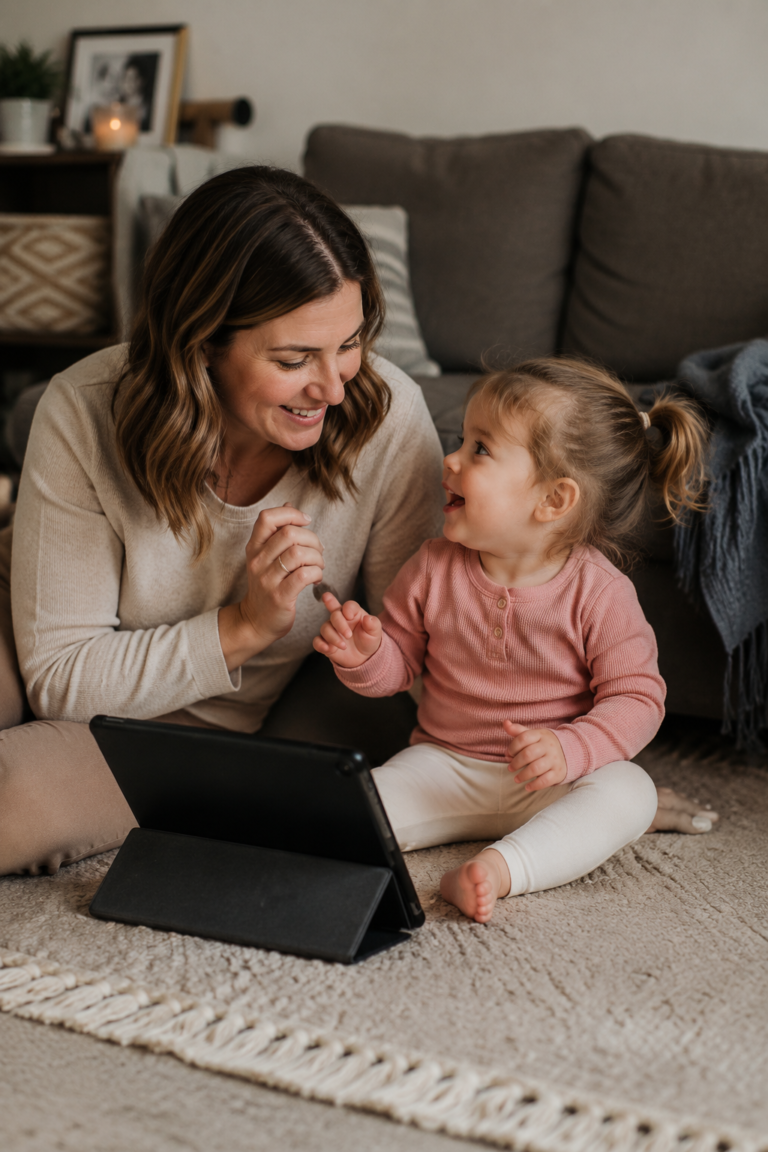
Young children learn communication through experiences that involve movement, emotion, touch, and social connection. Watching a word on a screen is very different from hearing that word while a caregiver points to an object, changes tone of voice, responds emotionally, and engages the child directly.
This is one reason speech therapists encourage families to prioritize everyday routines as language opportunities. Bath time, snack time, grocery shopping, and playtime naturally create opportunities for children to hear and practice meaningful language in real-world situations.
Fast-Paced Content Can Be Overstimulating
This does not mean every animated program is harmful, but it does highlight the importance of moderation and thoughtful media choices. Slower-paced programming with simple language and caregiver involvement may support engagement more effectively than highly overstimulating content designed primarily for entertainment.
Speech therapists sometimes notice that children exposed to large amounts of fast-paced media may struggle more with turn-taking, attention during conversation, or independent play. Again, every child is different, but the overall communication environment matters greatly.
What Speech Therapists Commonly Recommend
Focus on Connection Over Perfection
Most speech therapists do not expect families to eliminate screens completely. Modern parenting is demanding, and many caregivers rely on screens at times to manage daily responsibilities. The goal is usually not perfection but creating enough meaningful interaction throughout the day to support healthy communication development.
Children benefit most from frequent moments of connection. Singing during diaper changes, talking during meals, narrating play, reading books together, and responding to a child’s attempts to communicate all help strengthen language learning. These small interactions add up over time.
Parents often feel relieved when they realize speech development is not built around expensive tools or perfect routines. Consistent responsive interaction tends to matter far more than trying to follow rigid rules about every minute of screen exposure.
If you’re considering educational apps, read Are Any Apps for Speech Development Actually Good? to learn what speech-language pathologists recommend.
Co-Viewing Can Support Language
For example, if a child watches animals on a program, a parent might point and say, “Look, a dog! The dog is running!” This type of shared attention helps children connect language to meaning in a more interactive way.
Speech therapists often encourage parents to think of screens as conversation starters rather than babysitters whenever possible. Even brief moments of shared engagement can help support communication growth.
Balance Matters Most
Balanced routines tend to support communication best. Children benefit from movement, hands-on exploration, face-to-face interaction, and opportunities to practice communication naturally throughout the day. These experiences help build attention, vocabulary, problem-solving, and social communication skills together.
Many families find it helpful to focus less on guilt and more on intentional habits. Reducing background media, creating screen-free parts of the day, and building more interaction into routines can often make a meaningful difference without requiring unrealistic changes
When Communication Concerns Continue
Trusting Your Observations as a Parent
While screen exposure alone does not automatically cause a language disorder, persistent communication concerns deserve attention regardless of the reason behind them. Early support can help identify whether a child simply needs more language-rich interaction or whether additional developmental evaluation may be helpful.
Speech therapists encourage parents to trust ongoing concerns instead of dismissing them completely. It is always reasonable to ask questions and seek guidance when communication development feels difficult or unclear.
Signs It May Help to Seek Professional Support
- Very limited words by toddler age
- Reduced eye contact or social interaction
- Difficulty responding to simple language
- Minimal imitation of sounds or gestures
- Strong preference for screens over interaction
- Loss of previously used words or communication skills
- Frustration related to communication difficulties
Early Support Can Make a Difference

Speech-language pathologists can help families evaluate communication skills, identify strengths, and build practical strategies tailored to the child’s needs. Often, small changes in interaction patterns can support noticeable progress over time.
The most important thing is responding early rather than waiting in uncertainty for long periods. Supportive guidance can reduce stress for families while helping children strengthen communication skills in a natural and encouraging way.
Frequently Asked Questions
Does screen time directly cause language delay?
What matters most is how screens fit into a child’s overall environment. Children need frequent interaction, conversation, play, and responsive communication experiences to build language skills effectively.
How much screen time is considered too much for toddlers?
Speech therapists often focus less on strict counting and more on whether screen time is replacing important developmental experiences like play, conversation, movement, sleep, and shared attention with caregivers.
Are educational programs better for language development?
However, even high-quality educational content does not replace the value of real-life communication. Young children still learn best through responsive interaction with people.
Can background television affect speech development?
When televisions are constantly running, families often talk less during play and routines. Reducing background media can sometimes create more opportunities for communication naturally.
Is video chatting different from regular screen time?
Young children may benefit more from these responsive interactions compared to watching pre-recorded content alone, especially when conversations feel personal and engaging.
Should parents feel guilty about using screens sometimes?
Children benefit most from consistent opportunities for connection, conversation, play, and interaction throughout the day. Small meaningful moments often matter more than trying to eliminate screens entirely.
Not Sure Where Your Child Falls?
Answer a few questions and we’ll tell you whether their development
looks on track — or whether it’s worth talking to an SLP.
A Few Final Thoughts on Screens and Language Delay
Research on screens and language delay continues to evolve, but one message remains consistent across studies: young children learn communication best through responsive human interaction. Conversation, play, shared attention, and emotional connection all support language growth in powerful ways.
That does not mean families need to fear every screen or strive for impossible standards. Modern life includes technology, and many parents use screens thoughtfully as part of daily routines. What matters most is maintaining balance and protecting opportunities for real interaction throughout the day.
For children who already show communication challenges, reducing passive screen exposure and increasing interactive experiences may help support stronger language development over time. Even small changes in routines can create more opportunities for talking, listening, and connection.
For additional ideas about supporting early learning and development through everyday interactions, visit Zero to Three.
Parents do not need to navigate these concerns alone. When questions about speech or language development continue, supportive guidance from a speech-language pathologist can help families move forward with greater clarity and confidence.