
How Many Words Should My Child Have at Each Age?
Vocabulary growth does not happen in a perfectly straight line. Some children focus heavily on understanding language before they begin speaking more, while others become very verbal early on. A child’s personality, opportunities for interaction, hearing abilities, and developmental profile can all influence how language develops over time. Looking at broader patterns rather than exact numbers is usually the most helpful approach.
Speech-language pathologists often look at both the number of words a child says and how they use those words socially. A child who uses fewer words but actively communicates with gestures, eye contact, and attempts to interact may be developing differently than a child who rarely attempts communication at all. Vocabulary milestones are important, but they are only one part of the larger communication picture.
This guide walks through typical vocabulary expectations from infancy through the preschool years, explains how language growth often unfolds, and highlights signs that may suggest a child could benefit from additional evaluation or support.
Understanding Early Vocabulary Growth
First Words Usually Begin Around the First Birthday
Many children say their first meaningful words sometime between 10 and 15 months. These early words are often connected to familiar people, favorite foods, routines, or highly motivating objects. Words like “mama,” “dada,” “ball,” or “bye-bye” are common starting points because they are repeated frequently throughout daily life.
At this stage, communication involves much more than spoken vocabulary alone. Babies often point, wave, reach, imitate sounds, and use facial expressions to interact long before they can say many clear words. These early social communication skills are strong building blocks for later language development and deserve just as much attention as spoken vocabulary counts.
Parents sometimes worry if their child only says one or two words at 12 months, but a small spoken vocabulary can still fall within a typical developmental range. What matters most is whether the child is attempting to connect and communicate with others consistently throughout the day.
Vocabulary Often Expands Quickly Between 18 and 24 Months
By age 2, vocabulary often increases significantly. Many 24-month-old children use around 50 words or more and begin combining words into simple two-word phrases such as “more milk” or “mommy go.” Some children may have far larger vocabularies, while others continue developing more gradually but still remain within expected ranges.
It is important to remember that parents do not need to count every single word precisely. Speech-language pathologists usually look for overall communication patterns rather than exact totals. Consistent progress over time is often more meaningful than reaching one specific number by a certain birthday.
Preschool Vocabulary Development Becomes More Complex
By age 4, many children speak in detailed sentences and use language for imagination, humor, and social interaction. Their vocabulary continues expanding rapidly as they learn new concepts through books, play, preschool, and conversations with adults and peers. Children at this age are often understood by unfamiliar listeners most of the time.
Around age 5, communication becomes more organized and sophisticated. Children usually understand and use thousands of words, even though exact vocabulary counts become difficult to measure. At this stage, language development is less about counting words and more about how effectively children use language to communicate ideas, emotions, and experiences.
What Influences Vocabulary Development?
Children Learn Words Through Everyday Interaction
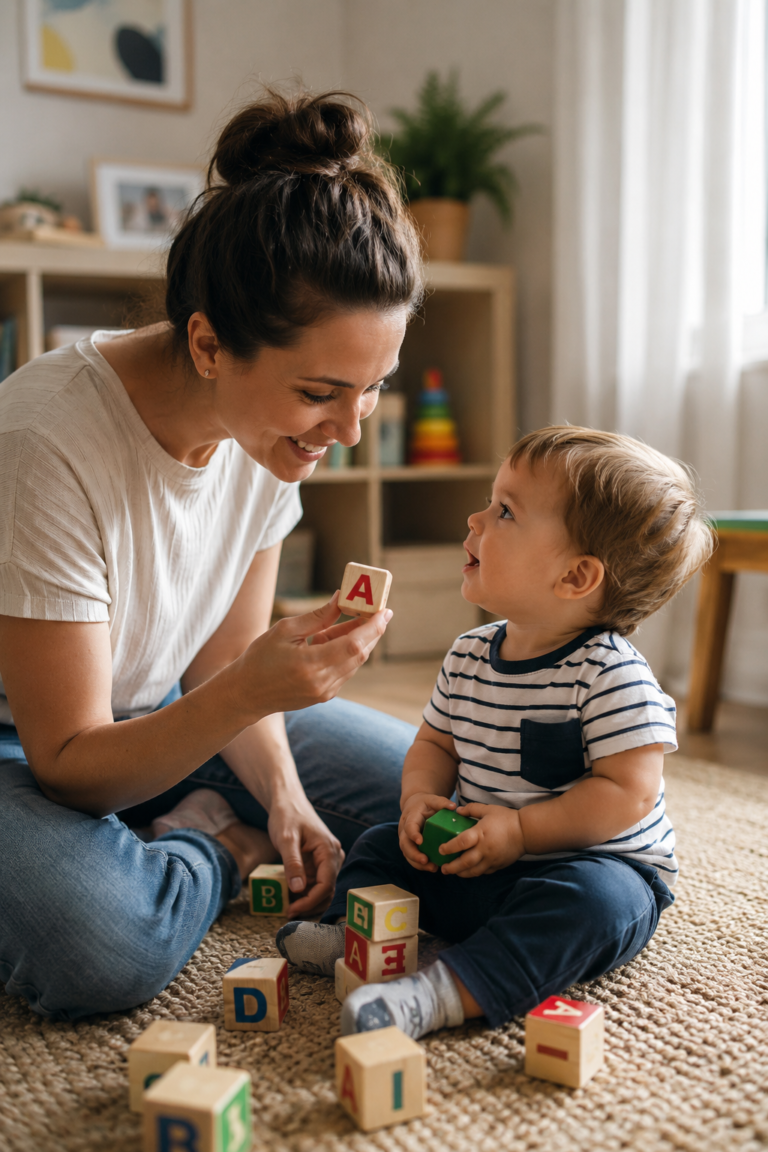
Parents often underestimate how powerful narration can be during ordinary routines. Talking about what you are doing, labeling objects your child notices, and responding to their attempts to communicate all help strengthen vocabulary growth over time. These interactions build both understanding and confidence with language.
Children also benefit when adults pause and give them opportunities to respond. Communication is not only about hearing words. It is also about participating in back-and-forth interaction where children feel encouraged to take conversational turns, even before their speech becomes clear.
Understanding Words Comes Before Saying Them
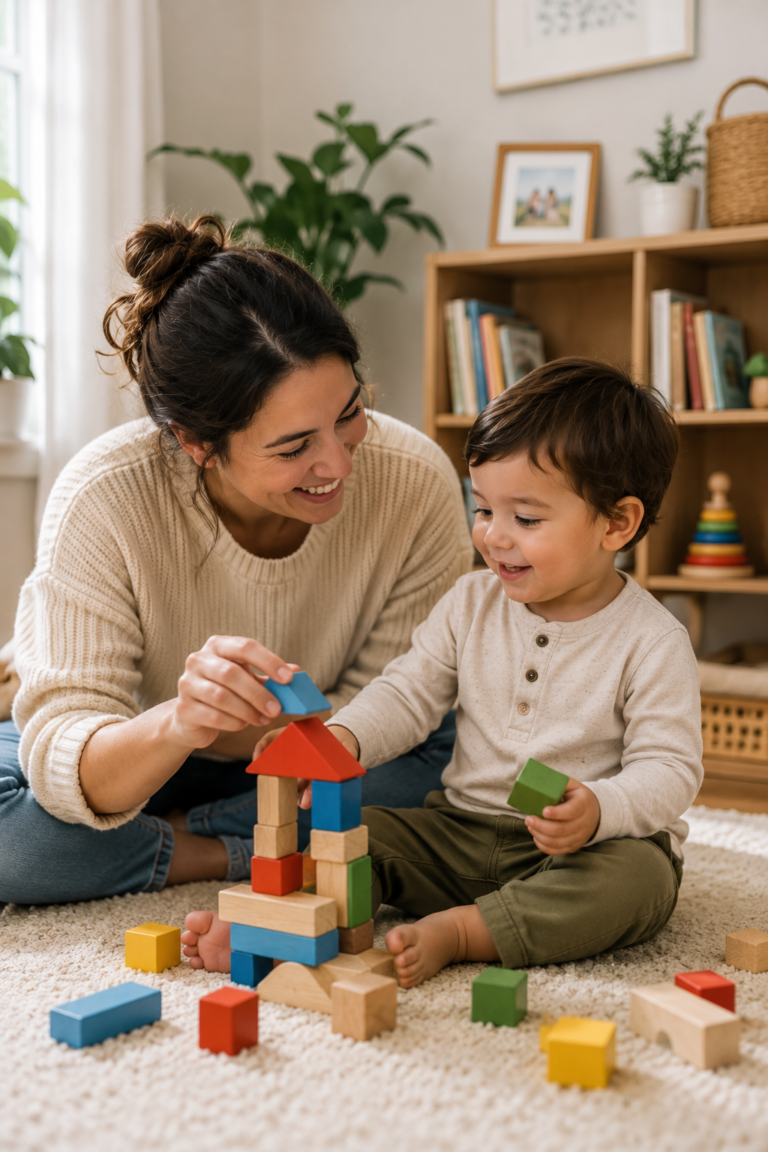
A child may understand far more language than they can verbally express. Receptive language, which refers to understanding words and directions, usually develops earlier than expressive language, which involves speaking. This is why some toddlers follow directions well even if they say relatively few words themselves.
Parents sometimes become concerned because another child the same age appears more talkative. However, vocabulary development can vary considerably between children, especially in the second year of life. Some toddlers spend longer observing and processing language before becoming verbally expressive.
Speech-language pathologists often evaluate both receptive and expressive skills together because they provide a more complete picture of communication development. Strong understanding skills can sometimes be reassuring even when spoken vocabulary is slower to emerge.
Bilingual Children May Divide Vocabulary Across Languages
Research consistently shows that bilingual exposure does not cause speech or language delays. In fact, children are fully capable of learning multiple languages successfully when they receive meaningful exposure and interaction in each language over time.
Parents raising bilingual children should feel comfortable continuing to use the languages that feel most natural within the family. Rich, emotionally connected communication supports language development much more effectively than limiting a child to only one language unnecessarily.
Typical Vocabulary Ranges by Age
Around 12 Months to 18 Months
At this age, communication attempts matter just as much as spoken vocabulary size. Pointing, waving, bringing objects to caregivers, copying sounds, and responding to names are all important developmental signs. Children are actively learning how communication works socially before their vocabulary fully expands.
Parents can support development by talking frequently, reading interactive books, singing repetitive songs, and responding enthusiastically to all communication attempts. Repetition and responsive interaction help children connect words with meaning over time.
Around 2 to 3 Years Old
By age 2, many toddlers use at least 50 words and begin combining them into short phrases. Vocabulary growth often accelerates rapidly throughout the third year of life, and children usually become much more conversational during everyday routines and play. If you’re wondering when toddlers typically begin talking in short sentences, read: When Should a Child Start Talking?
Around age 3, many children use several hundred words and speak in longer sentences. They often begin asking questions constantly, commenting on what they see, and attempting simple storytelling. Parents usually notice major improvements in both speech clarity and conversational interaction during this stage.
Even within typical development, vocabulary sizes can differ greatly from one child to another. Some children are naturally more verbal, while others communicate effectively with fewer spoken words. Consistent developmental progress is usually more important than comparison with peers.
Preschool Language Growth and Everyday Communication
How Many Words by Ages 4 and 5?
By ages 4 and 5, children often understand thousands of words and continue learning new vocabulary rapidly. They may describe emotions, explain ideas, ask detailed questions, and tell stories with clearer sequencing and organization. Communication becomes increasingly tied to social relationships and early academic readiness.
Parents sometimes continue worrying about vocabulary counts at this age, but speech-language professionals typically focus more on functional communication skills. How a child participates in conversation, understands directions, and expresses thoughts often provides more useful information than exact word totals alone.
When Vocabulary Growth May Need Closer Attention
Parents are often the first to notice when communication feels different from expected patterns. Trusting those observations is important. Seeking guidance does not automatically mean something is seriously wrong, and early support can often make communication easier and less frustrating for both children and families.
Speech-language evaluations are designed to look at the whole communication picture rather than focusing only on word counts. Professionals consider understanding skills, play, social interaction, gestures, speech sounds, and overall developmental history together.
Signs That May Warrant an Evaluation
Some signs that may suggest a child could benefit from a speech and language evaluation include:
- Very limited babbling by 12 months
- Few or no meaningful words by 18 months
- Difficulty combining words by age 2
- Frequent frustration when trying to communicate
- Limited response to spoken language
- Loss of previously used words or communication skills
- Difficulty interacting socially with others
Want to learn more? The American Speech-Language-Hearing Association (ASHA) provides communication milestones that include vocabulary growth, first words, and early sentence development.
Frequently Asked Questions
Do animal sounds count as words?
Early words do not have to sound like adult words. What matters is that your child is using the sound on purpose to represent an idea, object, action, or routine.
Do signs count as words?
Using signs does not stop speech from developing. For many children, gestures and signs reduce frustration and give them another way to communicate while spoken words are still emerging.
Should I worry if my child understands everything but says few words?
A child who understands many directions but has very few spoken words may be described as a late talker. Some late talkers catch up, while others benefit from speech therapy, so getting guidance can help you make an informed decision.
How many words should a 1 year old say?
What matters most is whether the child is attempting to communicate, responding to language, engaging socially, and continuing to make developmental progress over time.
How many words should an 18-month-old say?
Speech-language professionals also look at understanding, gesture use, play skills, and interaction patterns when evaluating communication development at this age.
Can too much screen time affect word learning?
This does not mean parents need to feel guilty about every show or video. The goal is to protect plenty of daily time for talking, playing, reading, singing, and face-to-face connection.
A Few Final Thoughts on How Many Words Children Should Have
A child’s gestures, understanding, play, imitation, social connection, and ability to combine ideas all matter. A toddler with fewer words may still be showing important strengths, while another child with many words may still need help with clarity, understanding, or conversation.
The most helpful approach is to stay curious instead of panicked. Watch for growth, respond warmly to your child’s communication, and create simple daily moments for talking, reading, singing, and playing together.
If you are concerned, you do not have to wait and wonder alone. A speech-language pathologist can help you understand your child’s development, support communication at home, and decide whether speech therapy would be helpful.
Not Sure Where Your Child Falls?
Answer a few questions and we’ll tell you whether their development
looks on track — or whether it’s worth talking to an SLP.
A Few Final Thoughts on Vocabulary Development by Age
Many children progress in bursts, with periods of observation followed by rapid language growth. Communication development is influenced by interaction, environment, temperament, and many individual differences that shape how children learn.
The most valuable support often comes through everyday connection. Talking during routines, reading together, playing face-to-face, and responding warmly to communication attempts all help build strong language foundations over time.
If concerns arise, seeking guidance early can provide reassurance and clarity. Whether a child needs simple monitoring or more structured support, early attention to communication development helps families feel informed, supported, and connected throughout the process.