
Babies First Words: What Parents Should Know
Many parents remember the moment they think they heard a first word. Maybe your baby looked right at you and said “mama,” reached toward the dog and said “da,” or shouted “uh-oh” after dropping a spoon from the high chair. Babies first words can feel exciting, emotional, and a little confusing all at the same time.
Most babies say their first meaningful words around their first birthday, but there is a healthy range. Some babies are using a few words before 12 months, while others take a little longer to move from babbling and gestures into clear word attempts. The CDC lists calling a parent “mama,” “dada,” or another special name as a common language milestone by 1 year, and trying one or two words besides “mama” or “dada” as a common milestone by 15 months.
A first word does not need to sound perfect. In fact, most early words are adorable approximations. “Ba” for ball, “da” for dog, “mo” for more, or “nana” for banana may all count if your baby uses the sound consistently, intentionally, and with meaning. Speech development is not just about pronunciation. It is about your baby learning that sounds, gestures, eye contact, and words can help them connect with people.
This page will walk you through when babies usually say first words, what counts as a real word, what skills often come before talking, signs your baby may need extra support, and simple ways parents can encourage first words naturally during everyday routines.
When Do Babies Usually Say First Words?
First Words Often Happen Around the First Birthday
It is also very common for first words to emerge gradually. A baby may babble “mamama” for weeks before it becomes a true word used for a specific person. Another baby may rely heavily on pointing, reaching, waving, and vocal sounds before spoken words become more consistent.
Parents often notice that understanding comes before talking. Your baby may know what “milk,” “up,” “no,” “dog,” or “where’s Daddy?” means before they can say those words. This receptive language, or understanding of language, is an important part of early communication development.
There Is a Range, Not One Perfect Age
That said, milestones do help parents know when to pay closer attention. By 15 months, the CDC notes that many children try to say one or two words besides “mama” or “dada,” look at familiar objects when named, follow directions with gestures and words, and point to ask for something or get help.
By 18 months, many toddlers are trying at least three words besides “mama” or “dada” and following simple one-step directions without gestures. If your baby is not exactly there yet, it does not automatically mean something is wrong, but it may be worth watching the whole communication picture.
First Words Are Part of a Bigger Communication System
A baby who is not saying many words yet but is socially engaged, using gestures, understanding familiar routines, and trying to imitate sounds may be showing strong pre-talking skills. A baby who is quiet, not using gestures, not responding to their name, or not showing interest in interaction may need a closer look from a pediatrician or speech-language pathologist.
The goal is not to count words in isolation. It is to notice how your baby communicates, understands, connects, and learns. First words matter, but they are only one part of your baby’s early language story.
What Counts as One of Babies First Words?
A First Word Has Meaning
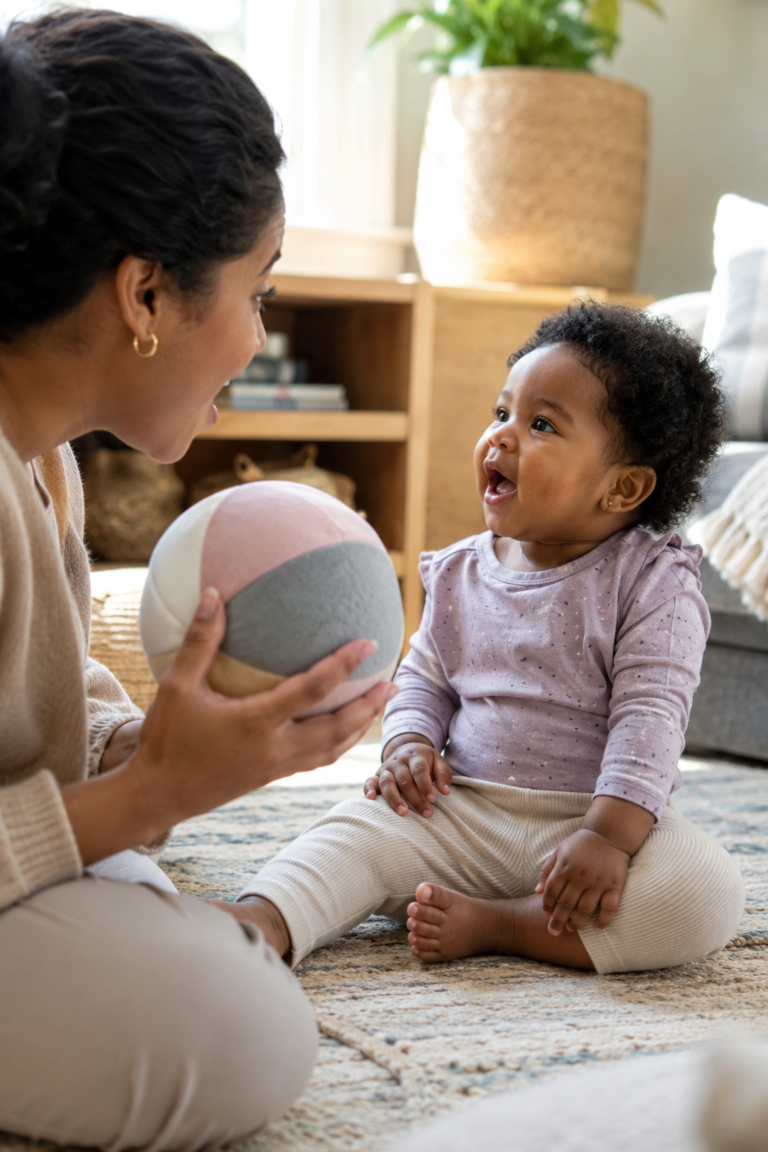
Early words are often shaped by what babies care about most. Words for people, pets, favorite foods, favorite toys, greetings, and powerful little words like “up,” “more,” “no,” and “go” are common because they help babies get attention, request something, protest, or join a routine.
Parents sometimes dismiss early word attempts because they are unclear. But speech-language pathologists count consistent, meaningful approximations. If your baby uses “wa-wa” for water, “buh” for bus, or “mmm” for milk in a predictable way, those attempts are meaningful communication.
A Word Does Not Have to Sound Like an Adult Word
This is expected in early speech development. At first, the important question is not, “Can everyone understand it perfectly?” The better question is, “Is my baby using this sound or word on purpose to communicate something?”
It is also okay if only close family members understand some early words at first. Parents and caregivers often become expert translators because they know the context, routines, and favorite things that give early words meaning.
Signs, Sounds, and Gestures All Matter
Gestures often come before words because they give babies a way to communicate before their mouths can keep up with their ideas. The CDC includes waving “bye-bye” and understanding “no” as common communication milestones by 1 year.
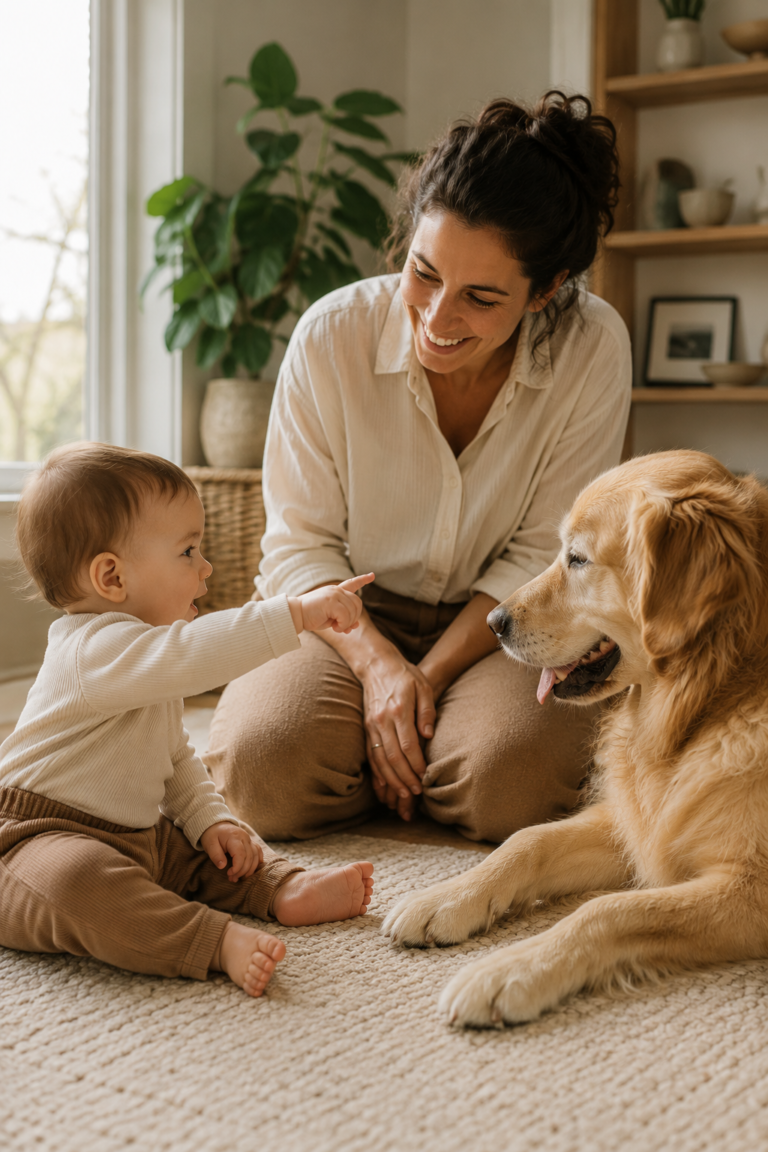
When gestures, sounds, and shared attention are growing together, they often support spoken language. A baby who points to a dog while looking at you is already sharing an idea. The word “dog” may come later, but the communication foundation is already building.
What Comes Before First Words?
Babbling Helps Babies Practice Speech Sounds
Babbling is one of the clearest signs that a baby is practicing for speech. You may hear strings like “bababa,” “dadada,” “mamama,” or playful sound combinations that rise and fall like real conversation. These sounds help babies explore rhythm, voice, mouth movement, and turn-taking.
As babies get closer to first words, babbling often starts to sound more speech-like. You may hear your baby “talking” with expression even though the words are not clear yet. This is sometimes called jargon, and it can sound like your baby is having a very serious conversation in their own language.
Babbling does not need to be constant, but it should generally become more varied over time. If a baby is very quiet, rarely vocalizes, or does not experiment with sounds, it may be helpful to discuss this with a pediatrician or speech-language pathologist.
These early communication skills are part of a broader pattern of development, which you can explore in our speech and language milestones from birth to age 5 guide.
Imitation and Turn-Taking Build Communication
Turn-taking teaches babies that communication goes back and forth. You say something, your baby responds, you respond again, and the interaction keeps going. This pattern helps babies learn that their sounds and actions affect other people.
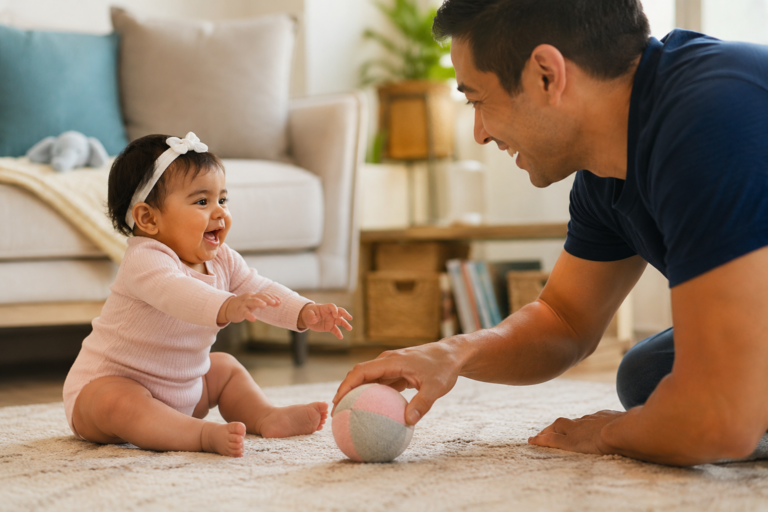
Parents can support this by pausing and waiting during familiar routines. After saying “ready, set…” before rolling a ball, pause and look expectantly. Your baby may smile, move, vocalize, gesture, or eventually say “go.” That little pause creates space for communication.
Understanding Words Usually Comes Before Saying Words
This is why everyday routines are so powerful. Words like “milk,” “bath,” “shoes,” “all done,” “more,” and “night-night” become meaningful because babies hear them during real moments. They are not memorizing flashcards; they are connecting words to people, actions, feelings, and routines.
If your baby is not talking yet, notice whether they are understanding familiar words and simple directions. Strong understanding is a positive sign, while limited response to sounds, names, or familiar words may be a reason to ask for more support.
When to Seek Help for Babies First Words
It Is Okay to Ask Questions Early
Parents sometimes worry that asking about speech too early means they are overreacting. In reality, asking questions early can be a very caring and practical step. A speech-language pathologist can look at the whole communication picture, including gestures, play, understanding, sounds, social connection, feeding history, hearing, and daily routines.
Not every baby who talks later needs therapy. Some babies simply need more time, especially when other communication skills are growing. But when a baby is not using sounds, gestures, eye contact, imitation, or shared attention in expected ways, early support can help families understand what is going on.
You do not need to wait until your child is very delayed to ask for guidance. Early intervention is designed to support young children and families during the earliest stages of development, when everyday routines can make a meaningful difference.
Families can also review the ASHA communication milestones for general developmental guidance.
Signs, Sounds, and Gestures All Matter
- Your baby is not babbling or making many sounds by the later part of the first year
- Your baby does not respond consistently to sounds or their name
- Your baby is not using gestures such as reaching, waving, showing, or pointing
- Your baby does not seem to understand familiar words or simple routines
- Your baby is not using any meaningful words or word approximations by around 15 to 16 months
- Your baby loses words, gestures, sounds, or social communication skills they previously had
- You feel something is not quite right, even if you cannot explain it clearly
Who to Contact and What Support May Look Like
A speech-language pathologist can evaluate how your baby communicates now and what skills may be emerging next. The evaluation may look playful because babies learn best through interaction, movement, toys, songs, books, and routines. The goal is not to pressure your baby to perform, but to understand how they communicate in a comfortable way.
If support is recommended, therapy may focus on helping parents notice communication attempts, respond in ways that build language, create more opportunities for interaction, and support early sounds, gestures, imitation, play, and first words. Families should feel encouraged, not blamed. Image Placement: When to Seek Help section, near the top of the section SEO File Name: signs-baby-may-need-help-with-first-words.jpg Alt Text: Speech-language pathologist coaching parent during babies first words support AI Image Prompt: Warm realistic editorial photo of a speech-language pathologist sitting on the floor with a parent and baby, gentle play-based interaction with simple toys, natural light, cozy therapy or home setting, supportive and calm mood, no logos, no text, not clinical or sterile
Frequently Asked Questions
When do babies usually say their first words?
It is helpful to look beyond one exact age. If your baby is socially engaged, responding to familiar words, using gestures, and making sounds, those are encouraging signs. If words are not emerging by 15 to 18 months, it is reasonable to ask a pediatrician or speech-language pathologist for guidance.
Does “mama” or “dada” count as a first word?
At first, babies may say “mamama” or “dadada” without a clear meaning. Over time, those sounds may become true words when your baby uses them intentionally and consistently.
What if my baby says a sound that only I understand?
Early words do not need perfect pronunciation. Babies are still learning how to coordinate their mouths for speech, so word approximations are expected in the beginning.
What comes before first words?
A baby may point, reach, wave, grunt, squeal, or look between you and an object before spoken words appear. These are meaningful steps toward talking and should be encouraged.
How can I encourage my baby’s first words naturally?
Try not to turn talking into a quiz. Instead of saying “Say ball,” you can model “ball,” pause, smile, and respond to any sound, look, reach, or attempt your baby makes. Warm interaction is more powerful than drilling.
When should I contact a speech-language pathologist?
A speech-language pathologist can help you understand whether your baby’s communication is developing as expected and what you can do next. Getting support does not mean something is seriously wrong; it means you are giving your child help early.
Not Sure Where Your Child Falls?
Answer a few questions and we’ll tell you whether their development
looks on track — or whether it’s worth talking to an SLP.
A Few Final Thoughts on Babies First Words
A first word counts when it is meaningful, intentional, and consistent, even if it does not sound perfect. Your baby’s “ba,” “da,” or “mo” may be the beginning of a much bigger language journey.
Parents can help by making communication feel natural and connected. Talk during everyday routines, pause so your baby has a chance to respond, copy their sounds, read simple books, sing familiar songs, and celebrate communication attempts without pressure.
If you are worried, trust that instinct enough to ask for help. A speech-language pathologist or early intervention provider can look at your baby’s whole communication picture and guide you with calm, practical next steps.