
How to Turn Grocery Shopping Into a Language Activity
Children learn language best during meaningful interactions with familiar people. A grocery store naturally introduces new words, categories, questions, sounds, colors, actions, and social exchanges. Even short conversations in the cart or checkout line can help children build vocabulary, listening skills, understanding, and confidence using language in everyday situations.
What makes grocery shopping especially helpful is that it connects words directly to real experiences. Your child can see the banana, touch the cold milk carton, hear the scanner beep, and watch you ask questions or solve problems. These moments make language feel useful and memorable rather than forced or repetitive.
The good news is that you do not need elaborate activities or extra preparation to make shopping more language-rich. Small shifts in how you talk, pause, describe, and interact during errands can create meaningful communication practice that fits naturally into your family routine.
Why Grocery Stores Naturally Support Language Development
Everyday Language Happens More Easily During Real Activities
For example, simple comments like “We need apples,” “That yogurt is cold,” or “Can you help me find the bread?” expose children to vocabulary in context. Hearing language this way supports understanding and helps children learn how words function during everyday conversations.
Because shopping involves movement and visual stimulation, many toddlers stay more engaged than they would during seated activities at home. That attention and engagement often make communication feel easier and more enjoyable for both the child and parent.
Grocery Stores Introduce New Vocabulary Organically
Children also hear action words throughout the trip. Parents naturally say things like “push,” “grab,” “open,” “look,” “carry,” and “choose.” Repeated exposure to these words during meaningful experiences helps strengthen understanding over time.
Even children who are not yet talking benefit from hearing consistent language paired with actions and objects. Receptive language, which involves understanding words and directions, develops long before many children begin using longer spoken sentences themselves.
Social Interactions Build Communication Confidence
Some children enjoy helping say “hi” to the cashier or answering simple questions during checkout. Others may simply watch quietly while absorbing the interaction patterns around them. Both experiences support social language development in different ways.
For children who feel shy or hesitant communicating outside the home, low-pressure interactions during errands can slowly build confidence. Over time, familiar routines and predictable conversations may help communication feel less overwhelming in public settings.
Simple Ways to Encourage More Talking While Shopping
Narrating the Experience Helps Build Understanding
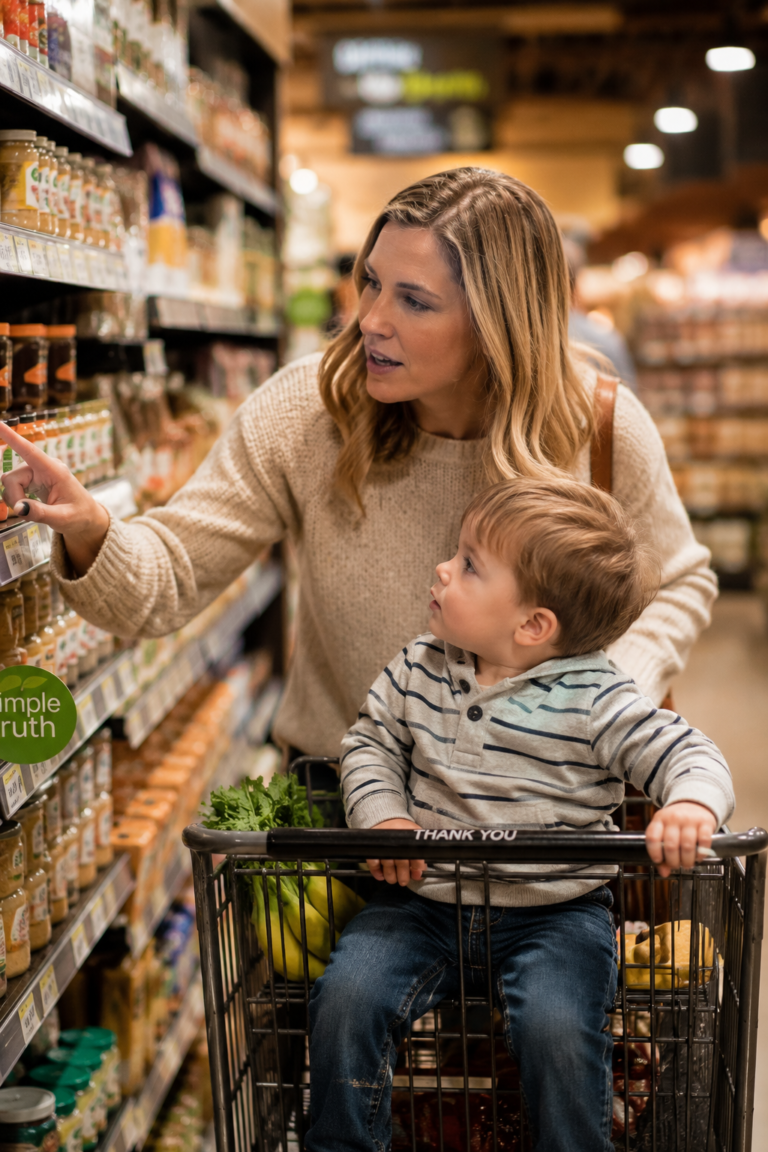
One of the easiest ways to support language during errands is to narrate what is happening around your child. This does not mean talking nonstop. Instead, it means offering short, meaningful descriptions that match the moment your child is focused on.
You might say, “We are putting the cereal in the cart,” or “Those strawberries look red and juicy.” These simple observations expose children to vocabulary while helping them connect words to real objects and actions.
Pausing after comments also matters. Children need processing time to absorb language and decide whether they want to respond. Even if your child does not answer verbally, they are often still learning from the interaction.
Asking Simple Questions Encourages Participation
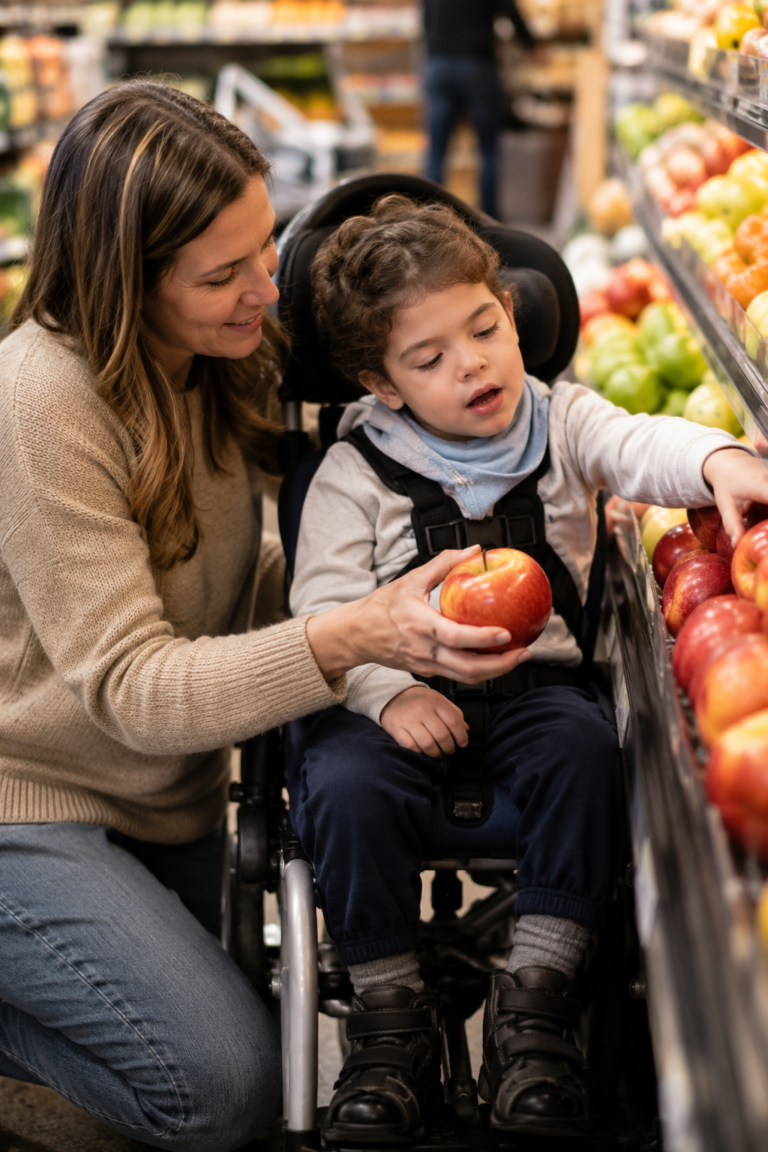
Open-ended questions also support language growth when used naturally. Asking “What do you think we should make for dinner?” or “Why do you think the ice cream stays frozen?” encourages children to think beyond single-word responses.
Not every child will answer every question, especially in busy public environments. The goal is not constant conversation. Instead, these small opportunities encourage communication in a relaxed and pressure-free way.
Following Your Child’s Interests Keeps Communication Natural
Children are often more motivated to communicate when conversations follow their interests. If your child becomes fascinated by lobsters in the seafood section or excited about colorful cereal boxes, those moments can become powerful language opportunities.
Rather than redirecting quickly, try expanding on what already has your child’s attention. You might describe colors, count objects, compare sizes, or talk about how something feels, smells, or tastes. These conversations often last longer because the child is emotionally engaged.
Following your child’s curiosity also helps communication feel enjoyable instead of instructional. Language learning tends to happen most naturally when children feel connected, interested, and included in the interaction.
After your shopping trip, pretend play with toy food or a play kitchen is another great way to build vocabulary. See Role Play Activities for Toddlers and Preschoolers for more ideas.
Making Grocery Shopping Feel Less Stressful for Everyone
Short Trips Can Still Be Valuable
Parents sometimes feel pressure to turn every outing into a perfect learning experience, but language development does not require long or elaborate conversations. Even a quick stop for milk and bread can include meaningful communication moments.
Children learn through repetition over time. Hearing familiar words and routines across many small shopping trips often matters more than trying to create one long educational activity. Consistency tends to support language growth better than pressure or perfection.
Keeping expectations realistic also helps parents stay emotionally present. A calmer, connected interaction usually supports communication more effectively than trying to force constant participation.
Everyday routines work best when they build on one another. You can find more simple ideas in How to Use Mealtimes to Build Language, another everyday opportunity to encourage communication.
Some Children Communicate Better Without Pressure
Parents can support communication by reducing pressure and focusing on connection instead of performance. Simple comments, shared attention, and predictable routines often feel more supportive than repeated requests to “say it” or answer questions.
Children communicate in many ways beyond spoken words. Pointing, eye contact, gestures, sounds, and facial expressions are all meaningful parts of language development and deserve recognition during everyday routines.
Repetition Helps Everyday Language Stick
Over time, children often begin anticipating familiar phrases like “Let’s find the milk,” or “Can you help me push the cart?” This repetition strengthens understanding and can eventually support more independent communication.
Familiar routines also help children feel secure. When children know what to expect, they often have more mental energy available for interaction, listening, and trying new words or communication attempts.
When Grocery Store Communication Still Feels Difficult
Some Communication Challenges Extend Beyond Everyday Practice
At the same time, persistent difficulty understanding language, limited attempts to communicate, or frustration during interactions may signal that additional support could help. Parents are often the first to notice when communication feels harder than expected during daily routines.
Trusting those observations matters. Everyday activities like grocery shopping can provide helpful insight into how your child responds to language, follows directions, engages socially, and communicates needs across different environments.
Signs It May Help to Seek Professional Guidance
- Limited response to familiar words or directions
- Very few gestures, sounds, or attempts to communicate
- Difficulty interacting socially with familiar adults
- Frequent frustration during communication attempts
- Loss of previously used words or skills
- Trouble combining words compared to expected developmental patterns
Early Support Can Be Encouraging and Practical
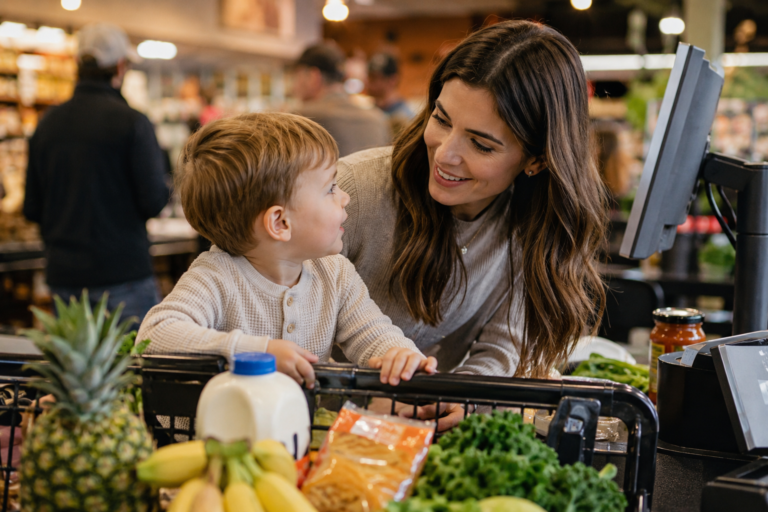
Seeking guidance does not automatically mean something is seriously wrong. Many families benefit from professional reassurance, developmental monitoring, or simple strategies that make communication easier during everyday life.
Speech and language support often focuses on helping parents use routines they already have rather than adding complicated exercises. Grocery shopping, meals, bath time, and play can all become natural opportunities for communication growth when families feel supported and confident.
Early support can also reduce stress for parents who feel uncertain about what is typical or how to help. Having individualized guidance often makes everyday communication feel more manageable and less overwhelming.
Frequently Asked Questions
Can grocery shopping really help speech development?
Even short interactions like naming foods, making choices, or talking about what you see can strengthen vocabulary and communication skills over time. Consistent small conversations often matter more than structured drills
What if my toddler does not talk much during errands?
You can continue modeling simple language without pressure to answer. Pointing, looking, smiling, gesturing, and listening are all important parts of communication development too.
Should I ask my child lots of questions while shopping?
Simple comments, observations, and occasional questions often create a more relaxed conversation flow. Children tend to communicate more when they do not feel pressured to perform.
How can I encourage language if my child is still very young?
You do not need complicated activities to encourage language development. Everyday routines repeated consistently are often some of the most effective learning opportunities.
What if grocery shopping usually feels stressful?
Even one or two calm interactions during a short errand can support communication development. Reducing pressure often helps both parents and children enjoy the experience more.
Can grocery shopping help older toddlers too?
As language skills expand, errands can also become opportunities for storytelling, predicting, comparing items, and practicing conversational turn-taking in real-world settings.
Not Sure Where Your Child Falls?
Answer a few questions and we’ll tell you whether their development
looks on track — or whether it’s worth talking to an SLP.
A Few Final Thoughts on Grocery Shopping and Language Development
Grocery shopping may seem ordinary, but everyday routines often hold some of the best opportunities for communication growth. Children learn language through connection, repetition, observation, and shared experiences with the people they trust most.
Small moments during errands can support vocabulary, listening, social interaction, and confidence without requiring extra materials or complicated activities. Simple conversations while choosing fruit or pushing the cart truly add up over time.
Parents do not need to create perfect teaching moments to support speech and language development. Being present, responsive, and emotionally connected during daily routines already provides meaningful opportunities for learning.
For more practical ideas about building vocabulary through everyday conversations, visit Reading Rockets, which offers family-friendly language and literacy resources.
Over time, routines like grocery shopping can become more than just another task on the schedule. They can become comfortable, familiar spaces where communication grows naturally alongside everyday family life