
What Is a Social Communication Disorder?
A social communication disorder is a difficulty using language in social situations. A child may know words, speak in sentences, and understand many everyday directions, but still struggle with the back-and-forth parts of communication, such as taking turns in conversation, reading social cues, staying on topic, or changing how they speak depending on the person or setting. ASHA describes social communication disorder as involving challenges with social interaction, social understanding, pragmatics, and language processing.
For parents, this can be confusing because the concern may not look like a “speech problem” at first. A child might talk a lot but have trouble having a true conversation. Another child may be quiet, miss jokes, answer in unexpected ways, or seem unsure how to join play with other children. These differences can affect friendships, classroom participation, family conversations, and confidence over time.
It is also important to know that social communication skills develop gradually. Young children are still learning how to share attention, use gestures, understand feelings, repair misunderstandings, and adapt to different social situations. CDC developmental milestones include communication, play, learning, social-emotional growth, and movement because development is connected across many areas.
This article explains what social communication disorder means, how it may show up in children, how it differs from autism and language delay, and when speech therapy support may be helpful. The goal is not to make parents worry over every awkward conversation, but to help families understand when a pattern may deserve a closer look.
How Social Communication Disorder Affects Everyday Communication
Using Language for Social Connection
For example, a child may answer questions but rarely ask them back. They may talk mostly about their own interests, give too much or too little information, or have trouble noticing when a listener is confused. These patterns can make conversations feel one-sided, even when the child is bright, verbal, and eager to connect.
This does not mean the child is rude or uninterested in others. Many children with social communication challenges want friendships and connection very much. The difficulty is often in knowing how to enter, maintain, and adjust social exchanges in real time.
Understanding Conversation Rules
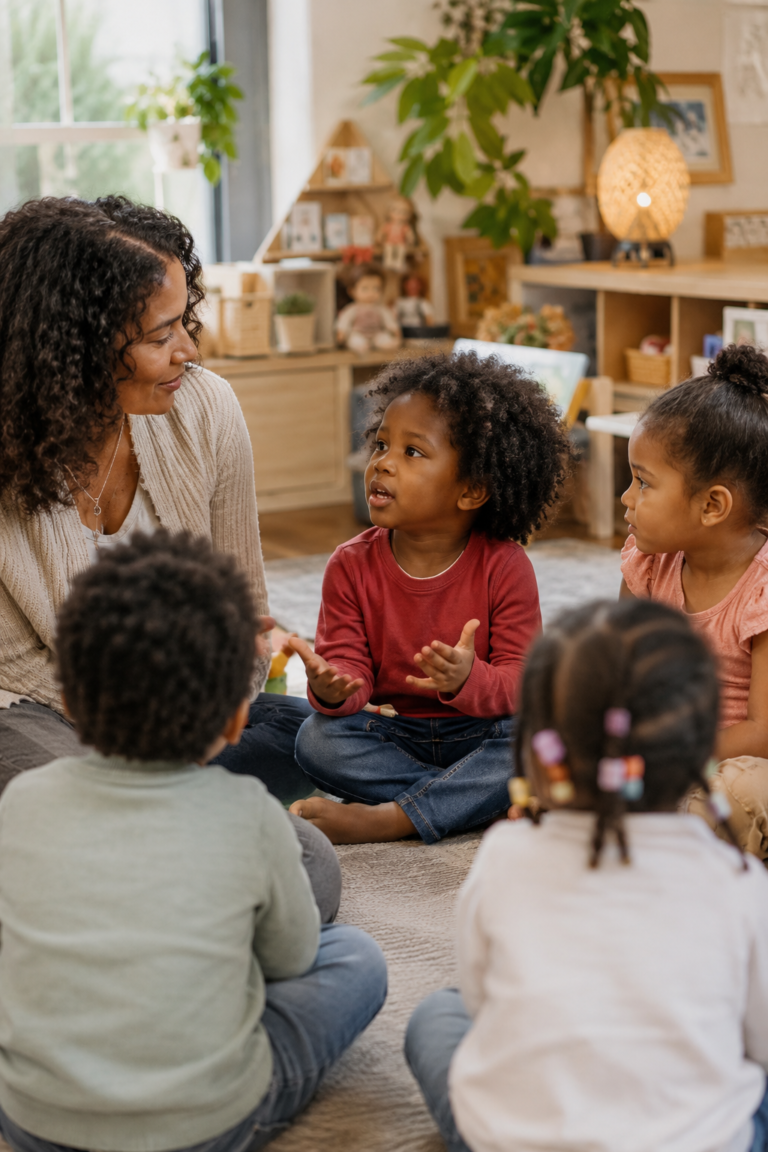
A child might interrupt often, respond with unrelated comments, miss sarcasm, misunderstand teasing, or have trouble explaining what happened in a way that makes sense to the listener. They may also struggle with storytelling because narrative language requires sequencing, perspective-taking, and choosing the right amount of detail.
These challenges can become more noticeable as children get older. In preschool, social communication may show up during pretend play or sharing toys. In elementary school, it may affect group work, friendships, classroom discussions, reading comprehension, and written language.
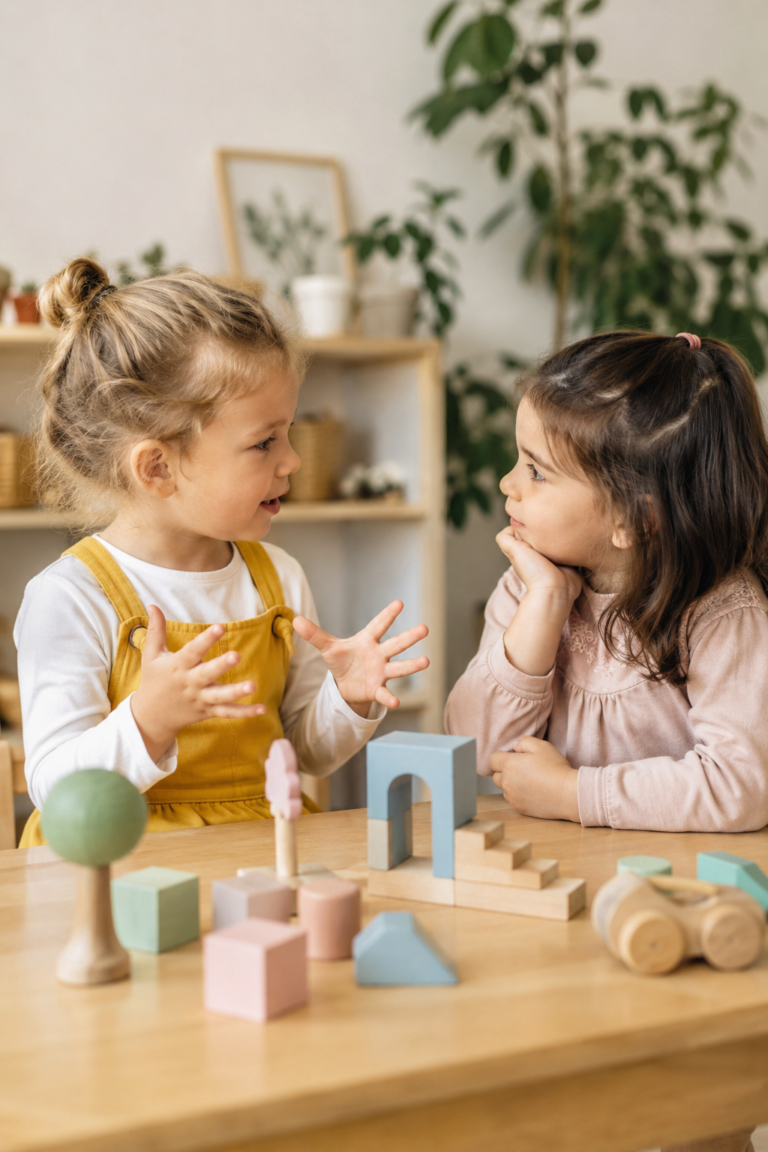
Child practicing social communication skills during play with another child
A child with social communication disorder may have trouble adjusting language based on the situation. They may speak too formally with peers, use overly casual language with adults, miss personal space cues, or not realize when someone is bored, upset, or ready to move on.
These differences can be subtle, especially in younger children or children who have strong vocabulary. Parents may sense that something feels “off” socially, even though the child’s speech sounds clear and their language seems advanced in other ways.
Social Communication Disorder vs. Autism, Language Delay, and Shyness
How It Is Different From Autism
Social communication disorder and autism can overlap in the area of social communication, which is why families often hear both terms during the evaluation process. The key difference is that autism also includes restricted or repetitive behaviors, interests, sensory differences, or patterns of behavior that are part of autism diagnostic criteria. CDC describes social communication and interaction differences as one part of autism, along with other behavior patterns.
A child with social communication disorder has meaningful difficulty using communication socially, but does not meet criteria for autism based on the broader profile. This distinction matters because support should match the child’s full developmental picture, not just one area of difficulty.
In real life, the difference is not always simple for parents to sort out on their own. A careful evaluation may include a speech-language pathologist, pediatrician, psychologist, developmental specialist, or school team depending on the child’s age and needs.
How It Is Different From a Language Delay
Some children have both language difficulties and social communication challenges. For instance, a child may struggle to understand questions and also have trouble joining peer conversations. Another child may use long sentences but still miss the social purpose of the conversation.
This is why speech-language evaluations often look at more than vocabulary or articulation. A strong evaluation considers comprehension, expressive language, play, conversation, gestures, narrative skills, problem-solving, and how the child communicates across real settings.
How It Is Different From Being Shy
A shy child may avoid speaking at first but still follow the flow of play, understand jokes, respond appropriately, and adjust once they relax. A child with social communication challenges may have trouble with these skills across familiar and unfamiliar situations.
Parents do not need to label every quiet child as having a problem. The bigger question is whether the child’s communication pattern is interfering with friendships, learning, emotional well-being, or everyday participation.
What Parents May Notice at Home, School, and Play
Signs During Play and Friendships
Some children hover near peers but do not know how to join. Others enter play abruptly, grab materials, repeat the same script, or talk at length without noticing how the other child responds. These behaviors can be misunderstood as behavior problems when the real difficulty is communication.
Friendship concerns may become clearer as social expectations increase. A child may want friends but struggle to keep them because conversations, compromise, humor, and group play become more complex with age.
Signs During Family Conversations
Some children with social communication disorder talk frequently but do not notice when a listener needs a turn. Others may avoid conversation because they find it confusing or tiring. Both patterns can be part of the same broader difficulty with social language.
Parents may also notice emotional frustration. When a child cannot explain a misunderstanding, read someone’s reaction, or repair a social mistake, everyday interactions can lead to tears, withdrawal, arguing, or avoidance.
Signs at School
Teachers may notice that the child misses the point of questions, has trouble with reading comprehension, struggles with written narratives, or does not understand figurative language. They may also see difficulty during recess, group projects, lunch, or transitions where social rules are less clearly explained.
Because social communication is connected to learning, these concerns should not be brushed off as “just social.” Support can help children understand expectations, build flexible communication skills, and participate more confidently.
When to Seek Help for Social Communication Disorder
When a Pattern Deserves a Closer Look
Parents may want to seek support if social communication difficulties are getting in the way of friendships, classroom participation, emotional regulation, or family routines. A speech-language pathologist can evaluate pragmatic language, conversation skills, comprehension, storytelling, gestures, play, and social use of language. ASHA identifies speech-language pathologists as professionals involved in assessment and treatment for social communication disorder.
You do not need to wait until a child is failing socially or academically. Early support can be gentle, practical, and focused on helping the child understand communication more clearly.
Signs Parents May Want to Discuss With a Professional
- Your child has trouble taking turns in conversation or play
- Your child often talks at people rather than with them
- Your child struggles to stay on topic or understand the main idea
- Your child has difficulty making or keeping friends
- Your child misses jokes, sarcasm, facial expressions, or body language
- Your child gives too much, too little, or confusing information when telling stories
- Your child has trouble changing language for different people or situations
- Your child becomes frustrated after social misunderstandings
- Teachers notice concerns during group work, recess, or classroom discussion
How Speech Therapy Can Help
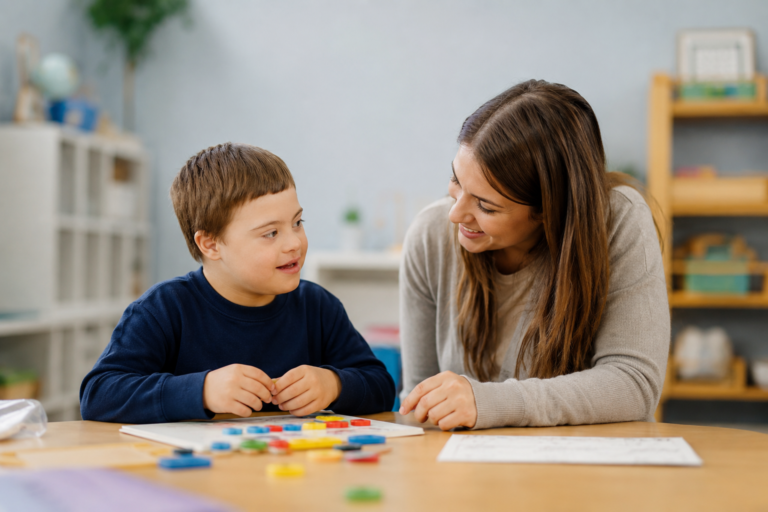
Therapy may include practicing conversation, perspective-taking, storytelling, flexible language, problem-solving, nonverbal cues, and social understanding. For younger children, support may happen through play. For older children, therapy may include real-life scenarios, classroom collaboration, and strategies for friendships.
Parents are an important part of progress. When families understand what social communication skills look like in everyday life, they can support growth during meals, play, car rides, homework, sibling interactions, and community routines.
Frequently Asked Questions
Is social communication disorder the same as autism?
Because the overlap can be confusing, it is best to have a full developmental evaluation when there are questions. The goal is not to rush into a label, but to understand the child’s communication profile and choose the right support.
Can a child talk well and still have social communication disorder?
A child may have strong vocabulary but struggle with conversation, storytelling, social cues, humor, topic changes, or adapting language to different situations. This is why pragmatic language skills are an important part of speech-language assessment.
What age is social communication disorder usually noticed?
Some children are not identified until elementary school because early language milestones may look fairly typical. Parents often seek help when social misunderstandings, peer challenges, or classroom concerns become more frequent.
Does social communication disorder affect learning?
Support can make a meaningful difference. When children learn how to organize ideas, understand social language, and repair communication breakdowns, they often participate more confidently at school and with peers.
Can speech therapy help social communication disorder?
The best therapy is individualized. A speech-language pathologist should consider the child’s age, personality, strengths, family priorities, school demands, and real-life communication needs.
Should parents wait to see if social communication improves on its own?
Seeking guidance does not mean something is seriously wrong. It simply gives families clearer information and can help a child receive support before frustration or social confidence becomes a bigger concern.
Not Sure Where Your Child Falls?
Answer a few questions and we’ll tell you whether their development
looks on track — or whether it’s worth talking to an SLP.
A Few Final Thoughts on Social Communication Disorder
What matters most is the pattern. If a child often has trouble with conversation, friendships, social cues, storytelling, or adapting language to different situations, it may be helpful to look more closely.
A speech-language pathologist can help families understand whether the concern is related to social communication disorder, another language difficulty, autism, attention, anxiety, or a combination of needs. Clear answers can make next steps feel much less overwhelming.
With the right support, children can learn practical communication tools that help them connect, participate, and feel more confident in everyday life.
Want to learn more? The American Speech-Language-Hearing Association (ASHA) explains how speech sound disorders are evaluated and treated, including when a child may benefit from speech therapy.