
Signs Your Toddler May Need Early Intervention Speech Therapy
Many parents notice small communication differences long before anyone else does. Sometimes it begins with fewer words than expected, difficulty following directions, or frustration during everyday interactions. Other times, it is simply a feeling that communication seems harder than it should be. When those concerns continue over time, parents often start wondering whether early intervention speech therapy could help support their toddler’s development.
Toddler communication development can vary widely, and not every delay automatically signals a long-term problem. Some children develop language gradually while still making steady progress in other areas. At the same time, certain patterns may suggest that additional support could be beneficial, especially when communication challenges begin affecting play, learning, social interaction, or emotional regulation.
Early intervention speech therapy focuses on helping young children build communication skills during the years when brain development is especially active. Support may involve helping toddlers understand language, use more words, improve speech clarity, strengthen social communication, or reduce frustration during everyday routines. Therapy is designed to feel play-based, supportive, and developmentally appropriate rather than overly structured or clinical.
Understanding the signs that may point toward speech or language difficulties can help parents feel more informed and confident about next steps. In many cases, seeking guidance early provides reassurance, practical strategies, and valuable support during an important stage of development.
Common Early Communication Signs Parents Notice
Fewer Words Than Expected for Age
Parents often describe feeling unsure whether their child is simply taking a little longer to talk or whether something more significant may be happening. It can be especially confusing when toddlers appear bright, playful, and socially engaged in other ways. Communication development is complex, and expressive language skills do not always develop evenly across children.
Speech-language pathologists look not only at the number of words a child uses, but also at how communication skills are progressing overall. A toddler who is steadily gaining new sounds, gestures, words, and social interaction skills may show a different developmental pattern than a child whose communication progress appears stalled over time.
Difficulty Understanding Language
Understanding language forms the foundation for many later communication skills. Toddlers learn words, routines, social interaction patterns, and play skills partly through listening and processing what others say around them. When comprehension is difficult, children may become frustrated more easily or appear disconnected during conversations and activities.
Receptive language challenges do not always mean a child is not paying attention or choosing not to listen. In many cases, toddlers genuinely have difficulty processing spoken language consistently. Early support can help families learn ways to strengthen understanding during play, routines, and everyday interactions.
Frustration During Communication
Frustration can increase when children have strong ideas, interests, or social motivation but limited communication tools. Some toddlers may pull adults toward desired objects, scream when misunderstood, or give up trying to interact altogether. These moments can become stressful for both the child and caregivers over time.
While frustration alone does not automatically mean a toddler needs speech therapy, ongoing communication breakdowns deserve attention. Supporting communication early can help children build confidence, reduce emotional stress, and participate more comfortably in family and social routines.
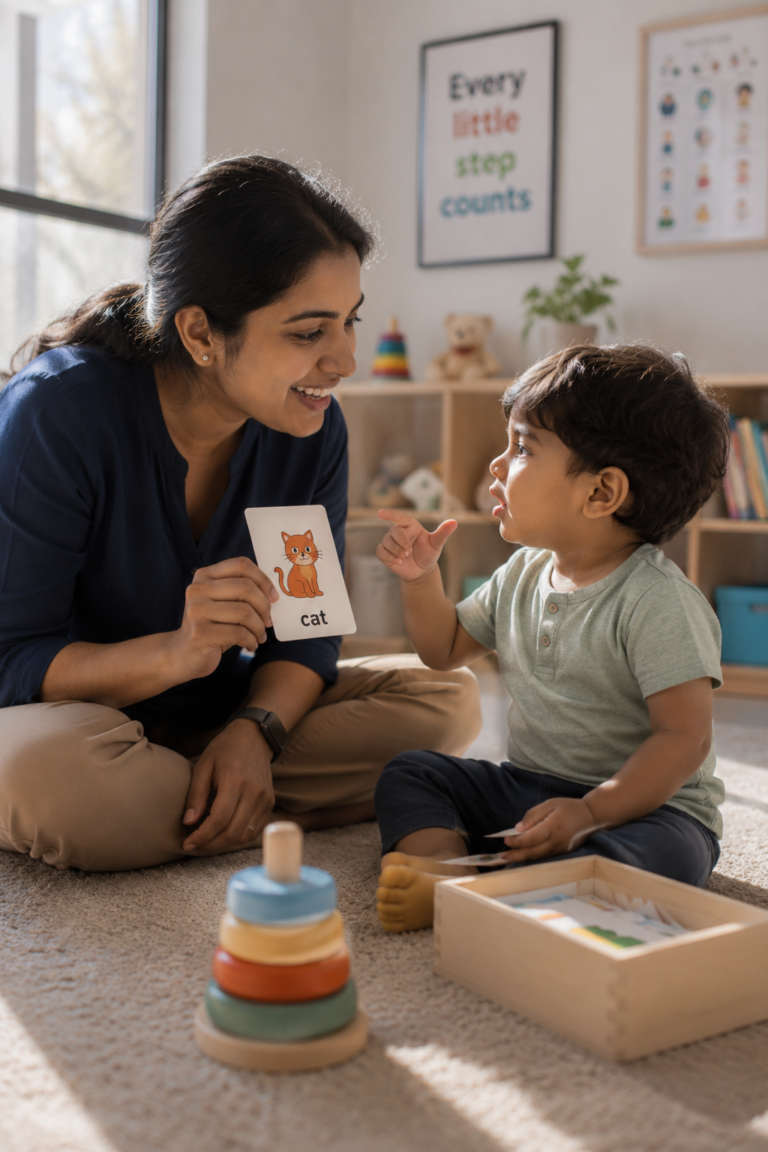
Speech and Social Communication Patterns That May Need Support
Speech That Is Very Difficult to Understand
Speech clarity can be affected by several different factors, including articulation difficulties, phonological delays, oral motor challenges, or broader language delays. Some children attempt many words but produce sounds inconsistently, while others speak very little because forming words feels difficult. These patterns can affect confidence and participation during everyday interactions.
Speech-language pathologists evaluate how a child uses sounds, combines syllables, and communicates across settings. Early intervention speech therapy often focuses on building understandable communication gradually through play, repetition, modeling, and supportive parent involvement.

Limited Interest in Interaction or Play
Social communication differences can appear in many ways. A toddler might avoid eye contact, rarely imitate actions or sounds, prefer playing alone consistently, or struggle to use gestures like pointing and waving. These signs can overlap with several developmental differences, which is why looking at the full developmental picture is important.
Not every quiet or independent toddler has a communication disorder. Some children simply have calmer personalities or different temperaments. Still, when social communication concerns appear alongside speech or language delays, early evaluation can help families better understand their child’s strengths and needs.
Regression or Loss of Communication Skills
Regression can involve spoken words disappearing, reduced social engagement, loss of eye contact, decreased babbling, or less interest in interaction. Sometimes these changes happen gradually, while other times they feel sudden and obvious. Any noticeable loss of communication skills deserves prompt attention from a healthcare or developmental professional.
Seeking evaluation after regression does not automatically mean a specific diagnosis is present. The purpose of early assessment is to better understand what may be affecting communication development and determine whether supportive intervention could help a child regain and strengthen skills.
Why Early Intervention Can Make a Difference
Young Children Learn Through Everyday Experiences
Parents are also an important part of early intervention services. Speech-language pathologists frequently coach caregivers on strategies that can be used during meals, bath time, play, errands, and daily routines. Small communication opportunities repeated consistently throughout the day often support progress more effectively than isolated practice alone.
Because toddler brains are rapidly developing, early support may help children strengthen foundational communication skills before challenges become more frustrating or deeply ingrained. Intervention is not about pressuring children to perform. It is about creating supportive opportunities for communication growth during an important developmental period.
Early Support Can Reduce Family Stress
When families receive support, they often gain practical tools that make everyday life feel calmer and more manageable. Even simple strategies such as modeling language, slowing communication, or creating predictable routines can reduce frustration significantly. Therapy can also provide reassurance that parents are not navigating concerns alone.
Many families report that one of the biggest benefits of early intervention is feeling more confident about how to support communication at home. Progress often happens gradually, but understanding how to encourage communication naturally can make a meaningful difference for both children and caregivers.
Evaluations Can Provide Valuable Clarity
An evaluation does not automatically lead to long-term therapy services. Sometimes families learn that development is progressing within a broad range of typical variation. In other cases, professionals may recommend monitoring, targeted support, or early intervention services based on the child’s needs.
Seeking clarity early can help families make informed decisions with less uncertainty. Whether concerns turn out to be mild, temporary, or more significant, understanding what is happening allows parents to respond with greater confidence and support.
When to Consider an Evaluation
Trusting Ongoing Concerns
Parents are often the first people to notice subtle communication differences in their child. Even when friends or family offer reassurance, persistent concerns deserve thoughtful attention, especially if communication challenges continue over several months rather than improving steadily.
It can help to focus less on comparisons with other children and more on whether communication skills are progressing over time. A toddler does not need to meet every milestone perfectly to benefit from support. What matters most is the overall pattern of growth, interaction, and communication development.
Seeking guidance early does not mean assuming something is seriously wrong. In many situations, families simply gain helpful reassurance, practical strategies, and a clearer understanding of what to watch moving forward.
Signs That May Warrant Early Intervention Speech Therapy
- Very limited words by 18 to 24 months
- Difficulty understanding simple language consistently
- Frequent frustration during communication attempts
- Speech that is extremely difficult to understand
- Limited gestures such as pointing or waving
- Loss of previously used words or communication skills
- Difficulty engaging socially during play and interaction
- Concerns about hearing, responsiveness, or attention to speech
Moving Forward Without Panic

Hearing that a child may benefit from speech therapy can feel emotional for many parents. It is common to worry about labels, future learning, or whether you somehow missed earlier signs. Most families experience a mix of uncertainty and relief during the evaluation process.
Early intervention exists to provide support during a time when communication skills are still rapidly developing. Many toddlers make meaningful progress when families receive guidance and children gain opportunities to practice communication in supportive environments.
The goal is not perfection or pressure. The goal is helping children communicate more comfortably, connect with others, and participate more fully in everyday life and relationships.
FAQ SECTION
Does needing speech therapy mean something is seriously wrong?
An evaluation helps professionals understand your child’s specific strengths and needs. Some children benefit from short-term support, while others may simply need monitoring and strategies for continued development at home.
What age can a toddler start early intervention speech therapy?
Starting early does not mean a child will need therapy forever. In many situations, early support helps strengthen foundational communication skills during an important stage of brain development.
Should I wait to see if my toddler catches up?
Seeking an evaluation does not commit your child to therapy automatically. Many parents find that having clearer information reduces anxiety and helps them feel more confident about next steps.
Can bilingual toddlers still have speech delays?
Speech-language pathologists consider the child’s full language environment during evaluations. Communication concerns should be assessed within the context of all languages the child hears and uses regularly.
What happens during an early intervention speech evaluation?
Parents are usually involved throughout the process and share observations about communication at home. The goal is to gather information in a supportive way rather than test children under pressure.
Can parents help communication development at home?
Speech-language pathologists often coach parents on practical strategies that fit into normal daily routines. Small consistent communication opportunities throughout the day can be very meaningful for toddlers.
Not Sure Where Your Child Falls?
Answer a few questions and we’ll tell you whether their development
looks on track — or whether it’s worth talking to an SLP.
A Few Final Thoughts on Early Intervention Speech Therapy
Early intervention speech therapy is designed to support children during a stage when communication skills are still rapidly developing. Therapy focuses on building connection, interaction, understanding, and confidence through everyday experiences that feel natural and engaging for young children.
An evaluation does not define your child or predict their entire future. Instead, it offers information, support, and practical guidance that can help families better understand communication development and make informed decisions moving forward.
If concerns continue lingering in the back of your mind, seeking professional guidance can be a positive and proactive step. Many families find reassurance simply by gaining clearer answers and learning ways to support communication growth during these important early years.
The American Speech-Language-Hearing Association (ASHA) explains Early Intervention services, including how families can continue supporting communication as children transition to preschool and school-age services.