
Birth to 6 Months: What Communication Looks Like This Early
From eye contact and cooing to social smiles and excited body movements, these early interactions build the foundation for future speech, language, learning, and social development.
For many parents, it can be reassuring to understand what communication typically looks like during these early months — and how everyday routines naturally support development along the way.
This guide walks through common communication milestones from birth to 6 months, simple ways to encourage interaction at home, and signs that may be worth discussing with a pediatrician or speech-language pathologist.
How Babies Communicate During the First 6 Months
Many parents think communication begins once babies start talking, but communication development actually starts from birth. Even during the earliest weeks of life, babies are already learning through listening, watching faces, recognizing voices, and responding to interaction.
During the first six months, communication is mostly social and sensory. Babies communicate through crying, eye contact, facial expressions, movement, cooing, smiling, and vocal play. While these early behaviors may seem simple, they are incredibly important building blocks for later speech and language development.
At the same time, caregivers are also learning how to understand their baby’s signals. Over time, many parents begin recognizing patterns in cries, reactions, facial expressions, and sounds that help interaction feel more connected and meaningful.
One of the most important things to understand is that babies learn communication through relationships. Warm, responsive interaction during feeding, diaper changes, cuddling, bath time, and play helps babies begin understanding how communication works long before words appear.
This stage is not about “teaching” babies to talk early. It is about helping babies feel connected, engaged, listened to, and socially connected through repeated everyday interaction.

Birth to 2 Months Communication Milestones
Common Signs Parents May Notice
- Quieting when spoken to
- Startling to sounds or voices
- Brief eye contact during feeding or cuddling
- Turning slightly toward familiar voices
- Crying differently for different needs
- Making small reflexive or throat sounds
Crying is the primary form of communication during this stage. Although crying can feel overwhelming for exhausted parents, babies are already learning that their signals lead to responses from caregivers. Over time, many parents begin noticing subtle differences in cries related to hunger, discomfort, fatigue, or overstimulation.
Newborns are also beginning to observe faces and voices closely. Many babies briefly focus on faces during feeding or cuddling and may quiet when hearing familiar voices. These early social experiences help build listening, attention, emotional connection, and trust.
At this age, babies are constantly absorbing information through interaction. Even though development may not feel dramatic yet, repeated exposure to voices, facial expressions, touch, and routines plays a major role in brain development during the first months of life.
Ways to Encourage Communication During the Newborn Stage
Talking softly during feeding, diaper changes, swaddling, or bath time helps expose babies to language in a calm, meaningful way. Narrating simple activities like “Let’s get your pajamas on” or “You’re getting sleepy” may feel repetitive to adults, but repeated exposure helps babies connect voices with comfort and attention.
Face-to-face interaction is especially valuable during this stage. Babies are naturally drawn to human faces and voices. Slowing down, smiling, making eye contact, and responding warmly all help support early social communication skills.
Many parents worry about whether they are “doing enough,” especially during exhausting newborn weeks. In reality, loving and responsive everyday interaction is already doing an incredible amount to support development.

2 to 4 Months Communication Milestones
For many families, this is when communication starts feeling more rewarding and reciprocal. Instead of simply responding through crying, babies may begin cooing during interaction, smiling when someone leans in to talk, or showing excitement when they hear a familiar caregiver’s voice.
These early back-and-forth moments are incredibly important for language development. Even though babies are not using words yet, their brains are actively learning how conversation works through tone, rhythm, pauses, facial expression, and emotional response.
At this age, communication is still deeply connected to relationships and interaction. Babies learn best through warm, responsive engagement during feeding, cuddling, diaper changes, tummy time, bath time, and play.
Early Sounds and Vocal Play
Babies are essentially experimenting with their voices. They may change pitch, volume, facial expression, or timing while vocalizing, almost as if they are discovering what their mouth and voice can do. Some babies become especially vocal during face-to-face interaction when caregivers respond enthusiastically.
This is one reason speech-language pathologists encourage parents to “talk back” to babies, even before real words appear. When adults smile, imitate sounds, pause, and respond conversationally, babies begin learning the rhythm and flow of communication.
What Parents May Notice Day to Day
Communication development during this stage often appears in small everyday moments rather than dramatic milestones. Some babies become more expressive during diaper changes or feeding routines. Others light up during songs, familiar games, or playful interaction with siblings.
Parents may notice their baby:
- Smiling when someone talks to them
- Watching faces closely during interaction
- Making sounds back during “conversations”
- Calming when hearing familiar voices
- Getting excited during favorite routines
- Beginning to laugh or squeal
Not every baby develops these skills on the exact same timeline. Some babies are naturally more vocal, while others communicate more through movement, facial expressions, or quiet observation.
4 to 6 Months Communication Milestones
Between 4 and 6 months, communication often becomes more expressive, playful, and interactive. Babies may laugh, squeal, react excitedly during familiar routines, and intentionally seek out social interaction with caregivers.
At this stage, many babies begin understanding that communication is a back-and-forth experience. They may make sounds, pause, watch for a response, and then vocalize again. These early “conversations” help build the foundation for future language and social interaction.
Babies are also becoming more aware of the world around them. They may turn toward familiar voices, react to changes in tone, notice music, and show excitement when favorite people enter the room. Some babies become especially expressive during songs, floor play, or playful routines repeated throughout the day. As your baby approaches the second half of the first year, learn what typically happens next in How Babies Communicate From 6 to 12 Months.
This stage can feel especially exciting for parents because babies often appear more socially connected and responsive. At the same time, development still varies widely between children, and there is a broad range of normal communication development during infancy.
Everyday Activities That Support Communication
Narrating simple activities helps babies begin connecting sounds, rhythm, and meaning over time. Phrases like “Let’s get your socks on” or “I hear the dog barking” may seem simple, but repeated exposure helps strengthen listening and language pathways in the brain.
Songs, nursery rhymes, repetitive phrases, and playful games also help babies hear patterns in language. Many babies enjoy exaggerated facial expressions, sing-song voices, and playful pauses during interaction.
Parents do not need perfect activities or elaborate lesson plans. Babies benefit most from warm, responsive interaction with familiar caregivers throughout the day.
Parent Reassurance Tip
Most communication development happens gradually through hundreds of small interactions over time. Consistent connection, responsiveness, and engagement matter far more than creating perfect teaching moments.
If concerns ever arise, asking questions early can provide reassurance and support — not judgment.
When Should Parents Seek Support?
At the same time, there are situations where it may be helpful to discuss communication development with a pediatrician or speech-language pathologist. Early support does not automatically mean something is seriously wrong. Often, it simply provides reassurance, guidance, and monitoring.
Parents know their babies best. If something consistently feels concerning over time, it is always okay to ask questions and seek professional input.
Signs That May Be Worth Discussing
- Limited eye contact over time
- Rare response to sounds or voices
- No social smiling by around 3 months
- Very limited vocalization by 5–6 months
- Loss of previously observed interaction skills
- Concerns about hearing or responsiveness
Early Support Can Be Helpful
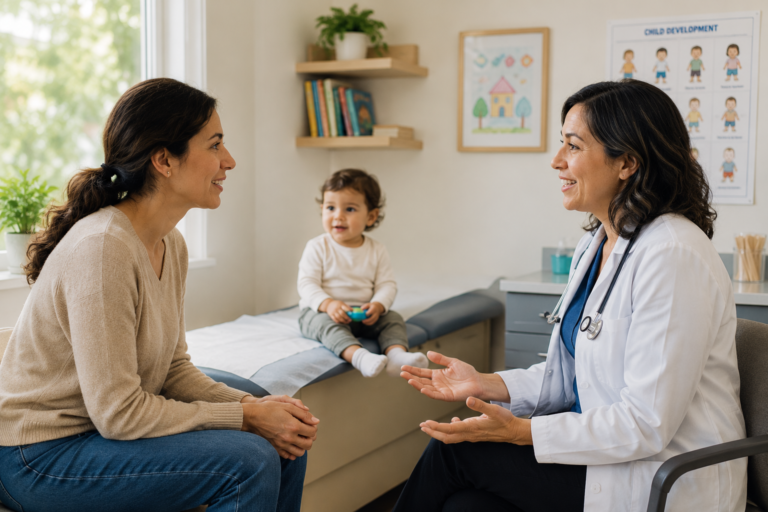
Early conversations with pediatricians, early intervention teams, or speech-language pathologists can often reduce stress and provide helpful perspective about what to monitor moving forward.
Supportive guidance should feel collaborative and reassuring — not fear-based or judgmental.
Frequently Asked Questions
Is it normal for babies to communicate before talking?
Even though these behaviors may seem simple, they are an important part of early language and social development. Babies are constantly learning how communication works by observing faces, listening to voices, and experiencing back-and-forth interaction with caregivers.
For example, when a parent responds to a baby’s cry, smile, or sound, the baby begins learning that communication leads to connection and response. These repeated interactions help build the foundation for listening, attention, social engagement, and eventually spoken language.
When do babies usually start cooing?
These early sounds are an important step in communication development because babies are beginning to experiment with their voices and learn how sounds work. Over time, babies may change pitch, volume, and facial expression while vocalizing during interaction.
Parents often notice cooing most during face-to-face interaction, feeding, diaper changes, or playful moments. Responding warmly to these sounds by smiling, talking back, or imitating the sounds can help encourage continued interaction and communication growth.
Does talking to a newborn actually help development?
Babies learn through repeated exposure to voices, tone, rhythm, facial expressions, and interaction. Everyday moments like feeding, diaper changes, stroller walks, cuddling, and bath time all create valuable opportunities for communication development.
Simple narration such as “Let’s get your socks on” or “You’re getting sleepy” helps expose babies to language naturally throughout the day. Over time, these repeated interactions help strengthen the listening and social foundations needed for future speech and language skills.
Parents do not need to constantly entertain or “teach” babies. Warm, responsive interaction during ordinary routines is one of the most powerful ways to support communication development during infancy.
Should I worry if my baby seems quiet?
Rather than focusing only on how often a baby vocalizes, it is usually more helpful to look at overall interaction and responsiveness over time. For example, parents can watch for signs such as eye contact, social smiling, reacting to voices, calming during interaction, or showing interest in faces and sounds.
Some babies communicate more through movement, facial expression, or observation before becoming highly vocal. Development is also rarely perfectly steady. Babies often go through periods where they seem more interactive followed by quieter phases during growth spurts, sleep changes, or busy developmental stages.
If parents consistently feel concerned about communication, hearing, or responsiveness, it is always okay to discuss those concerns with a pediatrician or speech-language pathologist for reassurance and guidance.
Can babies learn language from screens?
Babies learn a tremendous amount from watching facial expressions, hearing natural voice patterns, observing mouth movements, and participating in back-and-forth interaction with caregivers. These social experiences are an important part of early brain and language development.
While occasional video chatting with family members can still provide social interaction, passive screen viewing is generally not considered an effective way for babies to develop communication skills. Most experts encourage prioritizing direct interaction, play, reading, singing, and conversation during the first year of life.
For many families, this can feel reassuring because it means meaningful communication support does not require expensive programs, apps, or educational videos. Simple everyday interaction is often the most valuable learning opportunity.
What are some easy ways to encourage communication?
Talking during feeding, diaper changes, bath time, walks, and play helps expose babies to language naturally and consistently. Babies benefit from hearing voices, watching facial expressions, and experiencing responsive interaction over and over again.
Simple activities like singing songs, reading short books, making eye contact, smiling, imitating sounds, and responding when babies vocalize can all help support communication development. Many babies especially enjoy exaggerated facial expressions, playful voices, and repetitive games like peekaboo.
Parents do not need perfect routines or constant educational activities to support communication growth. Warm, responsive connection and emotionally present interaction are often the most important ingredients for early communication development.
A Few Final Thoughts
The first six months of life lay the foundation for everything that follows in communication. Although babies are not using words yet, they are learning through every smile, cuddle, sound, and back-and-forth interaction they share with the people who care for them.
Remember that every baby develops at their own pace. Some are naturally more vocal, while others communicate in quieter ways. What matters most is that your baby is becoming increasingly engaged with people, responding to voices, and showing interest in the world around them.
If your baby is not meeting several communication milestones or you have concerns about hearing, responsiveness, or overall development, talk with your pediatrician or a speech-language pathologist, often called a speech therapist. The American Speech-Language-Hearing Association also provides a helpful birth-to-1-year communication milestone guide for families.
Most importantly, enjoy these early months. Talking, singing, reading, smiling, and simply spending time together are some of the most meaningful ways you can support your baby’s communication development from the very beginning.
Not Sure Where Your Child Falls?
Answer a few questions and we’ll tell you whether their development
looks on track — or whether it’s worth talking to an SLP.