
What Is an Expressive Language Delay?
An expressive language delay happens when a child has difficulty using words, sounds, gestures, or sentences to communicate their thoughts and needs. Many children with expressive language delays understand much more than they can say, which can sometimes surprise parents who notice their child seems bright, social, and engaged but is not talking as expected. The gap between understanding and speaking is often what first raises concerns about communication development.
For some children, expressive language delays show up as late talking. Others may use only a few words, struggle to combine words into phrases, or have trouble finding the right words during conversation. Communication development can vary widely from child to child, but consistent difficulty expressing ideas compared to peers may signal that additional support could help.
Parents often wonder whether their child will “grow out of it” or if intervention is necessary. The truth is that some children do catch up naturally over time, while others benefit greatly from early speech-language support. Looking at the whole picture — including understanding, play skills, social interaction, and overall communication growth — helps professionals determine whether a child is following a slower developmental path or showing signs of a more significant delay.
The encouraging news is that expressive language skills can improve significantly with the right support, responsive interaction, and opportunities to communicate throughout everyday routines. Understanding what expressive language delay looks like is often the first step toward helping children build confidence and stronger communication skills over time.
Understanding How Expressive Language Develops
Babies Begin Communicating Long Before Words
As children grow, expressive language gradually becomes more complex. Babies begin experimenting with sounds, then move toward first words, simple phrases, and eventually longer conversations. This process does not happen overnight, and small differences in timing are completely normal during early childhood development.
Parents sometimes expect spoken words to appear suddenly, but expressive language usually develops in layers. A child who points, imitates sounds, and attempts to communicate is already building important foundational skills even if spoken vocabulary is still limited.
Expressive Language Includes More Than Talking
Some children with expressive language delays may know exactly what they want to say but struggle to put words together efficiently. Others may rely heavily on gestures, repeat phrases they hear, or become frustrated when they cannot communicate their needs clearly. These challenges can affect social interaction, play, and daily routines.
Speech clarity and expressive language are related but separate skills. A child may pronounce words clearly while still struggling to form sentences or express ideas. On the other hand, some children have both speech sound difficulties and expressive language challenges at the same time.
Development Can Look Different Across Children
Family history, personality, opportunities for interaction, hearing ability, and overall development can all influence communication growth. Bilingual children may also distribute vocabulary across multiple languages, which can sometimes make expressive skills appear different depending on the situation.
Because development is nuanced, professionals usually look for patterns rather than isolated milestones. A child who is slowly progressing and actively trying to communicate may be on a different path than a child showing very limited communication growth over an extended period of time.

Common Signs of an Expressive Language Delay
Limited Spoken Vocabulary
Parents often notice that their child communicates effectively through pointing, leading adults by the hand, or using sounds instead of words. While these communication attempts are important and meaningful, children typically begin expanding spoken vocabulary steadily during the toddler years.
Vocabulary growth matters because words become the foundation for later communication skills such as storytelling, conversation, asking questions, and academic learning. Slow expressive growth does not automatically indicate a major disorder, but it may warrant closer monitoring or evaluation.
Difficulty Combining Words Into Sentences
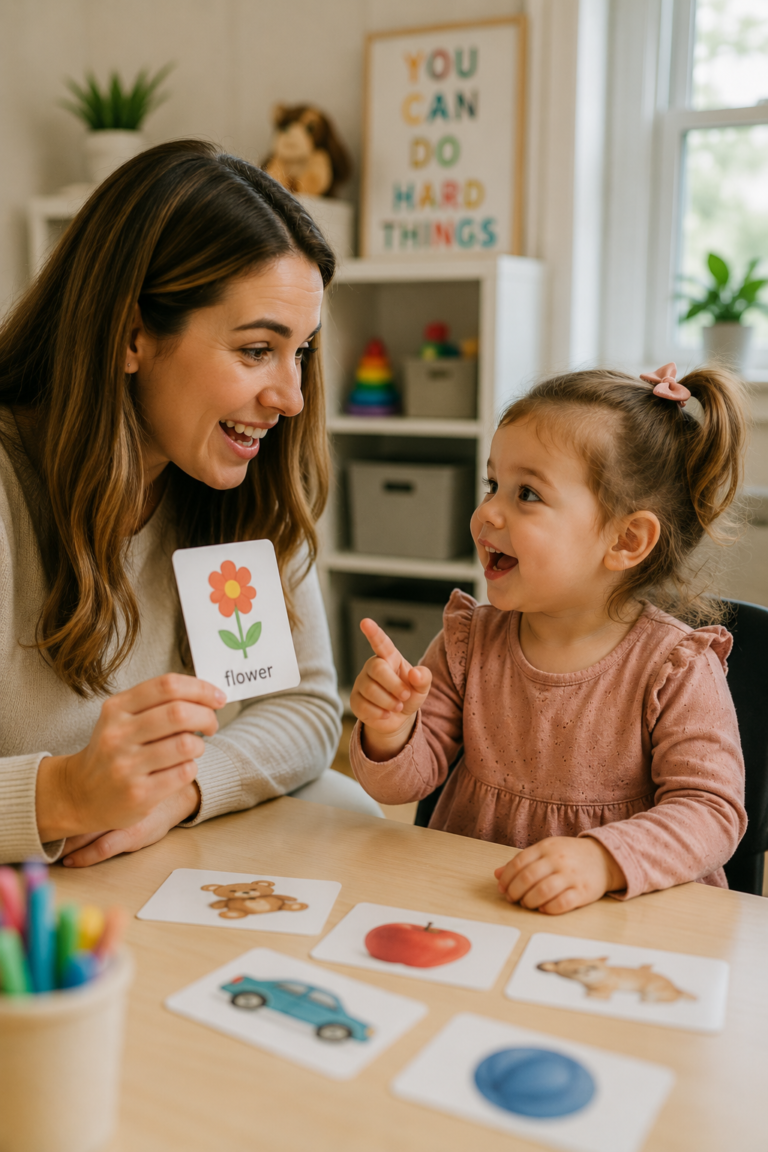
A child may continue relying on single words long after peers are using short sentences. Others may produce memorized phrases without being able to create their own flexible combinations of words during everyday conversation.
Parents sometimes notice frustration during communication breakdowns. A child may know what they want but become upset when others cannot understand them or when they cannot organize their thoughts into words quickly enough.
Trouble Expressing Thoughts Clearly
These challenges can become more noticeable during play with peers or in preschool settings where communication demands increase. Children may avoid conversation, rely on imitation, or withdraw socially if communication feels difficult or exhausting.
Expressive language difficulties can affect confidence as children become more aware of communication differences. Supportive adults who slow down, listen patiently, and encourage communication without pressure can make a meaningful difference in helping children feel successful.
How Speech Therapy Supports Expressive Language Skills
Therapy Often Looks Like Play
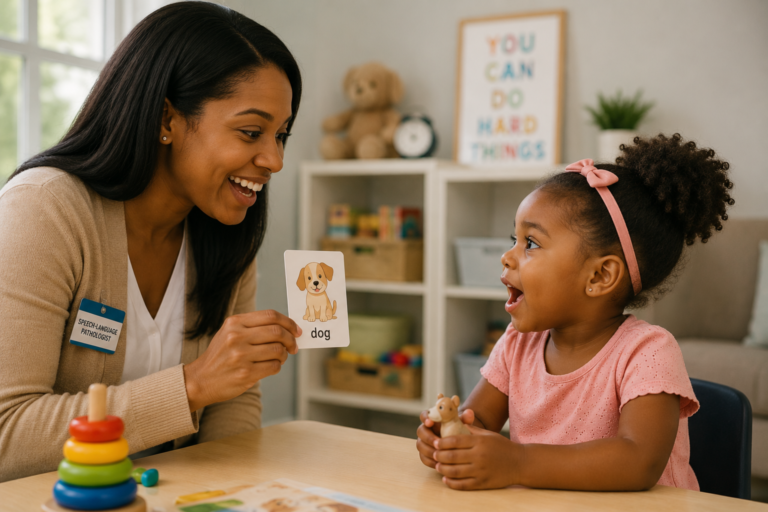
Children learn language best through meaningful social experiences. A speech-language pathologist may model words, expand on what a child says, encourage turn-taking, or create motivating situations that naturally encourage communication attempts.
Therapy is not about forcing children to talk on command. Instead, it focuses on building communication confidence, increasing opportunities for interaction, and helping language skills grow gradually within supportive relationships.
Parents Play an Important Role
Simple strategies like narrating activities, pausing to encourage responses, offering choices, reading together, and expanding on children’s attempts can support expressive growth over time. Small communication moments repeated consistently often have a significant impact.
Speech therapists frequently coach parents alongside direct therapy because children make the most progress when strategies continue outside structured sessions. The goal is not perfection but creating responsive communication environments that encourage interaction.
Early Support Can Reduce Frustration
Supporting expressive language early can improve not only communication skills but also confidence, social participation, and emotional regulation. As children become more successful communicators, many families notice smoother daily interactions and reduced frustration overall.
Early intervention does not mean something is “wrong” with a child. In many cases, it simply provides additional support during a developmental period when communication skills are rapidly growing and especially responsive to intervention.
When to Seek Help for an Expressive Language Delay
Trusting Your Concerns as a Parent
An evaluation does not automatically mean therapy will be needed long term. Sometimes families simply receive reassurance, developmental guidance, and strategies to encourage communication at home while continuing to monitor progress.
Seeking support early can provide clarity and reduce uncertainty. Many parents feel relieved after learning more about their child’s communication profile and understanding practical next steps.
Signs That May Warrant an Evaluation
- Very limited spoken words compared to peers
- Difficulty combining words into short phrases
- Frequent frustration during communication attempts
- Trouble expressing wants and needs clearly
- Difficulty participating in age-appropriate conversations
- Slow progress in expressive language over time
Support Can Make Communication Easier
The most important thing is recognizing that communication skills can improve with responsive support and meaningful interaction. Children do not need to “earn” help by struggling for years before receiving guidance or intervention.
Families do not have to navigate communication concerns alone. Pediatricians, early intervention programs, and speech-language pathologists can help determine what support may be most appropriate for a child’s individual developmental needs.
Frequently Asked Questions About Expressive Language Delay
Is expressive language delay the same as a speech delay?
Some children experience only expressive language difficulties, while others have both speech and language challenges together. A speech-language evaluation can help determine which communication areas are involved and what type of support may be most helpful.
Can a child understand language normally but still have an expressive delay?
Yes. Many children with expressive language delays understand far more than they can verbally express. Parents often describe these children as seeming very aware, social, and capable despite limited spoken communication.<br><br>
This difference between understanding and speaking is common in expressive language delays. Children may follow directions well, respond appropriately during routines, and demonstrate strong comprehension while still struggling to communicate verbally.
Will my child eventually catch up without therapy?
Early support can help reduce frustration and encourage stronger communication development during important learning years. Seeking an evaluation does not commit families to long-term therapy, but it can provide valuable guidance and reassurance.
What causes expressive language delay?
In many cases, children with expressive language delays are otherwise healthy and developing well in other areas. A comprehensive evaluation helps identify strengths, challenges, and the most appropriate support strategies for each child.
How do speech therapists work on expressive language?
Parents are often included in the process because communication opportunities happen throughout the day. Small changes during everyday routines can significantly support expressive language development over time.
At what age should I worry about expressive language delay?
If your child seems significantly behind peers, struggles to communicate needs, or shows very slow expressive progress, discussing concerns with a pediatrician or speech-language pathologist can provide helpful guidance and reassurance.
Not Sure Where Your Child Falls?
Answer a few questions and we’ll tell you whether their development
looks on track — or whether it’s worth talking to an SLP.
A Few Final Thoughts on Expressive Language Delay
The good news is that communication skills are highly responsive to supportive interaction, meaningful play, and early intervention when needed. Children often make important progress when given consistent opportunities to communicate in ways that feel motivating and successful.
Every child’s communication journey looks a little different. Some children need only short-term support, while others benefit from ongoing guidance as language demands increase over time. Development is rarely perfectly predictable, and progress can happen gradually as skills build layer by layer.
Most importantly, expressive language delays do not define a child’s intelligence, personality, or future potential. With understanding, patience, and appropriate support, children can continue building the communication skills they need to connect, learn, and thrive.
Want to learn more? The American Speech-Language-Hearing Association (ASHA) explains common signs of language disorders in children and how speech-language pathologists evaluate and support them.