
What Is a Phonological Disorder?
A phonological disorder is a type of speech sound disorder where a child has trouble using the sound patterns of their language. Parents often notice that their child is talking, using words, and trying to communicate, but many words sound unclear or are hard for unfamiliar listeners to understand.
This can feel confusing because the child may understand language well and may have plenty to say. The challenge is not usually about intelligence or effort. It is more about how the child’s brain is organizing speech sounds and sound patterns, which can make their words come out in predictable but unclear ways.
Some speech sound mistakes are normal in early childhood. Young children often simplify words while their speech system is still developing. A phonological disorder is different because the patterns may last longer than expected, happen often, or make the child’s overall speech much harder to understand than other children the same age.
In this article, we will look at what a phonological disorder means, how it can sound in everyday speech, how it is different from an articulation disorder, and when it may be helpful to talk with a speech-language pathologist. The goal is to give parents clear, calm information without making speech development feel scary or overly complicated.
Understanding Phonological Disorder in Children
What phonological disorder means
These patterns are sometimes called phonological processes. Many phonological processes are part of normal speech development for a while. The concern comes when the patterns continue past the age when most children have stopped using them, or when the number of patterns makes the child’s speech very difficult to follow.
Speech-language pathologists look at the whole pattern of a child’s speech, not just one sound mistake. That is important because phonological disorder is usually about a system of sound patterns rather than one difficult sound. ASHA describes speech sound disorders as difficulties with speech sound production that can affect how clearly a child is understood.
How phonological patterns can sound
Parents may notice that they understand their child better than grandparents, teachers, or other children do. This is common because close family members learn the child’s speech patterns over time. A parent may know that “poon” means “spoon” or that “tar” means “car,” even when other people cannot figure it out.
The pattern matters more than one funny pronunciation. A single mispronounced word is not usually a big concern. But when many words are affected in the same way, the child may need support learning how sounds work together to make words clear.
Why speech clarity matters
This does not mean every unclear word is a problem. Speech develops gradually, and children do not master every sound at once. Still, by age 3, the CDC notes that most children can talk well enough for others to understand them most of the time, which can be a helpful general guide for parents watching speech clarity.
Clearer speech can support confidence, social connection, and early learning. When a child can be understood more easily, everyday routines often feel smoother. Speech therapy can help a child learn sound patterns in a supportive, playful way that fits their age and communication needs.

How Phonological Disorder Is Different From Other Speech Concerns
Phonological disorder versus articulation disorder
A phonological disorder is about sound patterns. An articulation disorder is more about difficulty making a specific sound correctly. For example, a child who always has trouble producing the “r” sound may have an articulation concern, while a child who replaces many back sounds like “k” and “g” with front sounds like “t” and “d” may be showing a phonological pattern.
This difference matters because therapy may look different. A child with an articulation issue may practice where to place the tongue, lips, or jaw for one sound. A child with a phonological disorder often needs help hearing and using sound contrasts, such as understanding that “tea” and “key” are different words because the first sound changes the meaning.
Some children have both articulation and phonological needs. A speech-language pathologist can sort out what is happening by listening to the child say many different words, checking sound patterns, and considering the child’s age, language background, hearing history, and overall communication.

Phonological disorder versus normal speech development
A phonological disorder becomes more likely when the errors are persistent, frequent, or make speech much less clear than expected. Parents may notice that the child is using shorter words clearly but longer words fall apart, or that the same sound pattern shows up across many different words.
It is also important to consider the child’s whole communication profile. A child who is socially engaged, understands directions, and uses many words may still need speech sound support. Speech therapy is not only for children who are not talking; it can also help children who are talking but are hard to understand.
Phonological disorder and language development
Because speech and language are connected, an evaluation should look beyond pronunciation alone. The speech-language pathologist may check how the child understands language, how they use words and sentences, how they play, and how they communicate in daily routines.
This broader view helps families get the right kind of support. A child who only needs speech sound therapy may work mostly on sound patterns and clarity. A child with both speech and language needs may benefit from a plan that supports clearer speech and stronger communication at the same time.
What Causes a Phonological Disorder and How Therapy Helps
Why some children develop phonological disorders
Hearing is especially important because children learn speech sounds by listening. Even mild or temporary hearing changes can affect how clearly a child hears sound differences. That does not mean every child with ear infections will have a speech disorder, but it is one reason hearing is often considered during an evaluation.
Parents should not blame themselves. A phonological disorder is not caused by a parent failing to practice enough or by a child being lazy. Children usually want to be understood. When speech patterns persist, they often need clear teaching, repeated practice, and supportive feedback.
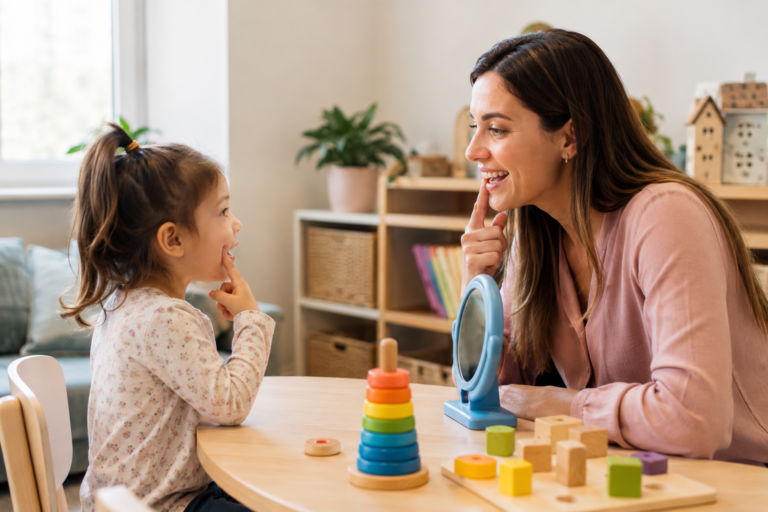
How speech therapy usually supports sound patterns
The goal is not just to make a child repeat words perfectly in a therapy room. The goal is to help the child carry clearer speech into everyday talking. That usually takes practice across words, phrases, sentences, conversation, and home routines.
Parents are often part of the process, but home practice should feel manageable. A few minutes of thoughtful practice can be more helpful than long, stressful sessions. The best practice usually fits into real life, such as reading a short book, playing with favorite toys, or noticing target words during daily routines.
What progress can look like
This kind of uneven progress is normal. Speech habits take time to change because children are learning to listen, plan, and produce sounds in a new way. Families may first notice that the child becomes easier to understand in familiar words, then in short phrases, and later in everyday conversation.
A good therapy plan should feel specific to the child. It should explain which patterns are being targeted, why those patterns matter, and how parents can support progress without turning every conversation into a correction.
When to Seek Help for a Possible Phonological Disorder
Trusting your concern without panicking
It is okay to pay attention to that feeling. Seeking guidance does not mean something is seriously wrong. It simply means you are gathering information and giving your child support if support is needed.
A speech-language evaluation can help clarify whether the speech patterns are age-expected, delayed, or disordered. It can also give you practical next steps, which is often much more helpful than waiting and worrying.
Signs parents may notice
- Your child is much harder to understand than other children the same age.
- Family members understand your child, but unfamiliar listeners often do not.
- Your child leaves off many beginning or ending sounds in words.
- Your child replaces whole groups of sounds, such as saying “t” for “k” or “d” for “g.”
- Your child’s speech sounds younger than expected for their age.
- Your child becomes frustrated because people do not understand them.
- Speech clarity is affecting preschool, play, confidence, or daily communication.
- You have concerns about hearing, frequent ear infections, or sound awareness.
What to do next
A helpful first step is to write down a few examples of how your child says common words. You might note words like “cat,” “dog,” “spoon,” “bus,” “cup,” or family names. Patterns are easier to see when examples are written down.
You can also ask your pediatrician about a hearing screening, especially if your child has had frequent ear infections or you are unsure how well they hear softer sounds. Hearing does not have to be the cause of the speech concern, but it is important information to have.
Most importantly, support should feel encouraging. Children learn best when they feel connected, successful, and safe to try. A speech-language pathologist can help you understand your child’s speech patterns and build a plan that supports clearer communication over time.
Want to learn more? The American Speech-Language-Hearing Association (ASHA) explains speech sound disorders, including the differences between articulation and phonological disorders, along with evaluation and treatment options for children.
Phonological Disorder FAQs
Is a phonological disorder the same as a speech delay?
That said, the terms can overlap in everyday conversation. Some children with phonological disorders may also have delayed speech or language skills. A speech-language evaluation can help explain what type of support would be most helpful.
Can a child outgrow a phonological disorder?
A true phonological disorder may not fully resolve without support, especially if the patterns are persistent or affect speech clarity in a major way. Therapy can help a child learn clearer sound patterns and reduce frustration.
What age should speech be clear?
By around age 3, many children are understood most of the time by others, though some sounds may still be developing. If your child is difficult to understand compared with peers, it is reasonable to ask for guidance.
Is a phonological disorder caused by weak mouth muscles?
This is why therapy often focuses on sound contrasts, listening, word patterns, and clear speech practice. Oral strength exercises are not usually the main approach unless there is a separate motor, feeding, or medical concern.
How is a phonological disorder diagnosed?
The evaluation may also include parent questions, play-based observation, language screening, and recommendations for hearing testing if needed. The goal is to understand the whole child, not just count sound errors.
How long does speech therapy take for a phonological disorder?
Some children make progress quickly with a focused plan, while others need longer support. Consistent therapy, realistic home practice, and encouraging communication at home can all help progress feel more steady.
Not Sure Where Your Child Falls?
Answer a few questions and we’ll tell you whether their development
looks on track — or whether it’s worth talking to an SLP.
A Few Final Thoughts on Phonological Disorder
The good news is that phonological disorders are treatable. With the right support, children can learn clearer sound patterns, become easier to understand, and feel more confident using their words with family, teachers, and friends.
It is also helpful to remember that speech development is not about perfection. Children grow at different rates, and many speech sounds take time. The key is noticing whether your child’s patterns are affecting communication and whether support could make daily life easier.
When you are unsure, asking a speech-language pathologist is a caring and practical step. You do not need to wait until frustration grows. Early guidance can give you answers, reassurance, and a clear path forward.