
My Child Has Words but Isn’t Putting Them Together
Learning to combine words is a major communication milestone, but it does not happen overnight. Before toddlers start putting words together, they spend a long time building vocabulary, understanding language, practicing speech sounds, and learning how conversations work. Some children make this leap very suddenly, while others need more time and support before phrases begin to emerge naturally.
It is also important to remember that communication development is not perfectly linear. A child may understand far more than they can express out loud. Some toddlers focus heavily on learning single words first, while others rely on gestures, pointing, routines, or sounds to get their needs met. Personality, temperament, exposure to language, and overall development can all influence how quickly combinations appear.
This article will walk through what it means when a child has words but is not yet putting them together, what is typically expected during toddler language development, ways parents can encourage phrase-building naturally, and signs that may suggest extra support could help.
When Toddlers Usually Start Combining Words
Vocabulary Often Comes Before Phrases
Two-word combinations often emerge sometime between 18 and 24 months, but there is natural variation. Some children begin earlier with phrases like “more juice” or “daddy go,” while others need additional time before combinations become consistent. Development rarely follows an exact calendar date.
The important piece is not only how many words a child says, but also whether their communication skills continue growing over time. A toddler who is steadily adding vocabulary, understanding language, pointing, imitating, and engaging socially may simply still be organizing language internally before phrases appear.
Understanding Language Matters Too
Parents may notice their child responding appropriately to questions, bringing requested items, or reacting emotionally to language long before they begin speaking in phrases themselves. These everyday moments reveal how much communication learning is already happening behind the scenes.
Speech-language pathologists look closely at both expressive and receptive language when evaluating development. A child who has strong understanding skills but limited phrase use may need a different type of support than a child who struggles with both understanding and speaking.
Some Children Are More Gestural Communicators
This does not mean gestures are a bad sign. In fact, gestures are an important part of early communication development and often support later language growth. Children who combine gestures with words are still practicing meaningful communication skills.
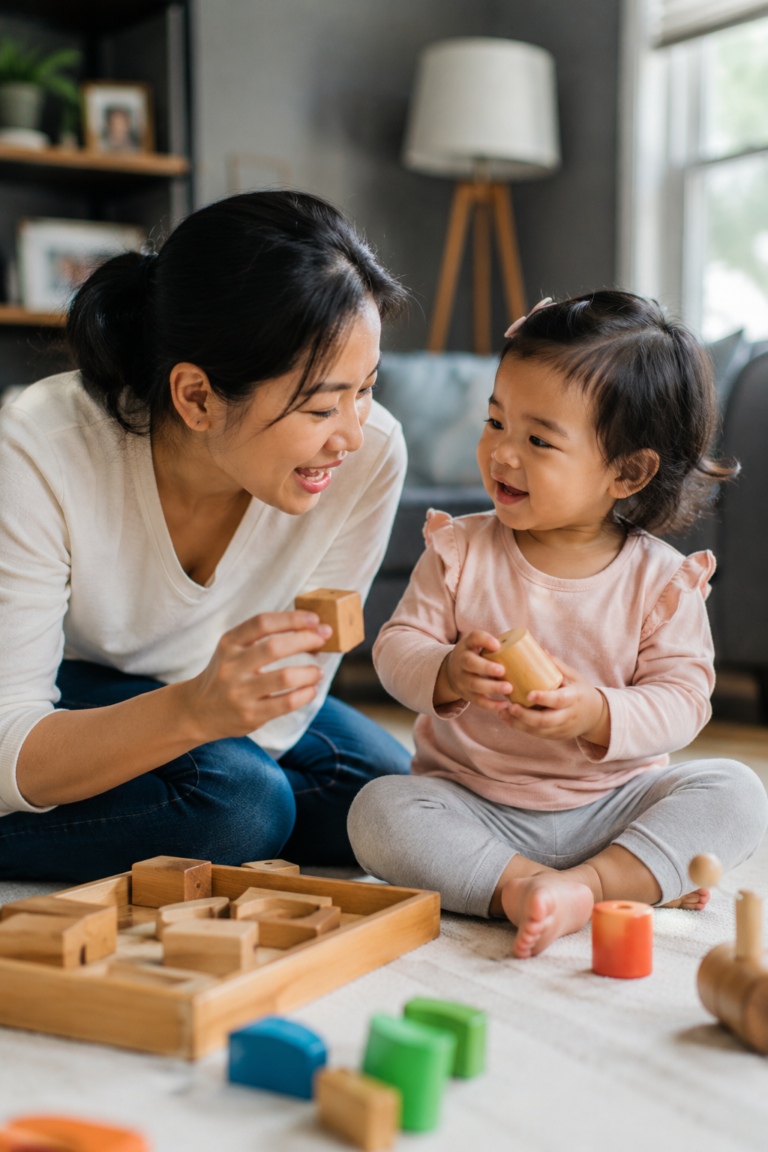
At the same time, parents can gently model short phrases alongside gestures throughout daily routines. For example, if a child points to bubbles, a parent might say, “more bubbles” or “bubbles up.” Repeated exposure helps toddlers begin noticing how words can work together during real interactions.
Why Some Children Struggle to Put Words Together
Language Processing Can Take More Time
Some toddlers need additional time to process and organize language before they can produce phrases independently. Even when they know many individual words, combining them requires more advanced planning and language coordination.
Children must learn word order, meaning relationships, memory sequencing, and speech motor planning all at once. That is a surprisingly complex task for a developing brain. A child who seems “stuck” at single words may actually be working hard behind the scenes on these emerging skills.
Parents sometimes notice long pauses before responses or inconsistent phrase attempts during this stage. These patterns can happen when language processing is still developing and do not automatically mean something is seriously wrong.

Speech Sound Difficulties Can Affect Phrases
Children with articulation or motor speech difficulties sometimes avoid longer utterances because they are harder to coordinate physically. Parents may hear frequent sound omissions, reduced syllables, or unclear attempts that become difficult to understand.
In these situations, speech-language support can help reduce frustration while encouraging communication growth. Therapy often focuses on making communication easier and more successful rather than pressuring children to “perform” verbally.
Temperament and Personality Influence Communication
Parents often compare siblings or peers and worry when communication styles look different. However, temperament can strongly influence how expressive a child appears day to day. One toddler may narrate every activity, while another communicates efficiently with only a few carefully chosen words.
What matters most is whether communication skills continue progressing over time. A quieter child can still have healthy language development if vocabulary, interaction, understanding, and engagement are steadily expanding.
Helping Your Child Learn to Combine Words
Model Short Simple Phrases
Simple combinations like “more snack,” “mommy help,” “go outside,” or “big truck” give toddlers manageable language models they can eventually imitate. Short phrases are often easier to process than longer sentences filled with extra words.
Children learn language best through repetition in meaningful contexts. Hearing the same combinations naturally during meals, bath time, play, and routines helps language patterns become familiar and easier to use independently.
Follow Your Child’s Interests
If a child loves cars, bubbles, animals, or snacks, those interests become excellent opportunities for modeling phrases. A parent might say “fast car,” “more bubbles,” or “baby dog” while actively participating in the activity alongside the child.
Responsive interaction tends to reduce pressure and increase communication confidence. When children feel understood and connected, they are often more willing to experiment with new language forms over time.
Reduce Pressure Around Talking
Instead of focusing on performance, it often helps to prioritize enjoyable back-and-forth interaction. Narrating routines, pausing expectantly, reading together, singing songs, and responding enthusiastically to communication attempts all support language development naturally.
Children typically learn language best in warm, connected environments where communication feels rewarding rather than stressful. Building confidence and connection is often just as important as practicing words themselves.
When Extra Support May Be Helpful
Looking at the Bigger Communication Picture
Some children simply develop phrase combinations later than expected while still making steady progress overall. Others may benefit from early intervention services that provide additional strategies and support during language development. Early support is often gentle, play-based, and family-centered.
Parents do not need to wait until communication challenges become severe before asking questions. Seeking guidance early can provide reassurance, practical tools, and a clearer understanding of a child’s unique communication profile.
Signs It May Be Worth Discussing With a Professional
- Very limited vocabulary growth after 18 to 24 months
- Difficulty understanding simple language
- Minimal attempts to imitate words or sounds
- Frequent frustration during communication
- Loss of previously used words or skills
- Limited social interaction or joint attention
- Speech that is extremely difficult to understand
Early Guidance Can Be Reassuring
Even when therapy is not needed, parents often leave evaluations with practical strategies that make communication easier at home. Understanding how a child learns best can reduce stress and help families feel more confident supporting development naturally.
If support is recommended, early intervention can be highly effective because young children learn communication skills rapidly through everyday interactions and play-based experiences.
FAQ SECTION
Is it normal for my child to know words but not combine them?
Some children focus first on building vocabulary and understanding before combinations emerge. If your child is continuing to learn new words, engage socially, and understand language, this may simply reflect their individual developmental pace.
At what age should toddlers start putting words together?
That said, there is a wide range of normal development. Some children begin slightly earlier, while others need more time before phrase use becomes consistent and spontaneous.
Should I worry if my 2-year-old only uses single words?
If your child has very few words, struggles to understand language, or is not making steady progress over time, discussing concerns with a speech-language pathologist can help provide clarity and guidance.
How can I encourage my toddler to use two-word phrases?
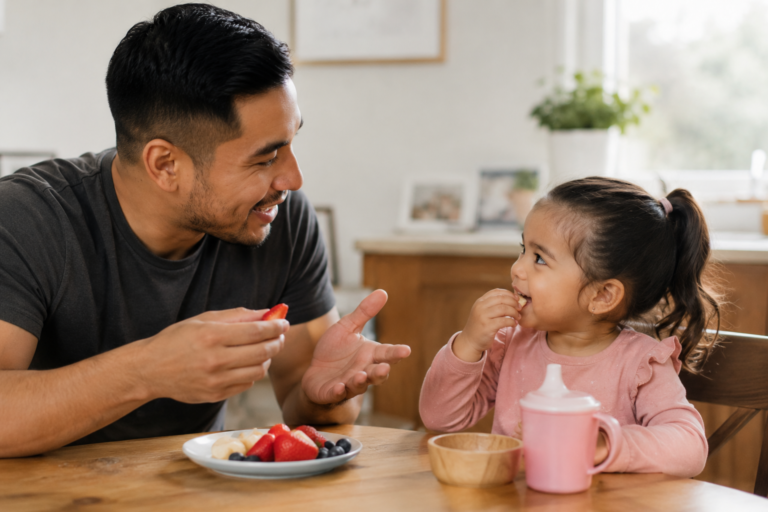
Instead of asking your child to repeat phrases constantly, try narrating play and routines with simple combinations like “big truck,” “more snack,” or “mommy help” throughout the day.
Does using gestures instead of phrases mean there is a problem?
Many toddlers use gestures heavily before verbal combinations become more consistent. Gestures and spoken language often develop together rather than separately.
Can bilingual children take longer to combine words?
What matters most is total communication growth across languages combined. Bilingual exposure does not cause speech delays, and children can successfully learn multiple languages simultaneously.
Not Sure Where Your Child Falls?
Answer a few questions and we’ll tell you whether their development
looks on track — or whether it’s worth talking to an SLP.
A Few Final Thoughts on Early Phrase Development
In many cases, phrase-building develops gradually after children spend time strengthening vocabulary, understanding, social interaction, and speech practice. Small everyday interactions often support communication growth more powerfully than parents realize.
The most helpful approach is usually a balance of observation, encouragement, and support without excessive pressure. Following your child’s lead, modeling language naturally, and creating enjoyable communication opportunities can make a meaningful difference over time.
If concerns continue, reaching out for professional guidance can provide reassurance and practical support. Early communication development is highly individual, and children often make meaningful progress when given responsive, supportive opportunities to connect and communicate.