
The Best Books for Toddler Vocabulary
Many toddlers learn language best through routines and familiar experiences, which is why certain books become favorites that children ask to hear again and again. Repetition may feel simple to adults, but hearing the same words, phrases, and sentence patterns repeatedly helps toddlers strengthen understanding and begin using language more confidently in daily life.
Parents are often surprised to learn that reading does not need to feel perfect or structured to support communication growth. Pausing to point at pictures, labeling objects, making animal sounds, or letting your child turn pages can all become meaningful language-learning moments. Even short reading sessions throughout the day can make a difference over time.
The books below are favorites frequently recommended by speech-language pathologists because they naturally encourage vocabulary growth, engagement, and interaction. Some focus on repetition, some build storytelling skills, and others support social communication, but all of them help create rich language experiences for toddlers and young children.
Why Certain Books Help Toddlers Learn Words Faster
Repetition Builds Early Vocabulary
Toddlers often begin anticipating repeated lines before they can fully say them aloud. You may notice your child smiling, pointing, making sounds, or attempting partial words during familiar sections of a favorite book. Those small responses are important parts of language learning and communication development.
Books like Brown Bear, Brown Bear, What Do You See? and We’re Going on a Bear Hunt are especially effective because toddlers quickly recognize patterns and become active participants in the reading experience rather than passive listeners.
Pictures Support Word Understanding
When parents pause to label pictures, imitate sounds, or describe actions, toddlers hear language used in context. Instead of memorizing isolated words, children begin understanding how words relate to experiences, emotions, routines, and interactions around them.
Books such as First 100 Words and Richard Scarry’s Busy, Busy Town work particularly well for vocabulary expansion because they expose toddlers to a wide variety of objects, people, actions, and descriptive language.
Interactive Reading Encourages Communication
Interactive books naturally invite toddlers to participate through pointing, lifting flaps, making sounds, or finishing familiar phrases. These moments help build attention, turn-taking, and social communication alongside vocabulary development.
Many toddlers stay engaged longer when reading feels playful and active. Even children with shorter attention spans often participate more when books include surprises, repeated actions, or opportunities for movement and anticipation during the story.
Books like Where’s Spot? and Dear Zoo are excellent choices because the lift-the-flap format encourages interaction while reinforcing simple vocabulary and predictable language patterns.
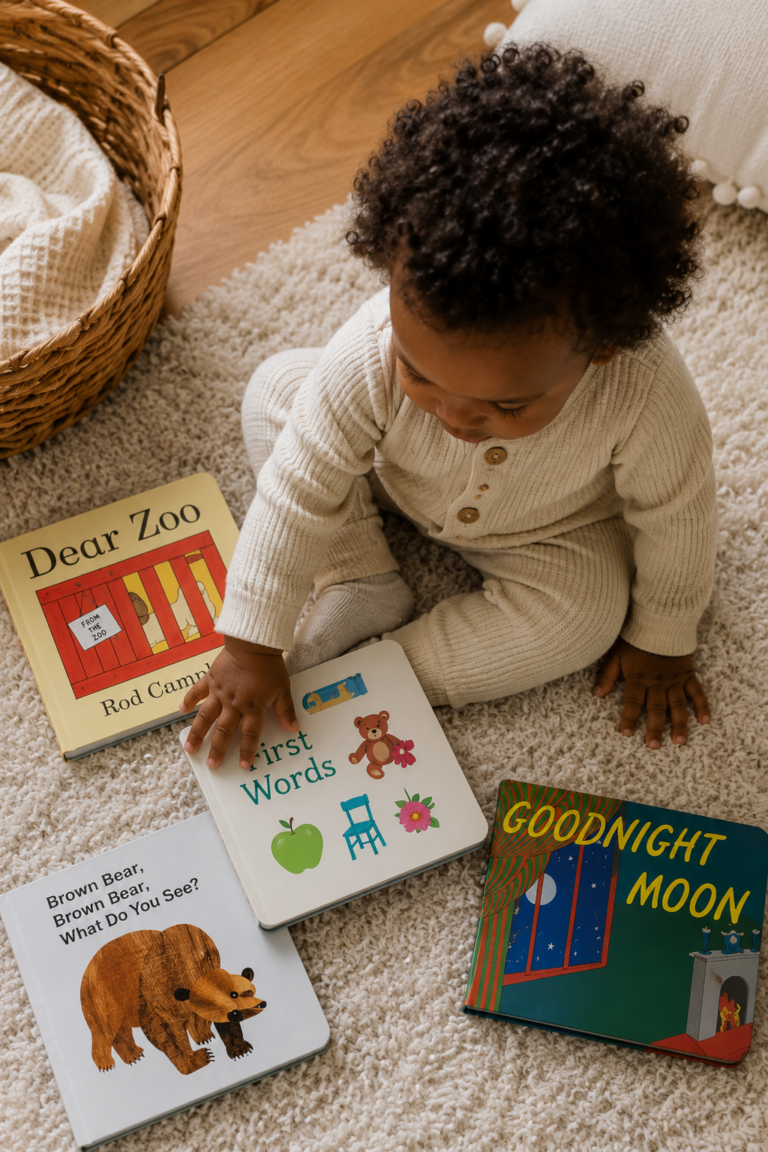
10 Excellent Books for Toddler Vocabulary Development
Books That Support Repetition and Early Words
The Very Hungry Caterpillar supports vocabulary related to food, sequencing, numbers, and daily routines. Many toddlers enjoy hearing the repeated food names while following the caterpillar’s progression through the story.
Goodnight Moon introduces calming everyday vocabulary connected to bedtime routines and familiar household objects. Its slower pace gives toddlers time to process language and notice details within the illustrations.

Books That Encourage Interaction and Participation
Dear Zoo uses repeated sentence patterns alongside animal vocabulary and descriptive words. The predictable structure helps toddlers understand and anticipate language while staying actively involved in the reading experience.
How Do Dinosaurs Say Goodnight? supports early social language by exploring emotions, routines, and behaviors in a playful and engaging way. Many toddlers connect strongly with the exaggerated illustrations and familiar bedtime themes
Books That Build Storytelling and Vocabulary Expansion
The Very Busy Spider helps introduce sequencing, repetitive actions, and simple story structure. Toddlers begin hearing how events connect from beginning to end, which supports both language comprehension and early narrative skills.
We’re Going on a Bear Hunt combines repetition, movement, descriptive language, and storytelling into one highly interactive reading experience. The rhythmic phrases and action-based vocabulary often make it a favorite for toddlers who enjoy active participation.
Making the Most of Reading Time With Toddlers
Follow Your Child's Attention
Toddlers do not always sit still through an entire story, and that is completely normal during early language development. Some children prefer flipping pages quickly, while others focus deeply on one picture or repeated phrase for several minutes at a time.
Following your child’s interest often creates richer communication opportunities than trying to finish every page exactly as written. If your toddler wants to point at animals, repeat a sound effect, or talk about one picture repeatedly, those moments still support meaningful language learning.
Reading together works best when it feels responsive and enjoyable rather than pressured. A short, playful interaction with a book can support vocabulary growth just as effectively as a longer formal reading session.
Want to make story time even more interactive? Learn how to use Dialogic Reading to encourage conversation, vocabulary, and back-and-forth communication while you read together.
Use Everyday Conversation During Reading
Simple comments and questions during reading encourage back-and-forth interaction. You do not need to quiz your child constantly. Instead, describing pictures, reacting emotionally, and pausing for your toddler to participate naturally creates opportunities for communication growth.
Even toddlers who are not yet talking much benefit from hearing rich, responsive language during shared reading experiences. Listening, watching, pointing, and reacting are all important parts of early communication development.
Re-Reading Favorite Books Is Helpful
Parents sometimes worry when toddlers ask for the same books repeatedly, but repetition is actually one of the strongest tools for vocabulary learning. Familiar books help children focus less on understanding the story and more on noticing language patterns and individual words.
Over time, toddlers often begin filling in words, copying sounds, or anticipating favorite parts of stories they know well. These small moments of participation reflect growing language understanding and confidence with communication.
Returning to favorite books also creates emotional connection and predictability, which can make language-learning experiences feel comforting and engaging for young children throughout the toddler years.
Children also learn through repetition in songs and nursery rhymes. Read How Singing Helps Toddlers Learn First Words for more simple ways to build vocabulary every day.
When Reading Challenges May Signal Communication Concerns
Some Toddlers Need Extra Language Support
Many toddlers develop vocabulary at different rates, and variations in communication skills are common during early childhood. Some children are naturally quieter, while others focus more on gestures, sounds, or nonverbal communication before spoken words become more consistent.<br><br>
At the same time, books and shared reading experiences can sometimes highlight areas where a child may benefit from additional support. A toddler who rarely responds to sounds, struggles to engage during interaction, or has difficulty understanding simple language may benefit from further evaluation.<br><br>
Parents often notice communication differences gradually during everyday routines like reading, playtime, or meals. Trusting your observations and discussing concerns early can help families access support when needed without waiting for problems to become more significant.
Signs It May Help to Talk With a Professional
- Limited interest in interaction during books or play
- Very few spoken words by the late toddler years
- Difficulty understanding simple directions
- Loss of previously used words or communication skills
- Limited gestures, pointing, or social engagement
- Frustration related to communication challenges
Early Support Can Make Reading More Enjoyable

Early intervention strategies are often play-based, relationship-focused, and designed to fit naturally into family routines. Reading together frequently becomes one of the easiest and most effective ways to practice language skills at home without adding pressure to daily life.
Most importantly, shared reading should continue feeling warm, connected, and enjoyable regardless of where a child is developmentally. Positive communication experiences matter just as much as the words themselves during the toddler years.
Frequently Asked Questions
What are the best books for toddler vocabulary?
Popular examples include Brown Bear, Brown Bear, What Do You See?, Dear Zoo, and The Very Hungry Caterpillar because they combine repetition, engaging visuals, and simple language that toddlers can process and enjoy repeatedly.
How often should I read to my toddler?
Many toddlers benefit more from short, interactive reading experiences than from trying to sit through long books. Following your child’s attention and keeping reading playful often leads to better engagement and stronger communication opportunities.
Is it okay if my toddler wants the same book every day?
Children often gain confidence from familiar books because they already know what to expect. Over time, you may notice your toddler attempting sounds, gestures, or words connected to favorite parts of the story.
Can books help late talkers?
Parents do not need to focus on testing or correcting their child during reading. Simply labeling pictures, reacting together, and following the child’s interests can support communication growth over time.
Should I ask my toddler lots of questions while reading?
Commenting on pictures, describing actions, making sounds, and pausing for your child to react naturally can create a more relaxed and interactive language-learning environment than constant quizzing.
What if my toddler will not sit still for books?
Keeping reading playful and flexible usually helps toddlers stay more engaged over time. Interactive books, movement-based stories, and short reading sessions are often especially helpful for active children.
Not Sure Where Your Child Falls?
Answer a few questions and we’ll tell you whether their development
looks on track — or whether it’s worth talking to an SLP.
A Few Final Thoughts on Building Toddler Vocabulary Through Books
Reading together creates far more than vocabulary growth during the toddler years. Shared books also support connection, attention, listening, social interaction, and emotional bonding between parents and children.
The best books for toddler vocabulary are often the ones children genuinely enjoy hearing repeatedly. Familiar stories, playful interactions, and responsive conversations help language learning happen naturally throughout everyday routines.
Parents do not need to read perfectly or follow every word exactly as written for books to support communication development. Pausing to talk, laugh, point, and connect during story time is often what matters most for young children.
For more book recommendations and tips for reading with young children, visit Reach Out and Read, a nonprofit organization that promotes early literacy and language development.
Over time, those simple reading moments can become some of the strongest foundations for communication, learning, and connection as toddlers continue developing language and confidence.