
Why SLPs Model Language Instead of Asking Toddlers to Repeat Words
When a toddler is not talking much yet, it is very natural for parents to say things like, “Say ball,” “Can you say more?” or “Say mama.” Parents are usually trying to help, not pressure their child. But in speech therapy, you may notice that SLPs often do something different: they model language for toddlers instead of repeatedly asking them to copy words on command.
Language modeling means the adult says useful words and short phrases during real moments. Instead of turning communication into a quiz, the speech-language pathologist gives the child words that match what they are seeing, doing, feeling, or trying to say. This helps toddlers hear language in a natural, meaningful way.
For many young children, especially late talkers or children who feel unsure about speaking, being asked to repeat can create pressure. Some toddlers shut down, walk away, say “no,” or become quiet. Modeling keeps communication warm and inviting, which is often much better for learning.
This article explains why SLPs model language, why asking toddlers to repeat words is not always the best strategy, and how parents can use simple speech therapy language modeling at home during everyday routines.
Language modeling means the adult says useful words and short phrases during real moments. Instead of turning communication into a quiz, the speech-language pathologist gives the child words that match what they are seeing, doing, feeling, or trying to say. This helps toddlers hear language in a natural, meaningful way.
For many young children, especially late talkers or children who feel unsure about speaking, being asked to repeat can create pressure. Some toddlers shut down, walk away, say “no,” or become quiet. Modeling keeps communication warm and inviting, which is often much better for learning.
This article explains why SLPs model language, why asking toddlers to repeat words is not always the best strategy, and how parents can use simple speech therapy language modeling at home during everyday routines.
Why Language Modeling Helps Toddlers Learn to Talk
Modeling Gives Toddlers Words Without Pressure
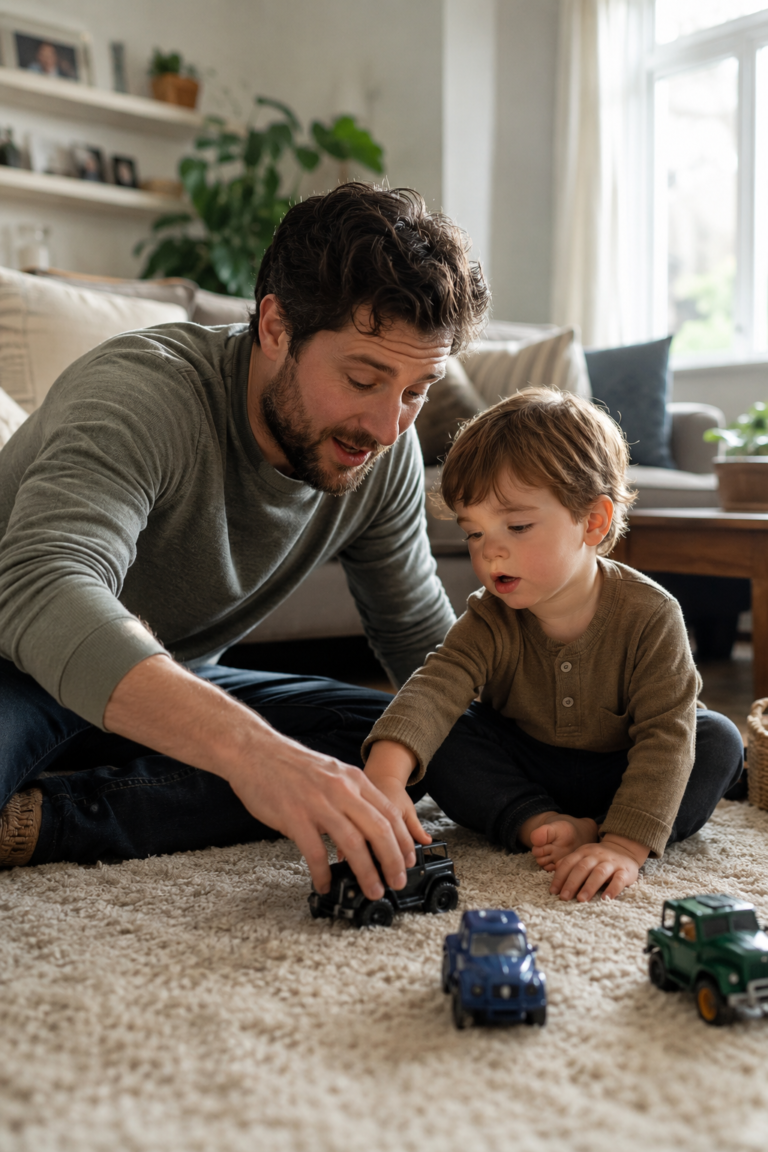
Toddlers learn language best when words are connected to something meaningful. When a child is holding a toy car and an adult says, “Car goes fast,” the word is tied to the child’s attention, play, and interest. That kind of language is easier to understand than a random request to “say car.”
When SLPs model language for toddlers, they are not ignoring speech practice. They are creating repeated chances for the child to hear useful words in a calm way. The child does not have to perform right away, but the language is still being placed right where learning can happen.
This is especially helpful for toddlers who already feel frustrated because they cannot say what they want. Modeling lowers the emotional demand. The child can listen, watch, gesture, vocalize, or try a word when they are ready.
When SLPs model language for toddlers, they are not ignoring speech practice. They are creating repeated chances for the child to hear useful words in a calm way. The child does not have to perform right away, but the language is still being placed right where learning can happen.
This is especially helpful for toddlers who already feel frustrated because they cannot say what they want. Modeling lowers the emotional demand. The child can listen, watch, gesture, vocalize, or try a word when they are ready.
Children Need to Hear Words Many Times
A toddler usually needs to hear a word many times before using it independently. That is one reason SLPs repeat simple words naturally throughout play. They may say, “Up,” “Go up,” “Block up,” and “It fell down,” instead of asking the child to repeat one word over and over.
This repetition is not random. It gives the child a rich language sample with small changes. The toddler hears how words work in different phrases, different actions, and different emotional moments. Over time, this helps build understanding as well as spoken language.
ASHA parent guidance also supports using everyday interactions, clear speech, repeating what the child says, and adding to the child’s message as helpful ways to encourage speech and language development
This repetition is not random. It gives the child a rich language sample with small changes. The toddler hears how words work in different phrases, different actions, and different emotional moments. Over time, this helps build understanding as well as spoken language.
ASHA parent guidance also supports using everyday interactions, clear speech, repeating what the child says, and adding to the child’s message as helpful ways to encourage speech and language development
Modeling Supports Real Communication
The goal of toddler speech therapy is not just to get a child to copy a word once. The bigger goal is helping the child communicate in daily life. A copied word may sound exciting in the moment, but a word used independently during play, meals, or routines is much more powerful.
SLPs model words that toddlers can actually use. These may include words like “more,” “open,” “help,” “go,” “up,” “mine,” “all done,” or “uh-oh.” These words help a child request, protest, comment, and connect with people.
When toddlers learn that words help them do something meaningful, they are more likely to use those words again. Modeling keeps the focus on communication, not just speech sounds.
SLPs model words that toddlers can actually use. These may include words like “more,” “open,” “help,” “go,” “up,” “mine,” “all done,” or “uh-oh.” These words help a child request, protest, comment, and connect with people.
When toddlers learn that words help them do something meaningful, they are more likely to use those words again. Modeling keeps the focus on communication, not just speech sounds.
Why Asking Toddlers to Repeat Words Can Backfire
Repeating on Command Can Feel Like a Test
Many toddlers know when they are being tested. A parent may say, “Say apple,” with the kindest voice in the world, but the child may still feel put on the spot. For some toddlers, that pressure makes speech harder, not easier.
This does not mean parents are doing anything wrong. Asking a child to say a word is one of the most common things loving adults do. The problem is that toddlers often communicate better when the adult joins their world instead of asking them to perform.
SLPs model language because it lets the child stay connected. The adult still provides the word, but the child has room to respond in a way that feels comfortable.
This does not mean parents are doing anything wrong. Asking a child to say a word is one of the most common things loving adults do. The problem is that toddlers often communicate better when the adult joins their world instead of asking them to perform.
SLPs model language because it lets the child stay connected. The adult still provides the word, but the child has room to respond in a way that feels comfortable.
Some Toddlers Stop Trying When Speech Feels Too Hard
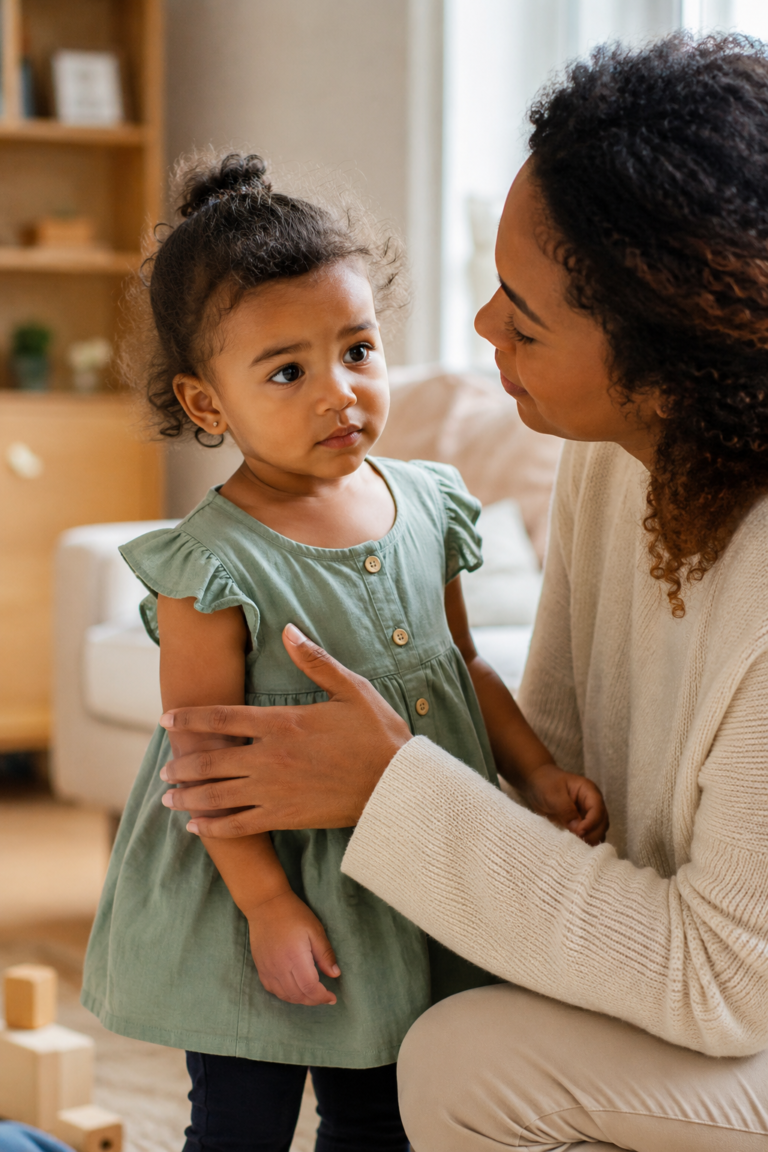
For a toddler with delayed speech, motor speech challenges, limited vocabulary, or reduced confidence, repeating a word may be genuinely difficult. The child may understand the word but not know how to plan the sounds. They may want to say it but cannot get their mouth to cooperate yet.
When adults repeatedly ask for a word the child cannot produce, the child may avoid the interaction. They might look away, cry, change the subject, grab instead of ask, or become quiet. These behaviors are often signs of frustration, not stubbornness.
Modeling protects the child’s willingness to communicate. It says, “Here are the words,” without making the child feel like they failed if they cannot say them yet.
When adults repeatedly ask for a word the child cannot produce, the child may avoid the interaction. They might look away, cry, change the subject, grab instead of ask, or become quiet. These behaviors are often signs of frustration, not stubbornness.
Modeling protects the child’s willingness to communicate. It says, “Here are the words,” without making the child feel like they failed if they cannot say them yet.
Copied Words Do Not Always Become Useful Words
A toddler may repeat “bubble” after five prompts, and that can feel like progress. But SLPs also look at whether the child uses the word later without being told. Independent communication is the skill that matters most for everyday life.
When a child only talks after an adult says “say this,” the child may not learn how to start communication on their own. They may wait for prompts instead of using words, sounds, signs, or gestures to share ideas.
Language modeling gives toddlers a better path toward spontaneous communication. The adult provides the language, pauses, and leaves space for the child to take a turn naturally.
When a child only talks after an adult says “say this,” the child may not learn how to start communication on their own. They may wait for prompts instead of using words, sounds, signs, or gestures to share ideas.
Language modeling gives toddlers a better path toward spontaneous communication. The adult provides the language, pauses, and leaves space for the child to take a turn naturally.
What SLPs Do Instead During Toddler Speech Therapy
SLPs Follow the Child’s Lead
Following the child’s lead means the adult notices what the toddler is interested in and talks about that. If the child is stacking blocks, the SLP talks about blocks. If the child is opening and closing a toy door, the SLP models “open,” “shut,” “knock knock,” and “more door.”
This works because toddlers pay more attention to language that matches their own focus. A child who is excited about bubbles is more likely to notice words like “pop,” “more,” “big bubble,” and “all gone.”
Following the child’s lead does not mean the adult has no plan. A skilled SLP is choosing words carefully, but the session still feels playful and responsive.
This works because toddlers pay more attention to language that matches their own focus. A child who is excited about bubbles is more likely to notice words like “pop,” “more,” “big bubble,” and “all gone.”
Following the child’s lead does not mean the adult has no plan. A skilled SLP is choosing words carefully, but the session still feels playful and responsive.
SLPs Use Short, Repeatable Phrases
When SLPs model language for toddlers, they often use short phrases that are easy to hear and useful to say. Instead of long explanations, they may say, “Go car,” “More bubbles,” “Open box,” or “Doggy sleep.” These phrases give the child language that fits their developmental level.
Short phrases also help toddlers hear the important words. A long sentence like “Would you like me to open the container so we can get the animals out?” may be loving, but it can be hard for a toddler to process. “Open animals” may be much easier.
As the child grows, the adult can expand the language. A child who says “car” might hear, “Fast car.” A child who says “more” might hear, “More bubbles.” This keeps language one small step ahead.
Short phrases also help toddlers hear the important words. A long sentence like “Would you like me to open the container so we can get the animals out?” may be loving, but it can be hard for a toddler to process. “Open animals” may be much easier.
As the child grows, the adult can expand the language. A child who says “car” might hear, “Fast car.” A child who says “more” might hear, “More bubbles.” This keeps language one small step ahead.
SLPs Pause and Wait for Communication
Modeling does not mean adults talk nonstop. One of the most important parts is the pause. After modeling a word or phrase, an SLP may wait quietly, look expectant, hold up an item, or create a natural reason for the child to communicate.
The child might respond with a word, sound, gesture, sign, point, eye gaze, or facial expression. For early communicators, all of these responses matter. Spoken words are important, but they are not the only sign that a child is learning to communicate.
This approach helps toddlers experience communication as a back-and-forth exchange. They learn that their turn matters, even before every word is clear.
The child might respond with a word, sound, gesture, sign, point, eye gaze, or facial expression. For early communicators, all of these responses matter. Spoken words are important, but they are not the only sign that a child is learning to communicate.
This approach helps toddlers experience communication as a back-and-forth exchange. They learn that their turn matters, even before every word is clear.
When to Seek Help or Extra Support
When Modeling Is Helpful but Not Enough
Language modeling is a wonderful strategy, but some toddlers need more support than home strategies alone can provide. That does not mean anything is wrong with your child or that you missed something. It simply means their communication system may need more direct, individualized help.
A speech-language pathologist can look at how your child understands words, uses gestures, plays, imitates actions, makes sounds, and communicates needs. Speech therapy for toddlers is not only about counting words. It is about understanding the whole communication picture.
CDC milestones can help parents notice patterns, but they are not meant to create panic. Milestones are guideposts. If your child is not meeting expected communication skills, it is reasonable to ask questions and get support early.
A speech-language pathologist can look at how your child understands words, uses gestures, plays, imitates actions, makes sounds, and communicates needs. Speech therapy for toddlers is not only about counting words. It is about understanding the whole communication picture.
CDC milestones can help parents notice patterns, but they are not meant to create panic. Milestones are guideposts. If your child is not meeting expected communication skills, it is reasonable to ask questions and get support early.
Signs It May Be Time to Ask About Speech Therapy
It may be time to talk with your pediatrician or contact a speech-language pathologist if you are noticing ongoing concerns with communication, especially when they affect daily routines or connection.
- Your toddler is not using words or uses very few words for their age.
- Your toddler rarely tries to communicate with gestures, sounds, pointing, or eye contact.
- Your toddler seems to understand much less than expected.
- Your toddler becomes very frustrated because they cannot communicate wants or needs.
- Your toddler used to say words and then stopped using them.
- Your toddler does not seem interested in back-and-forth interaction.
- You feel unsure whether your child’s communication is on track.
Getting Support Can Feel Reassuring
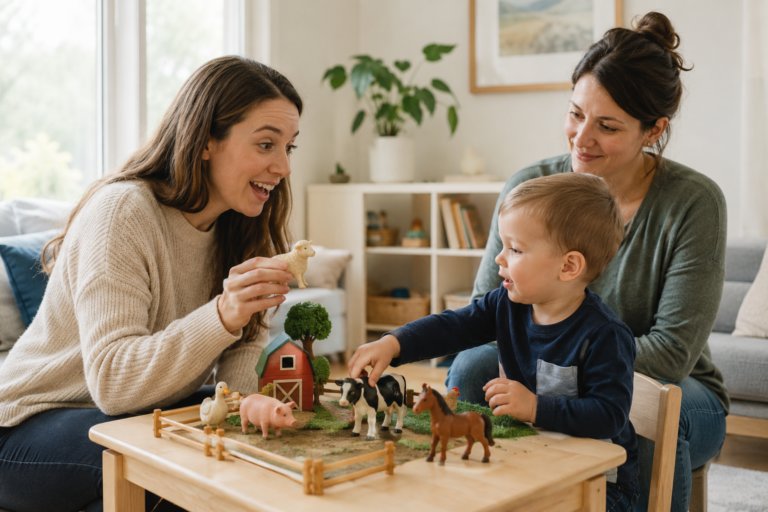
Many parents worry that asking for a speech therapy evaluation means they are overreacting. In reality, an evaluation often brings relief. You can learn what your child is already doing well, what may need support, and what strategies fit your child’s personality.
Early support can also make home life easier. When parents learn how to model language, reduce pressure, build communication opportunities, and respond to early attempts, toddlers often feel more understood.
You do not need to wait until your child is severely delayed to ask for guidance. A calm conversation with a qualified professional can help you decide what next step makes sense.
Early support can also make home life easier. When parents learn how to model language, reduce pressure, build communication opportunities, and respond to early attempts, toddlers often feel more understood.
You do not need to wait until your child is severely delayed to ask for guidance. A calm conversation with a qualified professional can help you decide what next step makes sense.
FAQ: Language Modeling and Toddler Speech
Should I stop asking my toddler to repeat words completely?
Not completely, but it helps to use repetition requests less often. A gentle “Can you say more?” once in a while is different from asking your toddler to repeat words all day long.
Most of the time, modeling is a better first choice. Say the word clearly, connect it to what your child wants or notices, then pause and give them room to respond.
Most of the time, modeling is a better first choice. Say the word clearly, connect it to what your child wants or notices, then pause and give them room to respond.
What should I say instead of “say ball”?
Say the word naturally in the moment. You might say, “Ball,” “Big ball,” “Roll ball,” or “Ball goes bounce,” depending on what your child is doing.
This gives your toddler the word without turning it into a test. Your child still hears the target word, but the interaction stays playful and connected.
This gives your toddler the word without turning it into a test. Your child still hears the target word, but the interaction stays playful and connected.
Will my toddler learn to talk if I do not make them repeat?
Yes, many toddlers learn more naturally when adults model language instead of demanding repetition. Children need to hear words in meaningful situations before they can use them independently.
That said, some children need speech therapy support even with strong home modeling. If progress feels slow or you are worried, an evaluation can help you understand what your child needs.
That said, some children need speech therapy support even with strong home modeling. If progress feels slow or you are worried, an evaluation can help you understand what your child needs.
How many words should I model at a time?
Use short, simple language that is close to your child’s current level. For many toddlers, one to three words at a time is enough, especially during play or daily routines.
For example, instead of saying a long sentence, you might say, “Open box,” “More snack,” or “Car fast.” Clear, simple language is easier for toddlers to process and imitate when they are ready.
For example, instead of saying a long sentence, you might say, “Open box,” “More snack,” or “Car fast.” Clear, simple language is easier for toddlers to process and imitate when they are ready.
What if my toddler only points or grunts?
Pointing and vocalizing are still communication. You can treat those attempts as meaningful while gently adding words for what your child is trying to say.
For example, if your toddler points to crackers and grunts, you can say, “Cracker,” “Want cracker,” or “More cracker.” This shows your child that their message worked while giving them language to use next time.
For example, if your toddler points to crackers and grunts, you can say, “Cracker,” “Want cracker,” or “More cracker.” This shows your child that their message worked while giving them language to use next time.
Is language modeling the same as baby talk?
No, language modeling is not the same as using unclear baby talk. SLPs usually model clear, simple, natural words that toddlers can understand and eventually try themselves.
A warm voice, playful sound effects, and simple phrases are all helpful. The goal is to make speech inviting while still giving your child a clear model.
A warm voice, playful sound effects, and simple phrases are all helpful. The goal is to make speech inviting while still giving your child a clear model.
Not Sure Where Your Child Falls?
Our free speech screener takes less than 3 minutes.
Answer a few questions and we’ll tell you whether their development
looks on track — or whether it’s worth talking to an SLP.
Answer a few questions and we’ll tell you whether their development
looks on track — or whether it’s worth talking to an SLP.
No sign-up required. Takes about 3 minutes.
A Few Final Thoughts on Modeling Language for Toddlers
SLPs model language instead of constantly asking toddlers to repeat because communication grows best in connection. Toddlers need words that match their world, their play, their feelings, and their everyday routines.
Asking a child to repeat is not “bad,” and parents should not feel guilty for doing it. But when repetition becomes the main strategy, some toddlers feel pressured and communicate less. Modeling gives them a gentler way in.
The heart of language modeling is simple: say what your child could say if they had the words. Then pause, watch, and respond warmly to whatever communication they offer.
With time, practice, and the right support when needed, many toddlers become more confident communicators. Small moments like “more bubbles,” “open door,” and “car go” can become the building blocks for real, meaningful language.
Asking a child to repeat is not “bad,” and parents should not feel guilty for doing it. But when repetition becomes the main strategy, some toddlers feel pressured and communicate less. Modeling gives them a gentler way in.
The heart of language modeling is simple: say what your child could say if they had the words. Then pause, watch, and respond warmly to whatever communication they offer.
With time, practice, and the right support when needed, many toddlers become more confident communicators. Small moments like “more bubbles,” “open door,” and “car go” can become the building blocks for real, meaningful language.