
Oral Motor Delays and Speech Development
When parents hear the phrase oral motor delays and speech development, it can sound more serious and confusing than it needs to. Most families simply notice everyday things first, such as messy eating, trouble moving the tongue, unclear speech, drooling, or a child who seems to understand much more than they can say.
Oral motor skills involve how the lips, tongue, jaw, cheeks, and soft palate move and work together. These same structures help children eat, drink, make sounds, shape words, and manage saliva. Speech is not just about “strong mouth muscles,” though. It also depends on hearing, language learning, motor planning, attention, social connection, and practice over time.
Some children with oral motor differences do have speech that is harder to understand. Others may have feeding or chewing concerns but speak clearly. That is why it is important not to assume that every picky eater, messy eater, or late talker has the same type of delay. A speech-language pathologist looks at the whole child, not just the mouth.
In this article, we will walk through what oral motor delays can look like, how they may connect with speech development, when they may point to something more specific, and how families can support communication in a calm, practical way.
Oral motor skills involve how the lips, tongue, jaw, cheeks, and soft palate move and work together. These same structures help children eat, drink, make sounds, shape words, and manage saliva. Speech is not just about “strong mouth muscles,” though. It also depends on hearing, language learning, motor planning, attention, social connection, and practice over time.
Some children with oral motor differences do have speech that is harder to understand. Others may have feeding or chewing concerns but speak clearly. That is why it is important not to assume that every picky eater, messy eater, or late talker has the same type of delay. A speech-language pathologist looks at the whole child, not just the mouth.
In this article, we will walk through what oral motor delays can look like, how they may connect with speech development, when they may point to something more specific, and how families can support communication in a calm, practical way.
Understanding Oral Motor Skills and Speech Development
What Oral Motor Skills Actually Mean
Oral motor skills refer to how the mouth moves for everyday tasks like sucking, chewing, swallowing, drinking, smiling, blowing, babbling, and talking. These movements involve coordination, timing, range of motion, and sensory awareness. A child’s lips, tongue, jaw, and cheeks need to work together smoothly, especially as speech becomes more complex.
For speech, children must learn how to place their tongue, lips, and jaw in just the right position for different sounds. A simple sound like “m” uses the lips, while sounds like “t,” “d,” and “n” use the tongue tip. As children grow, they learn to move from one sound to another quickly enough to produce syllables, words, and sentences.
This is why oral motor delays and speech development can be connected, but the connection is not always simple. A child may have the ability to move the mouth during eating but still struggle to coordinate those movements for speech. Another child may have feeding challenges without a major speech delay. Careful evaluation matters.
For speech, children must learn how to place their tongue, lips, and jaw in just the right position for different sounds. A simple sound like “m” uses the lips, while sounds like “t,” “d,” and “n” use the tongue tip. As children grow, they learn to move from one sound to another quickly enough to produce syllables, words, and sentences.
This is why oral motor delays and speech development can be connected, but the connection is not always simple. A child may have the ability to move the mouth during eating but still struggle to coordinate those movements for speech. Another child may have feeding challenges without a major speech delay. Careful evaluation matters.
Why Speech Is More Than Mouth Strength
Many parents are told that their child needs to “strengthen the mouth muscles,” but speech development is usually more about coordination than strength alone. Most children do not need strong lips or a strong tongue to talk clearly. They need accurate movement, good timing, and the ability to plan speech movements in the right sequence.
For example, a child may be able to stick out their tongue or blow bubbles, but still have difficulty saying words clearly. That is because non-speech movements are not the same as speech movements. Talking requires the brain and mouth to work together very quickly while also choosing words, using grammar, listening, and interacting with another person.
This distinction is important because speech therapy should match the child’s actual needs. Some children benefit from direct speech sound practice. Others need support with motor planning, feeding, sensory comfort, language development, or overall communication. A good therapy plan is specific, not one-size-fits-all.
For example, a child may be able to stick out their tongue or blow bubbles, but still have difficulty saying words clearly. That is because non-speech movements are not the same as speech movements. Talking requires the brain and mouth to work together very quickly while also choosing words, using grammar, listening, and interacting with another person.
This distinction is important because speech therapy should match the child’s actual needs. Some children benefit from direct speech sound practice. Others need support with motor planning, feeding, sensory comfort, language development, or overall communication. A good therapy plan is specific, not one-size-fits-all.
How Oral Motor Delays May Show Up at Home
Parents may notice oral motor concerns during meals before they notice them during speech. A child may have trouble chewing tougher textures, pocket food in the cheeks, gag often, drool beyond the expected age, or seem unusually sensitive to certain foods. Some children may prefer soft foods because chewing requires too much coordination or effort.
Speech-related signs can look different. A child may have limited babbling, unclear sounds, difficulty imitating mouth movements, trouble moving from one sound to another, or speech that becomes less clear as words get longer. Some children use mostly vowels, leave off many consonants, or seem frustrated because people cannot understand them.
These signs do not automatically mean something serious is happening. Children develop at different rates, and many speech patterns improve with time and support. Still, when feeding, drooling, speech clarity, and communication concerns overlap, it is reasonable to ask for a speech-language evaluation.
Speech-related signs can look different. A child may have limited babbling, unclear sounds, difficulty imitating mouth movements, trouble moving from one sound to another, or speech that becomes less clear as words get longer. Some children use mostly vowels, leave off many consonants, or seem frustrated because people cannot understand them.
These signs do not automatically mean something serious is happening. Children develop at different rates, and many speech patterns improve with time and support. Still, when feeding, drooling, speech clarity, and communication concerns overlap, it is reasonable to ask for a speech-language evaluation.

How Oral Motor Delays Can Affect Speech Clarity
When Sounds Are Hard to Form
Clear speech depends on precise placement. To make different sounds, children learn where the tongue should touch, when the lips should close, how the jaw should move, and how airflow should be directed. If a child has difficulty coordinating these movements, speech may sound unclear even when they are trying hard.
Some oral motor differences may affect specific sounds. A child who has trouble lifting the tongue tip may have difficulty with sounds like “t,” “d,” “n,” or “l.” A child who has trouble rounding the lips may struggle with sounds like “w,” “oo,” or “sh.” These patterns can vary, and they should be interpreted by looking at the child’s full speech system.
It is also important to remember that many speech sound errors are developmentally common. Young children often simplify words while they are still learning. The concern grows when errors are unusual for the child’s age, speech is very hard to understand, progress is slow, or the child becomes frustrated when communicating.
Some oral motor differences may affect specific sounds. A child who has trouble lifting the tongue tip may have difficulty with sounds like “t,” “d,” “n,” or “l.” A child who has trouble rounding the lips may struggle with sounds like “w,” “oo,” or “sh.” These patterns can vary, and they should be interpreted by looking at the child’s full speech system.
It is also important to remember that many speech sound errors are developmentally common. Young children often simplify words while they are still learning. The concern grows when errors are unusual for the child’s age, speech is very hard to understand, progress is slow, or the child becomes frustrated when communicating.

When Motor Planning May Be Part of the Picture
Sometimes a child’s mouth muscles are not weak, but the brain has trouble planning and sequencing the movements needed for speech. This can happen in motor speech disorders, including childhood apraxia of speech. In childhood apraxia of speech, children may have difficulty coordinating lips, jaw, and tongue movements for speech even though the muscles themselves are not paralyzed or weak.
Parents may notice that a child says a word one way one day and differently the next. Longer words may be harder than short words. A child may appear to search with their mouth, struggle to imitate sounds, or become less clear when trying to say more. These signs do not confirm a diagnosis by themselves, but they do tell us that a closer look is needed.
A speech-language pathologist may assess speech sound patterns, oral structure and movement, imitation, syllable shapes, prosody, and how the child responds to cues. The goal is not to label a child quickly. The goal is to understand what kind of support will help the child communicate more successfully.
Parents may notice that a child says a word one way one day and differently the next. Longer words may be harder than short words. A child may appear to search with their mouth, struggle to imitate sounds, or become less clear when trying to say more. These signs do not confirm a diagnosis by themselves, but they do tell us that a closer look is needed.
A speech-language pathologist may assess speech sound patterns, oral structure and movement, imitation, syllable shapes, prosody, and how the child responds to cues. The goal is not to label a child quickly. The goal is to understand what kind of support will help the child communicate more successfully.
When Feeding and Speech Concerns Overlap
Feeding and speech use many of the same body parts, but they do not develop in exactly the same way. Chewing a cracker and saying a word are different motor tasks. Still, feeding concerns can give helpful clues about how a child manages movement, sensation, strength, endurance, and coordination around the mouth.
A child who struggles with chewing, swallowing, cup drinking, or moving food around the mouth may need support from an SLP, occupational therapist, feeding therapist, pediatrician, or a team approach. Feeding concerns should be taken seriously, especially if a child coughs, chokes, loses weight, avoids many textures, or has stressful meals.
When feeding and speech concerns appear together, therapy may need to address both areas thoughtfully. Speech goals should support communication, while feeding goals should support safety, comfort, nutrition, and family routines. Families should not be left feeling blamed for either concern.
A child who struggles with chewing, swallowing, cup drinking, or moving food around the mouth may need support from an SLP, occupational therapist, feeding therapist, pediatrician, or a team approach. Feeding concerns should be taken seriously, especially if a child coughs, chokes, loses weight, avoids many textures, or has stressful meals.
When feeding and speech concerns appear together, therapy may need to address both areas thoughtfully. Speech goals should support communication, while feeding goals should support safety, comfort, nutrition, and family routines. Families should not be left feeling blamed for either concern.
Supporting a Child With Oral Motor Delays and Speech Development
What Speech Therapy May Look Like
Speech therapy for oral motor delays and speech development should be based on a careful evaluation. An SLP may look at speech sounds, language skills, oral structures, movement patterns, feeding history, hearing history, and how the child communicates during play. ASHA describes speech sound assessment as including multiple parts, such as oral mechanism examination, speech sound production, and broader communication factors.
Therapy may include practicing speech sounds in meaningful words, using cues to help the child feel where the tongue or lips go, building syllable shapes, increasing word attempts, or supporting clearer communication through gestures, signs, pictures, or AAC when needed. The best therapy is active, functional, and connected to real communication.
For children with motor planning needs, therapy may involve repeated practice with carefully chosen sounds and words. For children with feeding-related oral motor concerns, therapy may focus on safe eating skills and comfort with textures. For children with language delays, the plan may focus more on understanding, words, play, and interaction.
Therapy may include practicing speech sounds in meaningful words, using cues to help the child feel where the tongue or lips go, building syllable shapes, increasing word attempts, or supporting clearer communication through gestures, signs, pictures, or AAC when needed. The best therapy is active, functional, and connected to real communication.
For children with motor planning needs, therapy may involve repeated practice with carefully chosen sounds and words. For children with feeding-related oral motor concerns, therapy may focus on safe eating skills and comfort with textures. For children with language delays, the plan may focus more on understanding, words, play, and interaction.
What Parents Can Do During Everyday Routines
Parents do not need to turn the house into a therapy clinic. Children learn communication best inside warm, repeated routines. Mealtime, bath time, dressing, story time, car rides, and play all give children natural chances to watch your face, hear words, copy sounds, make choices, and connect meaning with communication.
Instead of asking a child to repeat words all day, try modeling simple, useful words during real moments. Say “up” when lifting them, “more” when offering another bite, “open” when opening a container, or “bye” when someone leaves. Pause gently and give your child time to respond with a sound, look, gesture, sign, or word.
For speech clarity, it can help to slow your own speech slightly and model words clearly without pressuring your child. If your child says a word unclearly, repeat it back naturally the correct way. For example, if your child says “tat” for “cat,” you might say, “Yes, cat. The cat is sleeping.” This keeps the interaction positive.
Instead of asking a child to repeat words all day, try modeling simple, useful words during real moments. Say “up” when lifting them, “more” when offering another bite, “open” when opening a container, or “bye” when someone leaves. Pause gently and give your child time to respond with a sound, look, gesture, sign, or word.
For speech clarity, it can help to slow your own speech slightly and model words clearly without pressuring your child. If your child says a word unclearly, repeat it back naturally the correct way. For example, if your child says “tat” for “cat,” you might say, “Yes, cat. The cat is sleeping.” This keeps the interaction positive.
Why Early Support Can Be Helpful
Early support does not mean something is wrong with your child. It means the adults around your child are paying attention and giving communication the best chance to grow. The CDC describes developmental milestones as skills children reach in how they play, learn, speak, act, and move, while also recognizing that children develop over time.
When parents seek help early, they often get clearer answers. Sometimes they learn that development is within a broad expected range. Sometimes they learn simple strategies to use at home. Sometimes therapy begins, and the child receives support before frustration becomes a bigger part of communication.
The most helpful mindset is curiosity, not panic. Oral motor delays and speech development can look different from child to child. A thoughtful evaluation can help separate normal variation from concerns that need support, while giving families a plan that feels practical and kind.
When parents seek help early, they often get clearer answers. Sometimes they learn that development is within a broad expected range. Sometimes they learn simple strategies to use at home. Sometimes therapy begins, and the child receives support before frustration becomes a bigger part of communication.
The most helpful mindset is curiosity, not panic. Oral motor delays and speech development can look different from child to child. A thoughtful evaluation can help separate normal variation from concerns that need support, while giving families a plan that feels practical and kind.
When to Seek Help for Oral Motor Delays and Speech Development
rusting Your Parent Instinct Without Panicking
Parents are often the first to notice when something about speech, feeding, or mouth movement feels harder than expected. You may not know the exact term, but you know your child. If meals feel stressful, speech is very unclear, or your child seems frustrated trying to communicate, it is okay to ask questions.
A speech-language pathologist can help determine whether oral motor skills are affecting speech development, feeding, or both. A pediatrician can also help decide whether hearing testing, developmental screening, ENT care, feeding support, or another referral is needed. Hearing should always be considered when speech or language is delayed, because hearing differences can affect how children learn sounds and words.
Seeking help does not mean committing to years of therapy. Sometimes an evaluation gives reassurance and home strategies. Sometimes it opens the door to early intervention. Either way, getting informed support is usually better than waiting and worrying alone.
A speech-language pathologist can help determine whether oral motor skills are affecting speech development, feeding, or both. A pediatrician can also help decide whether hearing testing, developmental screening, ENT care, feeding support, or another referral is needed. Hearing should always be considered when speech or language is delayed, because hearing differences can affect how children learn sounds and words.
Seeking help does not mean committing to years of therapy. Sometimes an evaluation gives reassurance and home strategies. Sometimes it opens the door to early intervention. Either way, getting informed support is usually better than waiting and worrying alone.
Signs That Are Worth Discussing With a Professional
The following signs do not all mean the same thing, and one sign by itself may not tell the whole story. Still, they are good reasons to check in with your pediatrician or a speech-language pathologist.
- Your child is very hard to understand compared with other children the same age.
- Your child has limited babbling, few speech sounds, or very few word attempts.
- Your child seems to understand well but cannot coordinate sounds or words clearly.
- Your child has ongoing drooling beyond what seems typical for their age.
- Your child has trouble chewing, moving food around the mouth, or managing textures.
- Your child coughs, chokes, gags often, or seems distressed during meals.
- Your child’s speech sounds inconsistent, especially when words get longer.
- Your child avoids talking, becomes frustrated, or relies heavily on others to interpret.
- Your child has a history of developmental, neurological, feeding, hearing, or medical concerns.
What a Supportive Evaluation Can Provide
A supportive evaluation should feel like someone is helping you understand your child, not judging your parenting. The SLP may observe play, listen to speech, check how your child uses the lips, tongue, jaw, and palate, ask about feeding, and look at how your child communicates wants, needs, ideas, and feelings.
The results should explain what your child is doing well, what seems difficult, and what the next steps may be. That might include therapy, home practice, monitoring, referrals, or a combination of supports. Good recommendations should be realistic for your family and meaningful for your child’s daily life.
Most importantly, support should protect your child’s confidence. Children communicate for connection first. Clearer speech is important, but so is helping your child feel heard, understood, and successful while those skills are still growing.
The results should explain what your child is doing well, what seems difficult, and what the next steps may be. That might include therapy, home practice, monitoring, referrals, or a combination of supports. Good recommendations should be realistic for your family and meaningful for your child’s daily life.
Most importantly, support should protect your child’s confidence. Children communicate for connection first. Clearer speech is important, but so is helping your child feel heard, understood, and successful while those skills are still growing.
Frequently Asked Questions
Can oral motor delays cause speech delay?
Yes, oral motor delays can contribute to speech delay or unclear speech in some children. If a child has trouble coordinating the lips, tongue, jaw, or cheeks, they may have difficulty forming certain sounds or moving smoothly between sounds.
However, oral motor delays are only one possible reason for speech difficulty. Speech development can also be affected by hearing, language delay, motor planning, developmental differences, and limited speech sound practice. An evaluation helps clarify what is actually going on.
However, oral motor delays are only one possible reason for speech difficulty. Speech development can also be affected by hearing, language delay, motor planning, developmental differences, and limited speech sound practice. An evaluation helps clarify what is actually going on.
Are oral motor delays the same as childhood apraxia of speech?
No, oral motor delays and childhood apraxia of speech are not the same thing. Oral motor delay is a broad description of difficulty using the mouth muscles or structures for tasks like feeding, sound production, or saliva control.
Childhood apraxia of speech is a specific motor speech disorder involving difficulty planning and sequencing speech movements. A child with apraxia may not have weak muscles, but may still struggle to coordinate speech clearly and consistently.
Childhood apraxia of speech is a specific motor speech disorder involving difficulty planning and sequencing speech movements. A child with apraxia may not have weak muscles, but may still struggle to coordinate speech clearly and consistently.
Does my child need oral motor exercises to talk better?
Not always. Some children benefit from activities that support awareness, feeding, or specific movement needs, but speech usually improves best through speech-based practice that targets real sounds, syllables, and words.
Blowing, chewing tools, or tongue exercises do not automatically improve talking for every child. The right approach depends on why the child is struggling. That is why individualized guidance from an SLP is so helpful.
Blowing, chewing tools, or tongue exercises do not automatically improve talking for every child. The right approach depends on why the child is struggling. That is why individualized guidance from an SLP is so helpful.
Can feeding problems be related to speech development?
Yes, feeding problems can sometimes be related to speech development because feeding and speech use many of the same oral structures. A child who has trouble chewing, managing textures, or moving food around the mouth may also show signs of oral motor coordination challenges.
Still, feeding and speech are different skills. A child can have feeding concerns without a major speech delay, or speech concerns without feeding difficulty. When both are present, it is wise to discuss them together during an evaluation.
Still, feeding and speech are different skills. A child can have feeding concerns without a major speech delay, or speech concerns without feeding difficulty. When both are present, it is wise to discuss them together during an evaluation.
What age should I worry about unclear speech?
You should ask for guidance whenever your child’s speech is very hard to understand, not improving, or causing frustration. While some unclear speech is expected in toddlers and preschoolers, children should gradually become easier to understand as they grow.
It is also worth seeking help if your child has very few sounds, limited babbling, feeding concerns, or inconsistent speech patterns. You do not need to wait until school age to ask for support.
It is also worth seeking help if your child has very few sounds, limited babbling, feeding concerns, or inconsistent speech patterns. You do not need to wait until school age to ask for support.
Can speech therapy help oral motor speech difficulties?
Yes, speech therapy can help many children with oral motor speech difficulties. Therapy may focus on speech sound placement, motor planning, clearer word shapes, feeding support, or functional communication, depending on the child’s needs.
The most effective plan is based on evaluation, not guesswork. A speech-language pathologist can help identify whether the concern is mainly speech sound development, oral motor coordination, motor planning, language delay, feeding, or a combination.
The most effective plan is based on evaluation, not guesswork. A speech-language pathologist can help identify whether the concern is mainly speech sound development, oral motor coordination, motor planning, language delay, feeding, or a combination.
Not Sure Where Your Child Falls?
Our free speech screener takes less than 3 minutes.
Answer a few questions and we’ll tell you whether their development
looks on track — or whether it’s worth talking to an SLP.
Answer a few questions and we’ll tell you whether their development
looks on track — or whether it’s worth talking to an SLP.
No sign-up required. Takes about 3 minutes.
A Few Final Thoughts on Oral Motor Delays and Speech Development
Oral motor delays and speech development can feel overwhelming at first, especially when you are trying to understand feeding, speech clarity, drooling, and communication all at once. The good news is that you do not have to figure it out alone.
Some children need direct speech support. Some need feeding help. Some need language strategies, hearing testing, motor planning support, or a combination of services. The most helpful next step is not guessing the label. It is understanding your child’s unique pattern.
As a parent, your role is not to become a therapist overnight. Your role is to notice, connect, model, encourage, and ask for help when something does not feel right. Warm daily interaction matters more than perfect practice.
With the right support, many children make meaningful progress in speech clarity, comfort, confidence, and communication. A calm evaluation can give your family answers, direction, and practical ways to help your child feel understood. Image Placement: Conclusion Section
SEO File Name: child-communication-confidence-oral-motor-support.webp
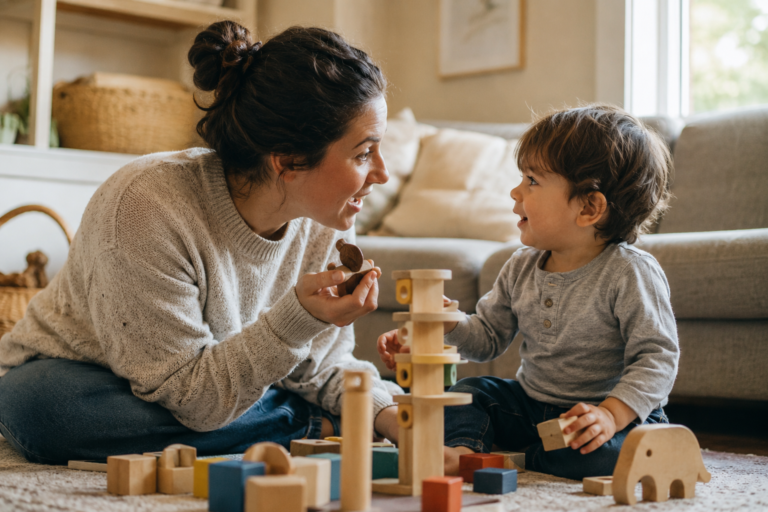
Alt Text: Smiling child communicating with parent after support for oral motor delays and speech development
AI Image Prompt: Emotional realistic editorial parenting photo of a smiling young child communicating with a parent during relaxed play at home, warm daylight, close connection, hopeful supportive mood, natural expressions, no text overlay, no logos
Some children need direct speech support. Some need feeding help. Some need language strategies, hearing testing, motor planning support, or a combination of services. The most helpful next step is not guessing the label. It is understanding your child’s unique pattern.
As a parent, your role is not to become a therapist overnight. Your role is to notice, connect, model, encourage, and ask for help when something does not feel right. Warm daily interaction matters more than perfect practice.
With the right support, many children make meaningful progress in speech clarity, comfort, confidence, and communication. A calm evaluation can give your family answers, direction, and practical ways to help your child feel understood. Image Placement: Conclusion Section
SEO File Name: child-communication-confidence-oral-motor-support.webp
Alt Text: Smiling child communicating with parent after support for oral motor delays and speech development
AI Image Prompt: Emotional realistic editorial parenting photo of a smiling young child communicating with a parent during relaxed play at home, warm daylight, close connection, hopeful supportive mood, natural expressions, no text overlay, no logos