
Low-Tech vs High-Tech AAC: What Parents Should Know
AAC stands for augmentative and alternative communication, which simply means communication supports that help a child express themselves when speech alone is not enough. Some children use AAC while they are learning to talk, some use it along with spoken words, and some may rely on AAC as their main way to communicate. AAC can support children with autism, motor speech challenges, developmental delays, complex communication needs, or unclear speech.
The most important thing to know is that low-tech AAC and high-tech AAC are not in competition with each other. One is not automatically better, more advanced, or more appropriate than the other. Many children benefit from using both, depending on the setting, the activity, their energy level, and what they are trying to say.
This parent-friendly guide explains the difference between low-tech and high-tech AAC, how each type can support communication, and what families should consider when choosing AAC tools for a child. The goal is not to make AAC feel complicated, but to help you feel more confident, informed, and ready to support your child’s voice in everyday life.
Understanding Low-Tech vs High-Tech AAC
What Low-Tech AAC Means
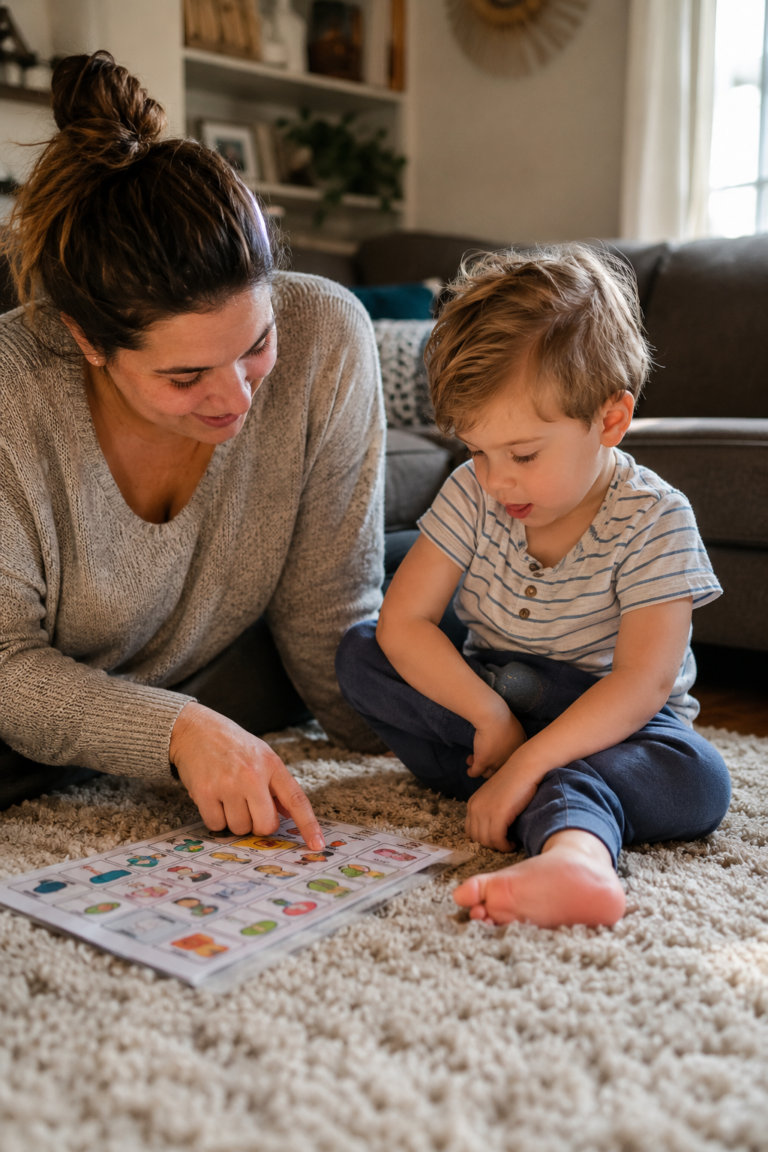
Low-tech AAC usually means communication supports that do not need batteries, charging, Wi-Fi, or electronic speech output. These tools may include picture cards, communication boards, communication books, objects, written words, visual schedules, gestures, and signs. They can be simple, flexible, and easy to bring into daily routines.
A low-tech AAC system might be as simple as a small board with pictures for “more,” “help,” “stop,” “go,” “eat,” and “drink.” For another child, it may be a larger communication book with many pages of words and pictures. The best low-tech AAC is not necessarily the prettiest or most detailed system; it is the one the child can access and use meaningfully.
Parents often appreciate low-tech AAC because it can be introduced gently and used in many real-life moments. A picture board can go to the park, sit on the kitchen counter, travel in a diaper bag, or stay near a child’s favorite toys. Low-tech tools can also be helpful when a child is tired, overwhelmed, outside, in water play, or away from a device.
What High-Tech AAC Means
High-tech AAC can be powerful because it gives a child a voice that can travel across people and places. A child may use it to request, comment, ask questions, answer others, share feelings, protest, tell a story, or participate in school and family routines. For some children, hearing the device speak words may also support language learning because the system models words in a clear and consistent way.
Still, high-tech AAC is not magic by itself. Children need patient modeling, practice, access to useful vocabulary, and adults who treat the device as real communication rather than a quiz tool. A tablet or speech-generating device works best when family members, therapists, teachers, and caregivers learn how to use it naturally during everyday interactions.
Why Many Children Need Both
A child may use a high-tech AAC device during therapy, school, or conversation, but rely on a low-tech picture board during bath time, outside play, or moments when the device is charging. Another child may begin with low-tech supports while the family and speech-language pathologist explore whether a more robust high-tech system would be helpful. Both options can support the same larger goal: giving the child access to communication.
Thinking in terms of “communication access” can take pressure off the decision. Instead of asking which AAC tool is best in every situation, it may be more helpful to ask what your child needs in this specific moment. Sometimes that answer is a picture. Sometimes it is a device. Sometimes it is a gesture, sign, object, or written choice.
How AAC Supports Real Communication
AAC Is More Than Requesting
A strong AAC approach gives children access to meaningful language, not just a few basic wants. A child who can only choose “cookie” or “juice” may become frustrated when they want to say “I don’t like that,” “come here,” “that’s funny,” or “I’m scared.” Low-tech and high-tech systems can both be designed to support a wider range of communication functions.
This is where adult modeling matters. Instead of only asking a child to “find” a word, parents and therapists can use AAC themselves during everyday play and routines. For example, an adult might point to “go” before rolling a car, touch “more” during bubbles, or model “stop” when the child turns away. This shows the child that AAC is for real messages, not just correct answers.

AAC Does Not Mean Giving Up on Speech
Many children use AAC alongside spoken words. A toddler may say part of a word while pointing to a picture. A preschooler may use a device for longer messages while still speaking short phrases. A child with motor speech challenges may use AAC when they are tired or when unfamiliar listeners cannot understand them. Communication does not have to be all-or-nothing.
When children have a reliable way to express themselves, they may feel less pressure and frustration around talking. AAC can reduce the need for guessing games and help adults respond to the child’s message more clearly. For many children, feeling understood is an important part of building confidence, connection, and participation.
AAC Can Support Language Growth
For example, when a parent models “open” on a communication board while opening a snack, the child sees and hears how that word works in a real situation. When a therapist models “want more bubbles” on a high-tech AAC device, the child gets a clear example of how words can be combined. These small moments can add up over time.
Language learning still takes time, repetition, and meaningful interaction. A child does not need to use AAC perfectly for it to be helpful. Exploring buttons, pointing to pictures, watching adults model, and using one word at a time can all be part of the learning process. The goal is steady communication growth, not instant mastery.
Choosing Between Low-Tech and High-Tech AAC
Start With Your Child’s Communication Needs
Choosing AAC should begin with your child, not with the tool. A speech-language pathologist will usually look at how your child currently communicates, what they understand, what they try to express, how they use their hands and eyes, and what situations are hardest for them. The goal is to match the system to the child’s real communication needs.
Some children need a simple low-tech system to reduce frustration during everyday routines. Others need a high-tech AAC system with a larger vocabulary so they can say more across settings. Some children may need a combination because their access, attention, sensory needs, or motor skills change throughout the day.
Parents bring important insight to this process because they know what communication looks like at home. You may notice that your child communicates best during movement, struggles during transitions, gets frustrated when choices are limited, or understands far more than they can say. Those observations help guide thoughtful AAC decisions.
Think About Access and Daily Life
Low-tech AAC can be easier to place around the home and use quickly in routines. High-tech AAC can offer a larger vocabulary and spoken output, but it may require charging, programming, protection, training, and a plan for repair or backup. These practical details matter because children need communication all day, not only during therapy sessions.
It is also helpful to think about communication partners. Parents, grandparents, siblings, teachers, babysitters, and therapists may all need to learn how to respond to AAC. A child’s system becomes more meaningful when the people around them slow down, notice attempts, model language, and treat every communication attempt as valuable.
Use AAC as a Team Decision
Occupational therapists may also support access if a child has motor, sensory, or positioning needs. Teachers can help AAC become part of classroom routines. Families can share what works at home and what feels difficult. When everyone communicates with each other, the child is more likely to receive consistent support across daily life.
AAC may need to change over time, and that is not a failure. A child may start with a few picture choices, move to a communication book, add a high-tech device, or use different tools in different settings. The best AAC plan grows with the child and respects communication as a developing skill.
When to Seek Help With AAC
Getting Support Does Not Mean Something Is Wrong
A speech-language pathologist can help determine whether low-tech AAC, high-tech AAC, or a combination of supports may be appropriate. They can also help you understand how to introduce AAC without turning every moment into practice or pressure. AAC should feel useful, respectful, and connected to real life.
It is especially helpful to seek support when your child seems frustrated, has limited spoken words, is difficult for others to understand, or has more to say than they can express. You do not need to wait until communication becomes very hard. Early support can help children build confidence and reduce daily stress for the whole family.
Signs Your Child May Benefit From AAC Support
- Your child has few spoken words or is not yet using words consistently.
- Your child understands more than they can express.
- Your child becomes frustrated when trying to communicate wants, needs, feelings, or ideas.
- Your child uses gestures, pulling, crying, or leading adults by the hand because words are difficult.
- Your child’s speech is hard for familiar or unfamiliar people to understand.
- Your child loses words or communication skills they previously used.
- Your child has autism, childhood apraxia of speech, motor challenges, developmental delays, or complex communication needs.
- Your child uses some AAC already, but the system feels too limited or is not being used consistently.
What Parents Can Do Next

While you are waiting for support, you can begin noticing what your child is already trying to communicate. Watch for gestures, facial expressions, sounds, pointing, reaching, body movement, and moments of frustration. These are communication clues, and they can help guide the AAC process.
Most importantly, keep responding to your child as a communicator. Whether they use a word, sign, picture, device, gesture, or sound, their message matters. AAC works best when children feel that their communication is noticed, respected, and worth listening to.
Frequently Asked Questions
Is low-tech AAC better than high-tech AAC?
Many children benefit from both. A low-tech board may be perfect during outdoor play, while a high-tech device may help the child say more complex messages at home, therapy, or school.
Will AAC stop my child from talking?
Many children use AAC and speech together. Some children may say sounds or words while pointing to pictures, and others may use a device for longer messages while still developing spoken language.
When should a child start using AAC?
Early AAC can be especially helpful when a child is frustrated, has limited speech, or understands more than they can say. A speech-language pathologist can help decide what type of AAC is appropriate.
Can toddlers use high-tech AAC?
At first, a toddler may explore, watch adults model, or use a few meaningful words. Over time, consistent access and patient support can help the child learn how the device supports real communication.
What if my child only pushes buttons or plays with the AAC device?
Adults can gently model without taking the device away or turning it into a test. For example, you might say “You found go!” and then make a toy car go, so the child sees that the word has meaning.
Do we need a speech therapist for AAC?
Parents still play a central role. AAC becomes most powerful when it is used during everyday routines with people who know, love, and listen to the child.
Not Sure Where Your Child Falls?
Answer a few questions and we’ll tell you whether their development
looks on track — or whether it’s worth talking to an SLP.
A Few Final Thoughts on Low-Tech vs High-Tech AAC
Low-Tech vs High-Tech AAC is not about choosing the “right” tool once and for all. It is about helping your child communicate in more places, with more people, and with less frustration. A picture board, gesture, sign, communication book, tablet, or speech-generating device can all be part of a thoughtful communication plan.
Some children begin with low-tech AAC because it feels simple and accessible. Others need the broader vocabulary and voice output that high-tech AAC can provide. Many children use both, and that flexibility can be a strength rather than a problem.
The most important part of AAC is not the device or the board. It is the way adults respond, model, wait, listen, and believe that the child has something meaningful to say. Communication grows best in relationships where children feel safe, respected, and understood.
If you are wondering whether AAC may help your child, you do not have to figure it out alone. A speech-language pathologist can help your family explore options, choose supports, and build a plan that honors your child’s communication today while supporting growth for tomorrow.
Want to learn more? The American Speech-Language-Hearing Association (ASHA) provides information about augmentative and alternative communication (AAC), including low-tech and high-tech communication options.