
Expressive vs. Receptive Language Disorders: What's the Difference?
Language development involves both understanding what others say and expressing thoughts, ideas, and needs. When difficulties occur in one or both of these areas, a child may be experiencing a language disorder rather than simply developing language at a slower pace.
Many parents notice communication challenges but are unsure whether the issue involves understanding language, using language, or both. The signs can sometimes look similar on the surface, which is why professional evaluation is often helpful in identifying the specific area of difficulty.
Expressive and receptive language disorders affect communication in different ways. Some children understand much more than they can say, while others struggle to process and understand spoken language even when their speech sounds clear.
Understanding the difference between these two types of language disorders can help parents recognize concerns early, seek appropriate support, and better understand how speech-language therapy can help children build stronger communication skills.
Many parents notice communication challenges but are unsure whether the issue involves understanding language, using language, or both. The signs can sometimes look similar on the surface, which is why professional evaluation is often helpful in identifying the specific area of difficulty.
Expressive and receptive language disorders affect communication in different ways. Some children understand much more than they can say, while others struggle to process and understand spoken language even when their speech sounds clear.
Understanding the difference between these two types of language disorders can help parents recognize concerns early, seek appropriate support, and better understand how speech-language therapy can help children build stronger communication skills.
What Is an Expressive Language Disorder?
Difficulty Putting Thoughts Into Words
Children with expressive language disorders often know what they want to communicate but have trouble finding the words to express themselves. They may become frustrated when others do not understand what they are trying to say.
These children may use fewer words than expected for their age, rely heavily on gestures, or frequently pause while searching for vocabulary. Their ideas may seem more advanced than what they can communicate verbally.
Parents sometimes describe this pattern by saying, “I know she understands everything, but she just can’t tell me what she’s thinking.” This observation is common among children with primarily expressive language difficulties.
These children may use fewer words than expected for their age, rely heavily on gestures, or frequently pause while searching for vocabulary. Their ideas may seem more advanced than what they can communicate verbally.
Parents sometimes describe this pattern by saying, “I know she understands everything, but she just can’t tell me what she’s thinking.” This observation is common among children with primarily expressive language difficulties.
Challenges With Vocabulary and Sentences
As children grow, expressive language involves more than learning individual words. It also includes combining words into meaningful phrases and sentences that communicate ideas clearly.
Children with expressive language disorders may use shorter sentences, leave out important words, or have difficulty describing events and experiences. They may struggle to explain what happened during their day or answer open-ended questions.
These difficulties can become more noticeable as classroom language demands increase and children are expected to communicate more complex information.
Children with expressive language disorders may use shorter sentences, leave out important words, or have difficulty describing events and experiences. They may struggle to explain what happened during their day or answer open-ended questions.
These difficulties can become more noticeable as classroom language demands increase and children are expected to communicate more complex information.
How Expressive Difficulties Affect Daily Life
Communication challenges can influence social interactions, academic participation, and confidence. A child may know an answer in class but hesitate to speak because expressing the thought feels difficult.
Friendships can also be affected when children struggle to participate in conversations, tell stories, or explain ideas during play. Communication is a major part of building social connections throughout childhood.
With appropriate support, many children make meaningful gains in expressive language skills and become more confident communicators over time.
Friendships can also be affected when children struggle to participate in conversations, tell stories, or explain ideas during play. Communication is a major part of building social connections throughout childhood.
With appropriate support, many children make meaningful gains in expressive language skills and become more confident communicators over time.

What Is a Receptive Language Disorder?
Difficulty Understanding Language
Receptive language refers to understanding spoken language. Children with receptive language disorders may have difficulty processing what others say, even when hearing ability is normal.
They may appear confused by directions, misunderstand questions, or seem inattentive when the real challenge involves understanding language rather than behavior or attention.
Because understanding occurs internally, receptive language difficulties can sometimes be harder for adults to recognize than expressive language challenges.
They may appear confused by directions, misunderstand questions, or seem inattentive when the real challenge involves understanding language rather than behavior or attention.
Because understanding occurs internally, receptive language difficulties can sometimes be harder for adults to recognize than expressive language challenges.

Problems Following Directions and Learning New Information
Children with receptive language disorders often struggle with multi-step directions. Instructions that seem simple to others may feel overwhelming because the language itself is difficult to process.
Learning new vocabulary, understanding classroom discussions, and following conversations can also become challenging. These difficulties may affect academic performance as language demands increase throughout the school years.
Parents may notice that their child frequently asks for repetition or seems unsure about what is expected in everyday situations.
Learning new vocabulary, understanding classroom discussions, and following conversations can also become challenging. These difficulties may affect academic performance as language demands increase throughout the school years.
Parents may notice that their child frequently asks for repetition or seems unsure about what is expected in everyday situations.
The Impact on Communication
When understanding language is difficult, communication becomes challenging from the very beginning of the interaction. A child may not fully understand what another person is saying before trying to respond.
This can create misunderstandings during conversations, social interactions, and learning activities. Some children learn strategies to compensate, which can sometimes make difficulties less obvious initially.
Early identification is important because receptive language skills support learning, social development, and overall communication success.
This can create misunderstandings during conversations, social interactions, and learning activities. Some children learn strategies to compensate, which can sometimes make difficulties less obvious initially.
Early identification is important because receptive language skills support learning, social development, and overall communication success.
How Expressive and Receptive Language Disorders Compare
Some Children Experience Both
Although expressive and receptive language disorders are often discussed separately, many children experience difficulties in both areas. Understanding language and using language are closely connected developmental skills.
A child who struggles to understand vocabulary may also have difficulty using that vocabulary independently. Similarly, challenges in one area can influence progress in the other over time.
This is why comprehensive evaluations examine both understanding and expression rather than focusing on only one communication skill.
A child who struggles to understand vocabulary may also have difficulty using that vocabulary independently. Similarly, challenges in one area can influence progress in the other over time.
This is why comprehensive evaluations examine both understanding and expression rather than focusing on only one communication skill.
Signs Parents Commonly Notice
Parents may notice expressive difficulties when a child talks less than peers, struggles to form sentences, or has trouble explaining ideas. These signs are often easier to observe during everyday interactions.
Receptive language difficulties may appear as trouble following directions, misunderstanding questions, or seeming confused during conversations. Sometimes these signs are mistaken for inattentiveness or behavioral concerns.
Looking at communication across multiple situations helps provide a clearer picture of a child’s strengths and areas of need.
Receptive language difficulties may appear as trouble following directions, misunderstanding questions, or seeming confused during conversations. Sometimes these signs are mistaken for inattentiveness or behavioral concerns.
Looking at communication across multiple situations helps provide a clearer picture of a child’s strengths and areas of need.
How Speech Therapy Helps
Speech-language pathologists assess communication skills using standardized testing, observation, and parent interviews. The goal is to understand how a child processes and uses language in daily life.
Therapy activities are individualized based on the child’s needs. Some children focus on building vocabulary and sentence structure, while others work on understanding concepts, directions, and conversation skills.
When intervention is tailored to the child’s specific challenges, communication skills often improve significantly and support participation at home, school, and in social settings.
Therapy activities are individualized based on the child’s needs. Some children focus on building vocabulary and sentence structure, while others work on understanding concepts, directions, and conversation skills.
When intervention is tailored to the child’s specific challenges, communication skills often improve significantly and support participation at home, school, and in social settings.
When Should Parents Seek Professional Guidance?
Trusting Your Observations
Parents are often the first to notice communication differences. If something about your child’s language development feels concerning, it is reasonable to seek guidance even if friends or family suggest waiting.
Communication skills develop at different rates, but persistent challenges with understanding or using language deserve attention. Early support can help identify whether difficulties reflect a temporary delay or a language disorder.
Seeking an evaluation does not automatically mean therapy will be needed. Sometimes reassurance and monitoring are the most appropriate recommendations.
Communication skills develop at different rates, but persistent challenges with understanding or using language deserve attention. Early support can help identify whether difficulties reflect a temporary delay or a language disorder.
Seeking an evaluation does not automatically mean therapy will be needed. Sometimes reassurance and monitoring are the most appropriate recommendations.
Signs That May Warrant an Evaluation
If you notice several of the following signs consistently, consider discussing your concerns with a speech-language pathologist:
- Difficulty understanding age-appropriate directions
- Frequent misunderstandings during conversations
- Limited vocabulary compared with peers
- Difficulty combining words into sentences
- Trouble answering questions appropriately
- Challenges telling simple stories or explaining events
- Ongoing frustration related to communication
Early Support Can Make a Difference
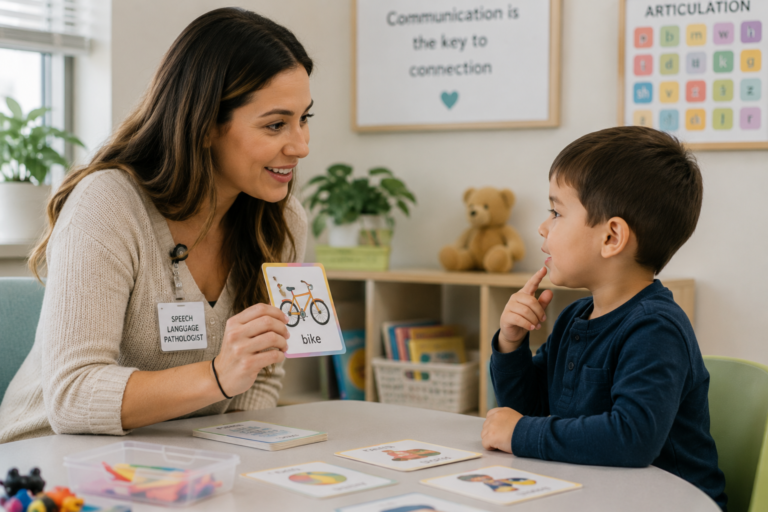
Language skills influence many aspects of childhood, including learning, relationships, and self-confidence. Addressing concerns early can help children access support when it is most beneficial.
Even when a child does not qualify for ongoing therapy, an evaluation can provide valuable information about strengths, developmental expectations, and practical strategies for home and school.
The goal is not to label children but to better understand how they learn and communicate so they can receive appropriate support when needed.
Even when a child does not qualify for ongoing therapy, an evaluation can provide valuable information about strengths, developmental expectations, and practical strategies for home and school.
The goal is not to label children but to better understand how they learn and communicate so they can receive appropriate support when needed.
Frequently Asked Questions
Is expressive language disorder the same as a speech disorder?
No. An expressive language disorder affects the ability to use words, sentences, and language effectively, while a speech disorder affects the production of speech sounds.
Some children have both speech and language difficulties, but they are separate areas that speech-language pathologists evaluate independently.
Some children have both speech and language difficulties, but they are separate areas that speech-language pathologists evaluate independently.
Can a child have receptive language difficulties without expressive problems?
Yes. Some children can speak clearly and use age-appropriate sentence structures while still struggling to understand language spoken by others.
Because speech may sound typical, receptive language difficulties can sometimes be overlooked until academic or social challenges become more noticeable.
Because speech may sound typical, receptive language difficulties can sometimes be overlooked until academic or social challenges become more noticeable.
Do children outgrow expressive language disorders?
Some children make significant progress over time, especially when they receive appropriate support and intervention early.
However, true language disorders typically require more than simply waiting for development to catch up. Professional evaluation helps determine the best course of action.
However, true language disorders typically require more than simply waiting for development to catch up. Professional evaluation helps determine the best course of action.
What causes receptive language disorders?
There is not always a single identifiable cause. Language disorders can occur for many different developmental reasons and often involve differences in how language is processed and learned.
A speech-language evaluation can help identify specific strengths and challenges and guide appropriate intervention planning.
A speech-language evaluation can help identify specific strengths and challenges and guide appropriate intervention planning.
Can language disorders affect school performance?
Yes. Language skills are essential for following instructions, understanding lessons, learning vocabulary, reading, and participating in classroom discussions.
Children with language disorders may require additional support to access academic content effectively as educational demands increase.
Children with language disorders may require additional support to access academic content effectively as educational demands increase.
How is a language disorder diagnosed?
A speech-language pathologist conducts a comprehensive evaluation that may include standardized assessments, observations, language samples, and parent input.
The evaluation helps determine whether communication skills are developing as expected and identifies areas where support may be beneficial.
The evaluation helps determine whether communication skills are developing as expected and identifies areas where support may be beneficial.
Not Sure Where Your Child Falls?
Our free speech screener takes less than 3 minutes.
Answer a few questions and we’ll tell you whether their development
looks on track — or whether it’s worth talking to an SLP.
Answer a few questions and we’ll tell you whether their development
looks on track — or whether it’s worth talking to an SLP.
No sign-up required. Takes about 3 minutes.
A Few Final Thoughts on Expressive and Receptive Language Disorders
Expressive and receptive language disorders affect different parts of communication, but both can influence how children learn, connect with others, and participate in daily activities.
Understanding the distinction between using language and understanding language can help parents recognize concerns more clearly and seek appropriate support when needed.
Every child develops communication skills at their own pace, and developmental differences do not automatically indicate a disorder. Careful evaluation provides the most accurate picture of a child’s strengths and needs.
When concerns arise, early guidance from a speech-language pathologist can provide reassurance, answers, and practical strategies that support long-term communication growth.
Understanding the distinction between using language and understanding language can help parents recognize concerns more clearly and seek appropriate support when needed.
Every child develops communication skills at their own pace, and developmental differences do not automatically indicate a disorder. Careful evaluation provides the most accurate picture of a child’s strengths and needs.
When concerns arise, early guidance from a speech-language pathologist can provide reassurance, answers, and practical strategies that support long-term communication growth.