
What to Look for in a Speech Therapist for Young Children
Finding the right speech therapist for your child can feel surprisingly emotional. Many parents begin the search while carrying a mix of worry, hope, confusion, and pressure to make the “right” choice quickly. The good news is that pediatric speech therapy is not one-size-fits-all, and a strong connection between your child, family, and therapist often matters just as much as credentials alone.
When young children struggle with communication, feeding, social interaction, or speech clarity, therapy works best when it feels safe, engaging, and relationship-based. A skilled pediatric speech-language pathologist understands that communication develops through play, connection, routines, and responsiveness — not through pressure or perfection. That is why the best therapy sessions for young children often look playful on the surface while targeting very intentional developmental goals underneath.
Parents are sometimes surprised by how different speech therapists can feel from one another. Some therapists are highly child-led and play-based, while others use more structured approaches. Some specialize in toddlers, autism, speech sound disorders, feeding, or language delays. Understanding what to look for can help families feel more confident asking questions and recognizing when a therapist is truly a good fit for their child’s needs and personality.
This guide will walk through the qualities, communication style, therapy approaches, and practical factors that matter most when choosing a speech therapist for a young child. Whether you are seeking early intervention services, private therapy, or school support, knowing what to look for can make the process feel much more manageable.
Why the Right Fit Matters in Pediatric Speech Therapy
A Good Pediatric Speech Therapist Understands Child Development
An experienced pediatric therapist often notices subtle developmental patterns that may affect communication. For example, a child who struggles to engage in back-and-forth play may need support building interaction skills before working directly on pronunciation or sentence length. Therapy goals should make sense for the child’s developmental stage rather than focusing only on isolated skills.
Parents frequently feel reassured when a therapist explains not just what a child is working on, but why those goals matter. A strong therapist helps families understand the bigger picture of communication development in a way that feels supportive rather than overwhelming.
Therapy Should Feel Engaging and Relationship-Based
Play-based therapy does not mean the therapist is “just playing.” Skilled pediatric therapists use toys, routines, movement, songs, books, and games intentionally to target language growth, social communication, speech sounds, and interaction skills. Sessions may appear natural and relaxed while still being highly therapeutic and purposeful.
Parents should also pay attention to how their child responds emotionally during sessions. While therapy can sometimes be challenging, children generally benefit from therapists who are warm, flexible, patient, and responsive rather than overly rigid or pressure-based.
Communication With Parents Matters Too
Families should not feel confused about what therapy is targeting or why certain activities are being used. Even simple explanations can help parents feel more confident carrying strategies into mealtimes, playtime, bath routines, reading, or daily conversations. Collaboration often leads to better carryover and more consistent progress.
Good therapists also recognize that parenting concerns are emotional as well as practical. Families often need reassurance, realistic expectations, and guidance without feeling judged or blamed. Feeling comfortable communicating openly with a therapist can make a significant difference throughout the therapy process.

Questions to Ask When Choosing a Speech Therapist
Ask About Experience With Young Children
Not every speech-language pathologist specializes in working with toddlers or preschoolers. Some therapists primarily work with older children, adults, voice disorders, or medical rehabilitation. Asking specifically about experience with young children can help parents better understand the therapist’s comfort level and approach.
Families may also want to ask whether the therapist has experience with their child’s particular area of need. This could include late talking, speech sound delays, autism, stuttering, feeding concerns, receptive language difficulties, or social communication challenges. Specialized experience can be especially helpful for more complex communication profiles.
It is perfectly appropriate for parents to ask how therapy sessions are structured and what approaches are commonly used. Most experienced pediatric therapists are comfortable discussing their methods and explaining how they individualize therapy for different children.
You may also find it helpful to review questions to ask before you hire an SLP so you feel confident comparing therapists and treatment approaches.
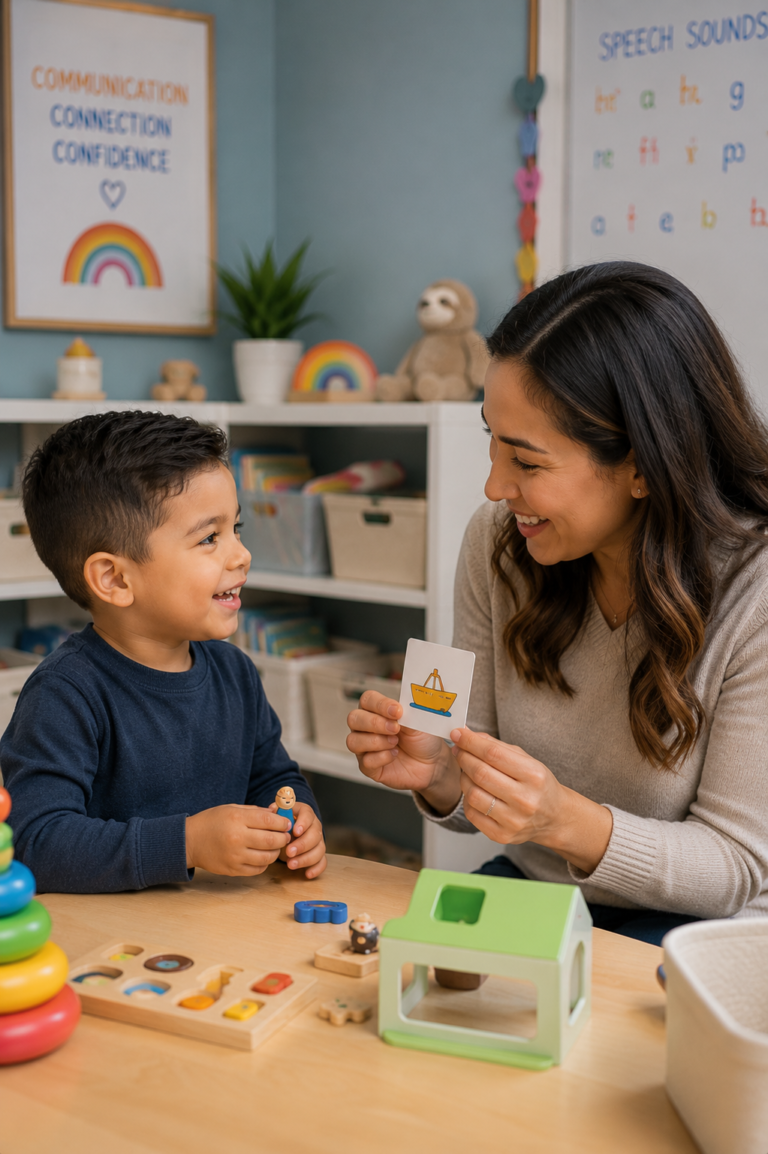
Notice How the Therapist Interacts With Your Child
Children do not need to immediately participate perfectly for therapy to be successful. Many young children take time to warm up in new environments. A skilled therapist understands how to support regulation, engagement, and trust before expecting high levels of participation.
Parents often notice small but meaningful signs during early sessions. A therapist who gets on the child’s level, follows interests, celebrates communication attempts, and adjusts pacing thoughtfully may help therapy feel more positive and productive over time.
Consider Practical Factors That Affect Consistency
Parents may want to ask about appointment availability, parent involvement expectations, cancellation policies, progress updates, and collaboration with pediatricians or schools. Some families also prefer in-home therapy or early intervention services, while others thrive in clinic settings with more structure and materials.
Insurance coverage, waitlists, and travel time can also affect sustainability. While clinical expertise matters greatly, therapy is most effective when it realistically fits into a family’s daily life and routines over time.
Signs of a Strong Pediatric Speech Therapy Experience
Goals Should Feel Individualized
Parents should feel that their child is being understood as a whole person rather than reduced to a diagnosis or checklist. Therapy goals may focus on interaction, play, understanding language, speech clarity, gestures, emotional communication, or functional everyday communication depending on the child’s needs.
Progress also tends to happen gradually and unevenly. Skilled therapists help families recognize meaningful growth beyond simply counting words or sounds, especially for very young children who are still building foundational communication skills.
Therapy Should Support Confidence, Not Just Performance
Many children communicate more successfully when they feel successful, connected, and understood. Therapists who celebrate attempts, model language naturally, and create enjoyable interaction opportunities often help children become more willing communicators overall.
Parents may also notice growing confidence outside therapy sessions. Children may begin initiating more interactions, attempting new words, participating socially, or showing greater comfort communicating with others in everyday settings.
Families Should Feel Supported Along the Way
Good pediatric therapists recognize that progress rarely looks perfectly linear. Some weeks bring exciting changes, while others feel slower or more subtle. Ongoing communication and encouragement can help families stay grounded during periods when growth feels less obvious.
Over time, therapy should feel collaborative rather than intimidating. Families who feel informed, respected, and emotionally supported are often better able to participate consistently and confidently in their child’s communication journey.
When Parents Still Feel Unsure About Therapy Choices
It Is Okay to Ask Questions or Seek Another Opinion
Many parents worry about offending a therapist by asking detailed questions or exploring additional options. In reality, experienced pediatric professionals generally understand that families need to feel comfortable and confident in the therapy relationship. Asking questions is part of making informed decisions for your child.<br><br>
If therapy feels confusing, overly rigid, dismissive, or emotionally uncomfortable, it is reasonable to seek clarification or even pursue another evaluation. A second opinion does not necessarily mean something is wrong. Sometimes families simply need a better personality fit, different communication style, or therapist with more specialized experience.<br><br>
Parents know their child deeply, even when they do not have clinical training. Feeling heard, respected, and included in the process matters. Trusting your instincts while also staying open to professional guidance can help families find the right balance.
Helpful Things to Look For During the Search
- Experience working specifically with toddlers and preschoolers
- Warm, engaging interaction style with children
- Clear communication with parents
- Play-based and developmentally appropriate therapy methods
- Willingness to individualize goals and strategies
- Comfort collaborating with families and other providers
- A supportive environment where children feel safe and encouraged
Early Support Can Be Helpful Even When Concerns Feel Mild

A speech-language evaluation does not automatically mean a child will need long-term therapy. In many cases, families simply gain clearer information about development and receive guidance for supporting communication at home. Early conversations with professionals can help reduce uncertainty rather than increase it.
The goal of pediatric speech therapy is not perfection. It is helping children communicate more comfortably, confidently, and successfully within their everyday lives and relationships.
FAQ SECTION
How do I know if a speech therapist is good with young children?
Parents should also feel comfortable asking questions and receiving understandable explanations. Strong therapists typically communicate openly with families and help parents feel included throughout the therapy process.
Should speech therapy for toddlers look like play?
Even though sessions may appear relaxed, experienced therapists are intentionally targeting specific goals during activities. Play-based therapy can still be highly structured underneath the surface while remaining enjoyable for the child.
Is it okay to switch speech therapists if it does not feel like a good fit?
Sometimes the issue is not that the therapist is unqualified, but simply that a different communication style, therapy setting, or personality fit may work better. Finding the right match can make a meaningful difference in engagement and consistency.
What qualifications should a pediatric speech therapist have?
Parents may additionally look for therapists with experience in early childhood development, autism, feeding therapy, or specific communication disorders depending on their child’s needs. Ongoing pediatric experience is often especially valuable.
How involved should parents be in speech therapy?
That does not mean parents need to become therapists themselves. Supportive guidance, consistency, and responsive interaction at home are often more important than trying to do formal “homework” perfectly.
Can a child make progress even if they are shy during sessions?
Progress may initially look subtle for shy children. Building trust, interaction, and communication confidence is often an important part of the therapeutic process itself.
Not Sure Where Your Child Falls?
Answer a few questions and we’ll tell you whether their development
looks on track — or whether it’s worth talking to an SLP.
Want to learn more? HealthyChildren.org, from the American Academy of Pediatrics, offers trusted information about developmental evaluations and early childhood services, helping families understand when and how to seek support.
A Few Final Thoughts on Choosing a Speech Therapist for Young Children
The best pediatric speech therapy experiences are often collaborative, playful, and individualized. Families should feel informed, respected, and encouraged throughout the process rather than pressured or overwhelmed.
It is okay if finding the right fit takes time or if you need to ask questions along the way. Trust, communication, and consistency all play an important role in helping children build confidence and communication skills over time.
Most importantly, parents do not need to navigate communication concerns alone. Supportive guidance, early evaluation, and responsive therapy can help many children make meaningful progress while helping families feel more confident and connected throughout the journey.