
What Is a Speech-Language Pathologist?
A speech-language pathologist, often called an SLP or speech therapist, is a professional who helps children and adults with communication, speech, language, social interaction, feeding, and swallowing skills. Many parents first hear the term after noticing their child is late to talk, difficult to understand, or struggling to communicate clearly. While the title can sound technical, the goal of speech therapy is usually very practical and family-centered: helping people communicate more confidently in everyday life.
For children, speech-language pathologists support many different areas of development. Some children need help learning to say sounds more clearly, while others need support understanding language, combining words, following directions, or using social communication skills. SLPs also work with babies and toddlers who are not yet talking, children with developmental differences, and kids who have feeding or oral motor concerns.
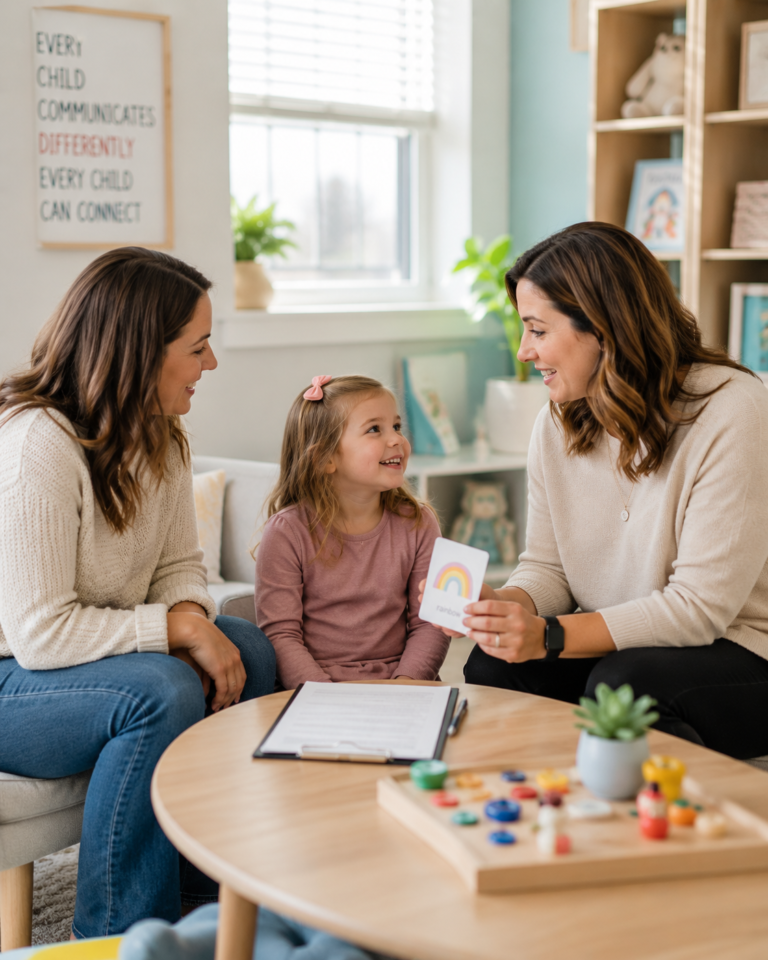
One thing that surprises many parents is how play-based and relationship-focused speech therapy often feels. Pediatric speech-language pathologists typically use games, books, routines, movement, and everyday interactions to build communication skills naturally. Therapy sessions are designed to meet children where they are developmentally while helping them feel successful and engaged.
If you have recently come across the term “speech-language pathologist,” you are not alone in wondering what they actually do. Understanding the role of an SLP can make it easier to recognize when support may help, what therapy looks like, and how communication development is supported over time.
What Does a Speech-Language Pathologist Help With?
Speech Sound Development
Speech sound differences can affect confidence, participation, and communication with others, especially as children get older. A speech-language pathologist looks at patterns in speech rather than isolated mistakes alone. This helps determine whether a child is still developing typically or may benefit from support.
Therapy for speech sounds is often interactive and playful. Children may practice sounds during games, storytelling, movement activities, or conversation rather than sitting through drills alone. The overall goal is helping speech become easier and more understandable in everyday life.
Language and Communication Skills
Speech-language pathologists also help children who struggle with language development. Language includes both understanding words and expressing thoughts. Some children understand language well but have difficulty using words, while others struggle with both understanding and communication.
Parents may notice signs such as delayed first words, trouble combining words into sentences, difficulty answering questions, or challenges following directions. Older children might have trouble telling stories, explaining ideas, or participating in conversations with peers.
SLPs assess how children use language in real-life situations and help build communication skills gradually over time. Therapy may focus on vocabulary, sentence structure, social communication, listening skills, or conversational interaction depending on the child’s needs.
Feeding and Oral Motor Concerns
An SLP may help babies with feeding challenges, toddlers with very limited food acceptance, or children who struggle chewing certain textures safely. Feeding therapy is individualized and often includes collaboration with pediatricians, occupational therapists, or other specialists when appropriate.
Feeding concerns can feel stressful for families, especially when mealtimes become emotionally exhausting. Speech-language pathologists aim to support both safety and positive experiences around eating while helping parents feel more confident and informed.

How Speech-Language Pathologists Work With Children
Evaluations and Assessments
A speech-language pathologist usually begins with an evaluation to better understand a child’s strengths and challenges. Evaluations often include observation, play, conversation, parent interviews, and structured activities that look at communication skills across different areas.
Parents sometimes worry that evaluations will feel intimidating or overly clinical, but pediatric speech assessments are typically designed to feel comfortable and child-friendly. Young children may spend much of the session playing while the SLP observes communication patterns naturally.
The goal of an evaluation is not simply to assign a label. Instead, it helps determine how a child communicates, whether support may be helpful, and what types of strategies or therapy goals may best fit the child and family.
Play-Based Therapy Approaches
An SLP may use pretend play, books, songs, sensory activities, movement games, or everyday routines to encourage communication growth. Therapy often looks very natural from the outside, but these activities are carefully chosen to support specific communication goals.
Play-based therapy also helps children feel emotionally safe and engaged. When children enjoy interacting, they are often more motivated to practice communication skills and participate actively in learning experiences.
Parent and Family Collaboration
SLPs often coach families on ways to encourage language naturally during meals, playtime, reading, dressing, and daily interactions. Small changes in how adults respond, pause, model language, or create communication opportunities can make a meaningful difference over time.
Families are not expected to become therapists at home. Instead, speech-language pathologists aim to make communication support feel realistic, supportive, and manageable within normal family life.
When Children Might See a Speech-Language Pathologist
Early Language Delays
Communication development can vary widely between children, which is why speech-language pathologists look at the whole picture rather than focusing on a single milestone alone. They consider gestures, social interaction, understanding, play skills, and overall communication patterns.
Early support can help families better understand their child’s communication style while giving children opportunities to build language skills during important developmental periods.
Social Communication Differences
Social communication skills develop gradually over time and can look different across ages and personalities. Some children are naturally quieter or slower to warm up socially, while others may need more structured support understanding communication expectations.
Speech-language pathologists help children build practical communication skills that support friendships, classroom participation, emotional expression, and everyday interactions with others.
School and Learning Concerns
Older children may see a speech-language pathologist for support with storytelling, vocabulary, reading-related language skills, listening comprehension, or classroom communication demands. Some children receive therapy through schools, while others work with private clinics or early intervention programs.
Communication support is not only about helping children “talk better.” It is also about helping them participate more comfortably, express themselves clearly, and feel confident navigating everyday environments.
When to Consider a Speech-Language Evaluation
Trusting Your Concerns
A speech-language evaluation does not automatically mean something is seriously wrong. In many cases, families leave with reassurance, practical strategies, or monitoring recommendations. When support is needed, early guidance can help reduce frustration and improve communication opportunities.
Seeking an evaluation can also provide clarity. Even when children develop at different rates, understanding their communication strengths and challenges helps families make informed decisions moving forward.
Signs a Child May Benefit From Support
- Limited babbling or gestures in infancy
- Delayed first words or slow vocabulary growth
- Difficulty combining words into sentences
- Speech that is very difficult to understand
- Trouble following directions or understanding language
- Frequent frustration during communication attempts
- Feeding or swallowing concerns
- Difficulty interacting socially with peers
Finding the Right Support

If you are considering speech therapy, starting with your pediatrician, early intervention program, or local speech-language clinic can help guide next steps. Many children receive evaluations through early intervention services or school-based programs depending on their age.
It can also help to remember that communication support is highly individualized. Some children benefit from short-term therapy and parent coaching, while others may need more ongoing support over time.
Most importantly, speech-language pathologists aim to build on a child’s strengths rather than focusing only on difficulties. Therapy works best when children feel supported, connected, and understood throughout the process.
Want to learn more? The American Speech-Language-Hearing Association (ASHA) explains what speech-language pathologists do, including the wide range of communication and feeding disorders they evaluate and treat.
Frequently Asked Questions About Speech-Language Pathologists
Is a speech-language pathologist the same as a speech therapist?
These professionals are trained to support speech, language, communication, social interaction, and sometimes feeding or swallowing concerns. Pediatric SLPs work with children across many stages of development.
What ages do speech-language pathologists work with?
Young children may receive support through early intervention programs, clinics, hospitals, or schools depending on their needs and age. Therapy approaches are adapted to match developmental level and communication style.
Does speech therapy always happen in an office?
The setting matters less than the quality of interaction and the child’s comfort level. Speech-language pathologists often incorporate familiar routines and environments into therapy whenever possible.
How long does speech therapy usually last?
Progress in communication development is rarely perfectly linear. Children often grow through a combination of therapy, everyday practice, developmental readiness, and supportive interaction at home.
Can parents help with speech therapy at home?
Do all children with speech delays have autism?
Speech-language pathologists look at the full pattern of communication, social interaction, play, and development rather than making assumptions based on speech alone.
Not Sure Where Your Child Falls?
Answer a few questions and we’ll tell you whether their development
looks on track — or whether it’s worth talking to an SLP.
A Few Final Thoughts on Speech-Language Pathologists
For many families, meeting with an SLP brings reassurance as much as guidance. Understanding how communication develops can make concerns feel less overwhelming and help parents feel more supported moving forward.
Every child develops differently, and communication growth is rarely identical from one child to another. Speech-language pathologists aim to meet children where they are while helping them continue building skills step by step.
If you have concerns about your child’s communication, asking questions and seeking support is never a bad thing. Early guidance can provide clarity, practical tools, and peace of mind while helping children communicate with greater confidence over time.