
How to Talk to Your Pediatrician About Speech Concerns
Many parents notice small communication differences long before they bring them up out loud. Sometimes it starts with a child who is quieter than expected, hard to understand, or not combining words yet. Other times, parents simply have a feeling that something about communication development seems different from other children the same age. Talking to your pediatrician about speech concerns can feel intimidating, especially when you are unsure whether your worries are “serious enough.”
One of the most important things to remember is that pediatricians hear these concerns every day. Asking questions about speech and language development does not mean you are overreacting or labeling your child too early. In fact, early conversations often help families better understand what is typical, what may need monitoring, and when additional support could be helpful.
Speech and language development can vary widely in early childhood. Some children develop steadily and predictably, while others move forward in bursts. A child may have strong understanding skills but limited spoken language, or clear speech sounds but difficulty interacting socially. Pediatricians look at the whole developmental picture, not just word counts alone.
This guide will help you prepare for conversations with your child’s doctor, understand what information is helpful to share, and feel more confident advocating for your child if communication concerns continue over time.
This guide will help you prepare for the conversation and understand the next steps for getting help with speech and language concerns.
Why Parents Often Hesitate to Bring Up Speech Concerns
Comparing Children Can Make Concerns Feel Confusing
Family members and friends sometimes add to the uncertainty. Parents often hear comments like “boys talk later,” “she’ll catch up,” or “he’s just shy.” While reassurance can be comforting, it can also make parents second-guess instincts that something deserves a closer look.
Pediatricians generally prefer parents bring up concerns early rather than wait until frustration builds. Even when development ultimately falls within a typical range, conversations about communication milestones can help families feel more informed and supported.
Parents Often Worry About Overreacting
In reality, pediatricians rely heavily on parent observations. Parents spend the most time with their child and often notice subtle communication patterns that are not obvious during a short office visit. Sharing concerns helps create a more complete developmental picture.
Even small observations can be valuable. Difficulty following directions, limited gestures, frustration during communication, unclear speech, or lack of word combinations can all provide meaningful information when discussed together over time.
Early Conversations Create Better Monitoring
These early conversations also create a timeline of development. If concerns continue, having documented observations can make referrals and evaluations smoother later on. Families often feel more prepared because they already understand the next possible steps.
Importantly, bringing up speech concerns does not automatically mean a child needs therapy. Sometimes pediatricians recommend simple monitoring, hearing testing, parent strategies, or additional developmental screening before deciding whether formal services are necessary.
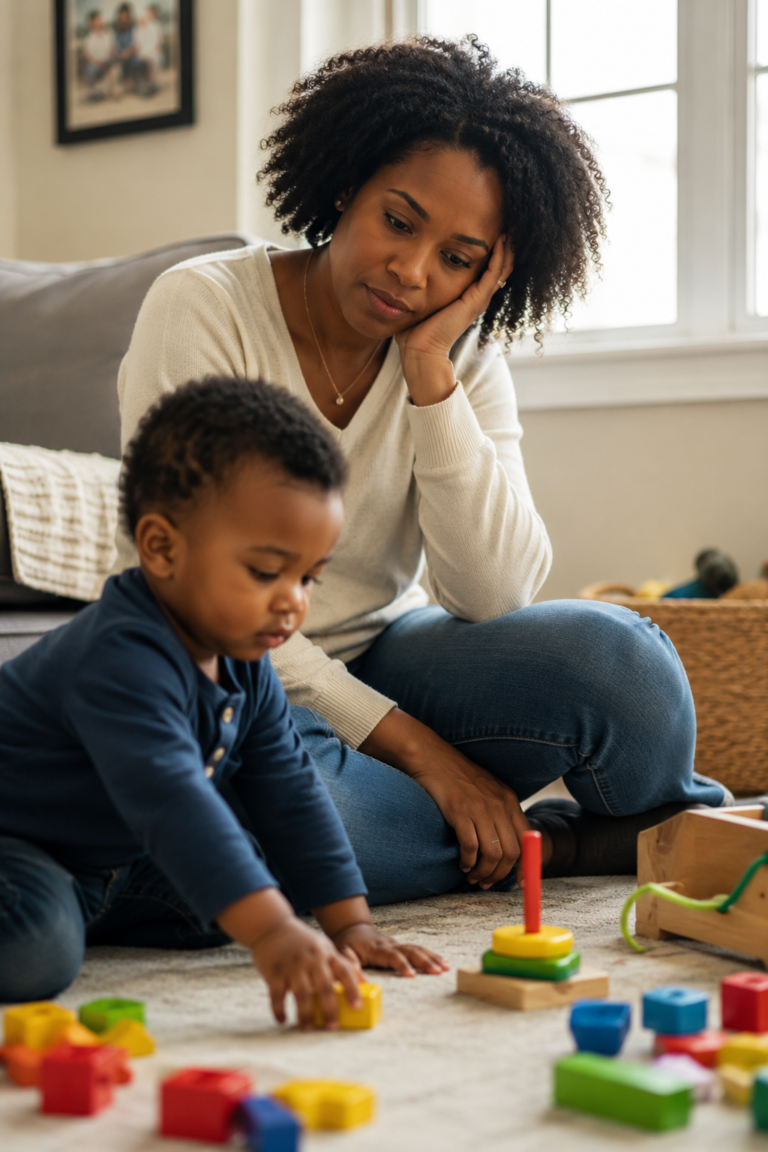
What to Share During the Appointment
Specific Examples Help More Than General Worries
It can help to think about what your child currently does rather than focusing only on what seems missing. Parents might describe how many words their child uses, whether they combine words, how well they follow directions, or how often unfamiliar people understand them.
Concrete examples also help pediatricians identify patterns. A child who rarely imitates sounds may raise different questions than a child who talks often but is difficult to understand. These details help guide decisions about monitoring, referrals, or additional screening.
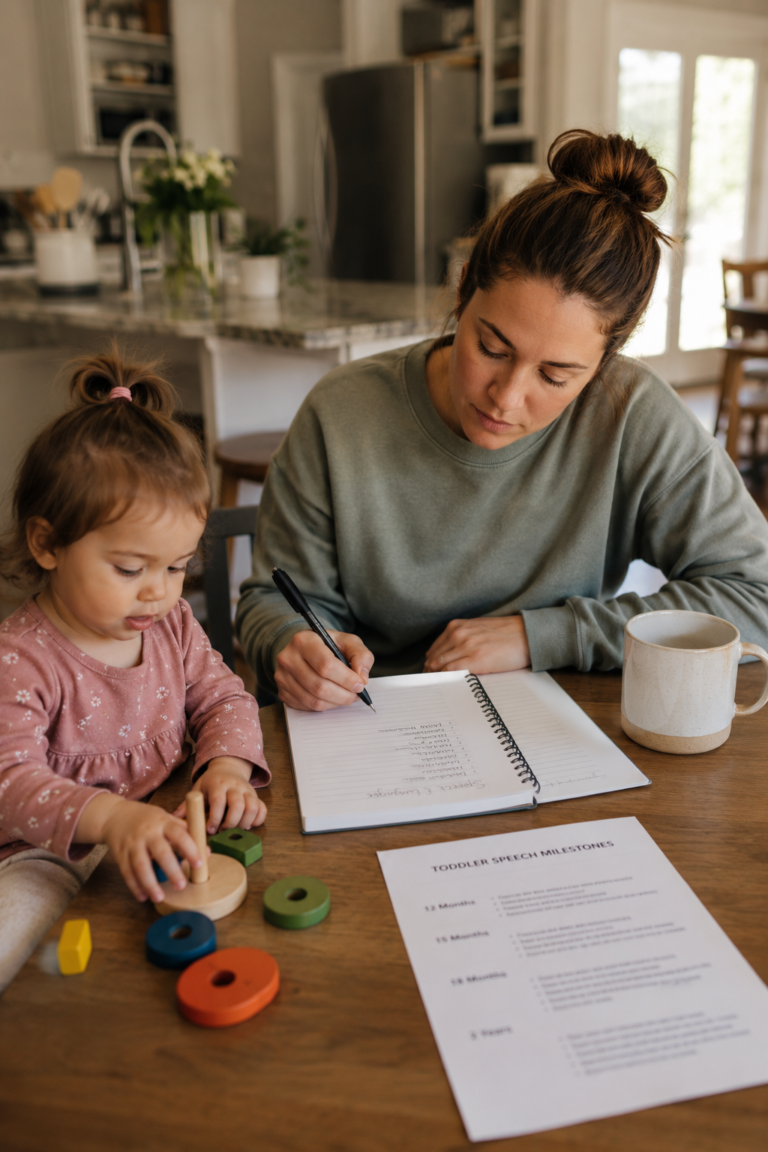
Videos and Notes Can Be Very Helpful
Parents may also find it useful to jot down observations before the appointment. Tracking examples over several weeks often helps families notice patterns they may otherwise forget during the visit. Notes about gestures, play skills, social interaction, or frustration during communication can all be relevant.
This preparation does not need to be complicated or formal. A few simple examples from everyday routines often give pediatricians meaningful information about how a child communicates across environments.
Questions Parents May Want to Ask
Parents commonly ask whether development seems age-appropriate, whether hearing should be checked, or whether a speech-language evaluation would be beneficial. Some also ask how long they should monitor before following up again if progress remains slow.
The goal is not to “prove” a child has a delay. The goal is to better understand development and make informed decisions together. Good pediatric conversations should feel collaborative, supportive, and focused on helping the child succeed.
Understanding What May Happen Next
Pediatricians Often Look at Overall Development
Speech concerns are usually considered alongside many other developmental areas. Pediatricians may ask about social interaction, play skills, motor development, feeding history, hearing, behavior, and emotional regulation in addition to spoken language.
This broader perspective matters because communication development is connected to many other skills. Some children primarily struggle with expressive language, while others may show differences across several developmental areas at once.
Parents are sometimes surprised that pediatricians ask questions unrelated to speech itself. However, these conversations help determine whether concerns appear isolated or part of a larger developmental pattern that may benefit from additional evaluation.
When an evaluation is recommended, learning what happens at a speech and language evaluation can help you feel more prepared.
Referrals Do Not Mean Something Is “Wrong”
Speech-language evaluations can identify strengths alongside challenges. Many children who receive evaluations make significant progress over time, especially when concerns are recognized early and families receive practical support strategies.
In many cases, evaluations provide reassurance as much as guidance. Some children qualify for therapy, while others simply benefit from monitoring and parent education. Either outcome can help families feel more confident moving forward.
Trusting Ongoing Communication Matters
Parents should feel comfortable returning to the conversation if concerns continue, even after initial reassurance. New developmental differences sometimes become more noticeable as language expectations increase with age.
Strong partnerships between parents, pediatricians, and specialists create the best support system for children. Open conversations help ensure concerns are addressed thoughtfully and that families feel informed throughout the process.
When Communication Concerns May Need Closer Attention
Signs It May Be Time to Push for More Evaluation
Children who show limited progress over several months, frequent frustration during communication, regression in language skills, difficulty understanding language, or reduced social interaction may benefit from closer monitoring or formal assessment.
Parents do not need to wait until concerns feel severe before seeking support. Early guidance often helps families better understand development and may improve outcomes when intervention is needed.
Questions to Consider Bringing to Your Pediatrician
- How many words should my child be using at this age?
- Should my child be combining words yet?
- Could hearing be affecting speech development?
- Would a speech-language evaluation be appropriate?
- Should we contact early intervention services?
- What changes should we watch for over the next few months?
Supportive Conversations Can Make a Big Difference

It is also important to remember that communication development is deeply individual. Children grow at different rates, and progress may happen gradually rather than all at once. Supportive guidance can help parents focus on steady growth instead of constant comparison.
If your instincts continue telling you something deserves attention, it is okay to keep asking questions. Parents are an essential part of the developmental team, and their observations matter.
The American Academy of Pediatrics also encourages parents to discuss developmental concerns with their child’s doctor rather than waiting for the next routine miles
FAQ SECTION
Should I bring up speech concerns even if my child is still young?
Early conversations do not automatically lead to therapy or diagnoses. Often, they simply help families track development more confidently and decide whether follow-up support may be useful later on.
What if my pediatrician says to wait?
If concerns continue or worsen, parents can absolutely revisit the conversation. Seeking a second opinion or requesting a speech-language evaluation is also reasonable when families remain worried.
Should I ask for a speech evaluation directly?
Evaluations provide more detailed information about communication strengths and challenges. Even when therapy is not needed, assessments often give parents practical strategies and reassurance.
Can hearing problems affect speech development?
Because of this, pediatricians commonly recommend hearing testing when speech concerns arise. Checking hearing is an important step in understanding the bigger developmental picture.
What information should I track before the appointment?
Simple videos, examples of communication frustrations, or notes about social interaction can also help pediatricians better understand concerns beyond what they observe during a short visit.
Is it okay to seek help even if family members disagree?
Having a conversation with a pediatrician does not mean something is seriously wrong. It simply opens the door to better understanding your child’s development and available support options.
Not Sure Where Your Child Falls?
Answer a few questions and we’ll tell you whether their development
looks on track — or whether it’s worth talking to an SLP.
A Few Final Thoughts on Talking to Your Pediatrician About Speech Concerns
Pediatricians rely heavily on parent observations when evaluating developmental progress. Sharing concerns early often leads to better monitoring, clearer guidance, and more confidence about how to support a child moving forward.
Speech and language development does not follow the exact same timeline for every child. Some children simply need time and monitoring, while others benefit from additional evaluation or early support services. What matters most is staying curious, informed, and connected to trusted professionals.
If something about your child’s communication development continues to stand out to you, it is okay to ask questions and keep the conversation going. Parents know their children best, and thoughtful early support can make a meaningful difference over time.