
My Toddler’s Speech Is Hard to Understand
Many parents notice a stage where their toddler seems to talk constantly, yet very little is actually clear. You may understand some familiar words while grandparents, caregivers, or strangers struggle to follow what your child is trying to say. This can feel confusing, especially when your toddler seems bright, social, and eager to communicate. The good news is that speech clarity develops gradually throughout the toddler years, and some amount of unclear speech is completely typical during this stage.<br><br>
Toddlers are learning how to coordinate their lips, tongue, jaw, breath, and voice all at the same time. Even when children know exactly what they want to say, their speech muscles and sound patterns are still developing. Many toddlers simplify longer words, leave sounds out, or pronounce words differently than adults expect. That process is a normal part of learning to speak.<br><br>
At the same time, parents often wonder how much unclear speech is considered expected and when it may point to a speech delay or speech sound disorder. Development rarely follows a perfect timeline, but there are helpful patterns speech therapists look at when evaluating speech intelligibility, pronunciation, and overall communication growth. Looking at the full picture matters far more than focusing on one difficult-to-understand word.<br><br>
This article will walk through what speech clarity usually looks like during the toddler years, why some children are harder to understand than others, and signs that may suggest additional support could help. You’ll also learn practical ways to encourage clearer speech naturally during everyday routines at home.
Understanding Toddler Speech Clarity
Why Toddlers Often Sound Unclear
Young toddlers also use predictable speech simplifications while learning sounds. For example, a child may say “nana” for banana or “tar” for car. These patterns are developmentally common because some speech sounds are easier for young children to produce than others. Over time, clearer pronunciation usually improves naturally as children mature and gain practice.
Parents sometimes worry because they compare their child to older siblings or particularly advanced peers. In reality, speech clarity varies considerably during the toddler years. Some children become easy to understand earlier, while others remain difficult for unfamiliar listeners for a longer period even though development is still progressing appropriately.
What Speech Intelligibility Looks Like by Age
By age 4, most children are understood much more consistently in everyday conversation. However, even preschoolers may still struggle with certain sounds like R, L, TH, or blends. Clear speech develops gradually over several years rather than appearing suddenly.
It is also important to consider who understands the child. Parents naturally become skilled at interpreting their toddler’s speech because they know routines, favorite words, and context clues. Strangers typically provide a more realistic picture of overall speech intelligibility because they do not have those built-in advantages.
How Language and Speech Are Different
Some toddlers speak in long sentences but pronounce many sounds incorrectly. Others may have clear speech but use very few words overall. Understanding this difference helps parents avoid unnecessary panic while also recognizing when evaluation could be beneficial.
Speech therapists look at the whole communication system rather than focusing on one area alone. A toddler who is social, engaged, learning new words, following directions, and attempting communication regularly may simply still be refining speech production skills that continue developing naturally with age.

Common Reasons Toddler Speech May Be Hard to Understand
Speech Sounds Develop Gradually
Longer words can also become shortened or simplified. A toddler may leave off ending sounds or compress multiple syllables into shorter forms that feel easier to say. These patterns are part of normal developmental speech learning for many children.
What matters most is whether your child is continuing to make progress over time. Even if speech remains unclear, increasing vocabulary, improving sentence length, and gradual gains in clarity are usually encouraging signs that communication skills are moving forward.
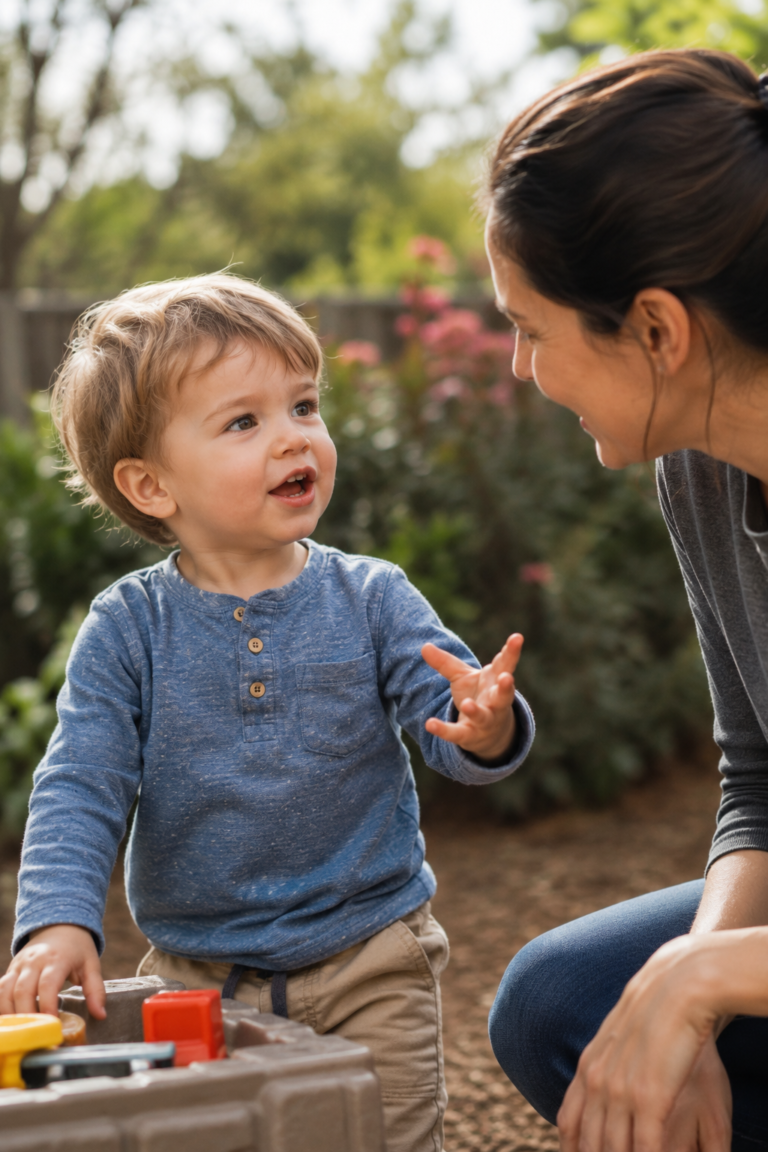
Fast Talkers and Excited Communicators
This mismatch between language growth and motor coordination is common. A toddler’s brain may generate ideas faster than speech movements can organize clearly. Slowing down during conversations and modeling calm speech can help support clearer communication naturally.
Children who are enthusiastic communicators sometimes appear more difficult to understand simply because they attempt longer, more complex speech earlier. In many cases, clarity improves steadily as coordination, pacing, and speech planning mature over time.
Hearing and Speech Clarity
A toddler who cannot consistently hear subtle sound differences may have trouble producing those sounds accurately. Parents sometimes notice children speaking loudly, misunderstanding words, or showing inconsistent responses to verbal instructions alongside unclear speech.
Not every child with unclear speech has hearing concerns, but hearing is often one of the first things speech therapists and pediatricians consider when speech clarity seems significantly delayed. A simple hearing screening can provide useful information and reassurance for families.
Supporting Clearer Speech at Home
Everyday Conversation Matters Most
Parents do not need to pressure toddlers to repeat words perfectly. Instead, responding naturally while gently modeling correct pronunciation helps keep communication positive and encouraging. For example, if a child says “tar,” a parent might respond, “Yes, that’s a big car.”
Children benefit most from hearing language used clearly, slowly, and consistently throughout the day. Warm conversational interaction supports both speech development and emotional connection at the same time.
Reading Together Builds Speech Skills
Repetitive books, rhyming stories, and predictable phrases are especially helpful for toddlers with unclear speech. Many children begin attempting clearer pronunciation naturally when favorite books become familiar and enjoyable.
Reading together does not need to feel instructional. Pointing to pictures, pausing for your child to comment, and enjoying simple conversation around books creates a relaxed learning environment that supports communication growth naturally.
Avoiding Pressure Around Pronunciation
Toddlers benefit from feeling understood and successful during conversations. If speech is unclear, parents can focus on the message rather than perfect pronunciation. Using context clues, visual supports, and patient listening often keeps communication flowing more comfortably.
Supportive communication environments help toddlers stay motivated to keep talking, experimenting with sounds, and practicing speech naturally. Confidence and connection are important parts of healthy communication development too.
When to Seek Help or Additional Support
Signs a Speech Evaluation May Help
Parents should also consider the bigger developmental picture. Concerns about understanding language, social interaction, play skills, hearing, or regression alongside unclear speech deserve professional discussion with a pediatrician or speech-language pathologist.
Seeking guidance does not automatically mean something is seriously wrong. Early support often provides reassurance, practical strategies, and monitoring that helps families better understand their child’s communication development.
Common Reasons Families Reach Out
- Strangers understand very little of the child’s speech after age 3
- The child becomes frequently frustrated when trying to communicate
- Speech progress seems stalled over time
- The child uses very few speech sounds
- There is a history of frequent ear infections or hearing concerns
- The child stopped using words or sounds they previously used
Early Support Can Be Encouraging
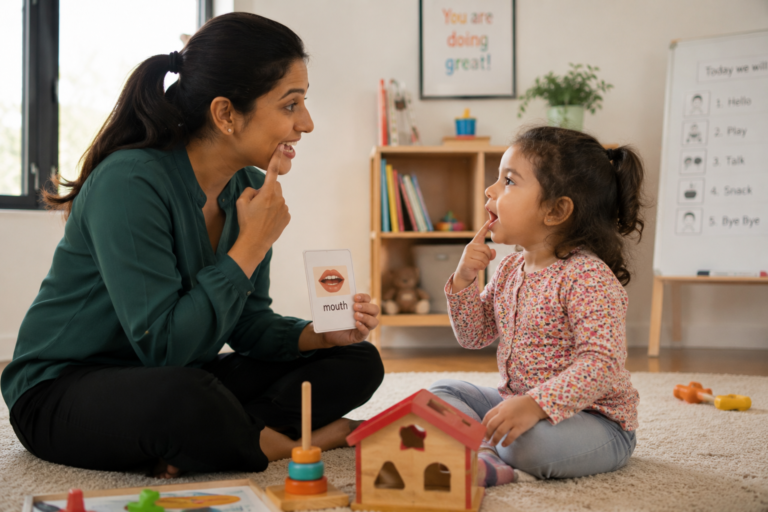
A speech evaluation can help identify whether speech patterns are developmentally expected or whether extra support may improve communication confidence and clarity. Sometimes families simply leave with reassurance and practical strategies for home.
Parents know their child best. If concerns continue lingering despite reassurance from others, seeking professional guidance can provide clarity and peace of mind while supporting healthy communication growth during an important developmental stage.
Frequently Asked Questions
Is it normal for a 2-year-old to be hard to understand?
Parents often understand more of their child’s speech because they know routines and context. What matters most is whether communication skills continue progressing over time rather than whether every word sounds perfectly clear.
At what age should strangers understand my toddler?
Speech therapists look at overall communication patterns instead of expecting perfect pronunciation at a specific age. Gradual improvement over time is usually more important than exact percentages.
Should I correct my toddler’s pronunciation?
Children learn speech best through relaxed interaction and repeated exposure. Constant correction can sometimes make toddlers hesitant to communicate or feel self-conscious about talking.
Can ear infections affect speech clarity?
If parents notice unclear speech alongside hearing concerns, inconsistent responses, or frequent ear problems, discussing hearing screening with a pediatrician can be helpful.
What is speech intelligibility?
Children become easier to understand gradually over several years. Intelligibility expectations change with age, which is why toddlers are not expected to sound like older children or adults.
Does unclear speech always mean a speech delay?
However, if speech remains extremely difficult to understand, progress seems limited, or other developmental concerns are present, an evaluation may provide useful guidance and reassurance.
Not Sure Where Your Child Falls?
Answer a few questions and we’ll tell you whether their development
looks on track — or whether it’s worth talking to an SLP.
A Few Final Thoughts on Toddler Speech Clarity
Speech clarity develops gradually throughout early childhood. Some toddlers become easier to understand quickly, while others need more time and practice before pronunciation catches up with their growing language skills. Progress over time matters far more than perfection.
Parents can support speech growth best through warm conversation, shared reading, patient listening, and responsive interaction during everyday routines. Children thrive when communication feels encouraging, connected, and emotionally safe rather than pressured or performance-based.
If concerns continue lingering, seeking guidance from a speech-language pathologist can provide reassurance and helpful next steps. Early support is designed to encourage communication growth, not label children, and many families find that even a single evaluation brings valuable clarity and peace of mind.