
When Should a Child Start Talking?
Many parents spend months waiting for that exciting first word. It is completely normal to wonder when a child should start talking, especially when every baby and toddler seems to develop a little differently. Some children begin experimenting with sounds very early, while others take more time before words appear consistently. Early communication often starts long before clear speech does.
Speech and language development happens gradually through everyday interactions, play, gestures, eye contact, babbling, and listening. Before children use recognizable words, they are already learning how communication works. They watch facial expressions, respond to voices, imitate sounds, and begin connecting words with meaning through repeated experiences.
Parents sometimes worry when they hear other children talking earlier or using longer sentences. In reality, there is a wide range of typical development. Some toddlers become early talkers, while others focus first on movement, observation, or social interaction before language suddenly takes off. What matters most is looking at the overall pattern of communication rather than comparing children side by side.
Understanding what speech milestones usually look like can help parents feel more confident and informed. This guide explains when children often begin talking, how language develops over time, what early communication signs to look for, and when it may be helpful to seek extra support from a speech-language professional.
How Communication Begins Before Talking
Babies Communicate Long Before First Words
Around the middle of the first year, many babies begin babbling repeatedly using sounds like “ba,” “da,” or “ma.” Babbling is an important milestone because it shows that children are experimenting with the sounds needed for later speech. Babies also start responding to familiar voices and may turn when their name is called.
Parents often notice that communication becomes more interactive during this stage. Babies may pause during babbling as if taking turns in conversation, imitate sounds they hear often, or use different cries and noises for different needs. These early social exchanges matter just as much as spoken words.
Understanding Usually Comes Before Talking
Parents sometimes become concerned because their child is quiet, but understanding is an important part of the developmental picture. A child who points to body parts, looks toward familiar people when named, or follows simple requests is actively building language skills even without many spoken words yet.
This is one reason speech development can feel uneven from one child to another. Some children spend months absorbing language quietly before suddenly using many new words in a short period of time. Language growth is rarely perfectly steady week by week.
Gestures Are Part of Language Development
When toddlers point to airplanes in the sky or bring a toy to show a parent, they are learning that communication can be shared with another person. These moments build social communication skills that support future conversation and storytelling abilities.
Parents sometimes overlook gestures because they are waiting for spoken words, but gestures are an important sign that communication is developing. Children who use eye contact, facial expressions, and gestures are actively participating in early language learning every day.
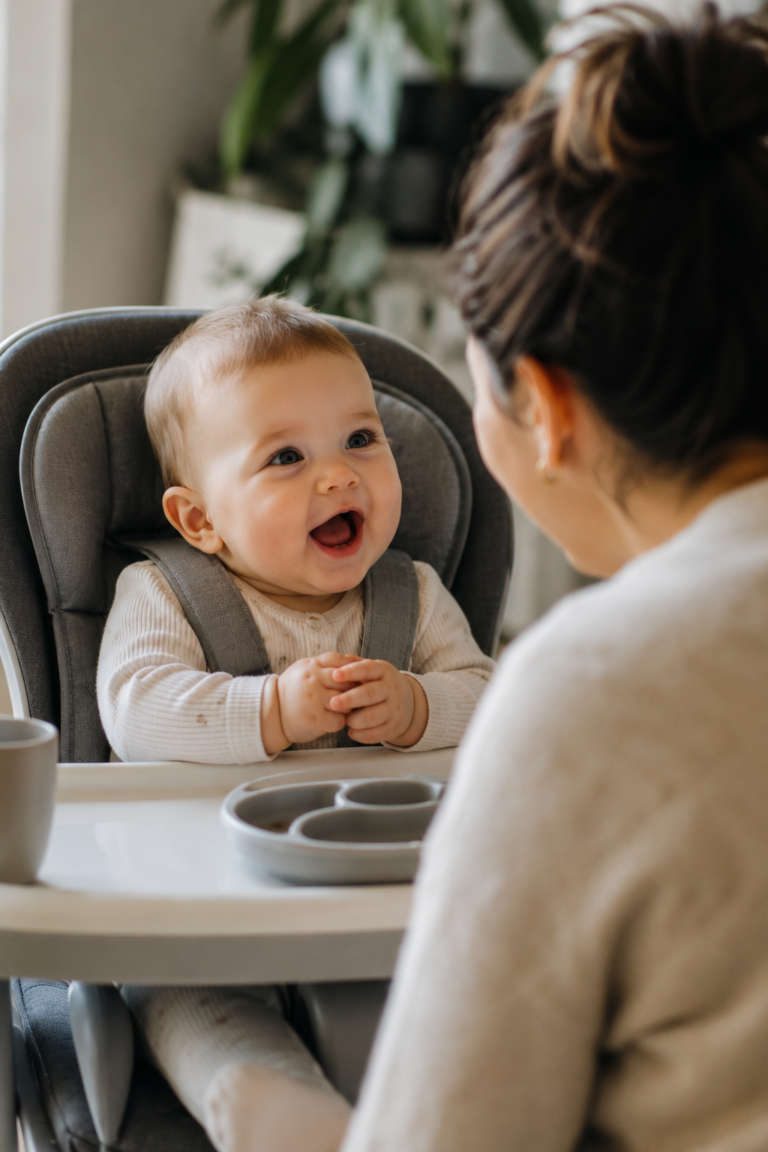
Typical Ages for First Words and Early Speech
Many Babies Say First Words Around One Year
Many children begin using first words somewhere around 12 months, although there is a normal range on both sides of that milestone. Early words are often simple and connected to everyday experiences, such as “mama,” “dada,” “bye-bye,” or names for favorite foods and toys.
Wondering which words often come first? See our guide to Babies’ First Words and what they can tell you about early communication development.
At first, words may not sound perfectly clear. Toddlers are still learning how to coordinate their lips, tongue, jaw, and breath for speech. Parents usually understand these early attempts more easily because they hear them repeatedly within familiar routines.
Some children say only a few words for several months, while others quickly begin adding new vocabulary. Both patterns can be typical when communication skills continue growing in other ways such as understanding language, responding socially, and using gestures.

Vocabulary Often Expands During the Second Year
This stage can feel exciting because communication becomes more interactive and intentional. Toddlers often start commenting on what they see, asking for help, and attempting short conversations during play and routines. Parents may notice new words appearing almost daily for a period of time.
Even during vocabulary growth, pronunciation may still be difficult to understand. It is completely common for toddlers to simplify words, leave out sounds, or use approximations while speech clarity continues developing gradually over the next several years.
Conversations Grow During the Preschool Years
As preschoolers grow, they usually improve in both vocabulary and speech clarity. Familiar adults may understand most of what they say by age 3, although some sounds and longer words can still be challenging. Storytelling and pretend play also become more complex during these years.
By ages 4 and 5, many children are using longer conversations, sharing ideas, and participating more comfortably in group settings. Language development continues well beyond toddlerhood, which is why progress should always be viewed as an ongoing process rather than a single milestone.
Why Speech Development Can Look Different for Every Child
Temperament and Personality Influence Communication
Parents often notice differences even between siblings raised in the same home. One child may chatter constantly at age 2 while another communicates effectively with gestures and fewer words before language rapidly increases later on. These differences are common in early childhood development.
A quieter communication style does not automatically mean something is wrong. Looking at the full picture, including social engagement, understanding, play skills, and interaction, provides more useful information than focusing only on word count alone.
Environment and Interaction Matter
Children learn language through repeated interaction with caregivers and the environment around them. Talking during routines, reading books together, singing songs, and responding to communication attempts all support speech and language development naturally throughout the day.
Language learning does not require constant structured teaching. Everyday moments like meals, bath time, grocery shopping, and play create powerful opportunities for children to hear vocabulary and practice communication. Responsive interaction matters more than perfection.
Children also benefit from hearing language used socially between family members. Conversations, storytelling, and shared attention help children understand how communication connects people emotionally and socially, not just functionally.
Bilingual Development Is Often Misunderstood
Bilingual children may temporarily mix languages within sentences or show stronger skills in one language depending on exposure. This is a typical part of multilingual language development and does not cause speech disorders.
Families should feel encouraged to continue using the languages that feel most natural and meaningful at home. Strong communication experiences in any language support overall language learning and emotional connection.
When Extra Support May Be Helpful
Watching the Overall Communication Picture
Children who are not babbling, not using gestures, or not attempting communication by expected developmental windows may benefit from an evaluation. Similarly, toddlers who lose previously used words or social communication skills should always be discussed with a pediatrician or speech-language pathologist.
Early support does not mean something is seriously wrong. In many cases, evaluation simply provides reassurance, practical strategies, and monitoring to help families feel more confident about communication development.
Signs Parents May Want to Discuss With a Professional
- Limited babbling by around 12 months
- Few or no words by around 18 months
- Difficulty understanding simple language
- Very limited gestures like pointing or waving
- Loss of previously learned communication skills
- Frustration related to difficulty communicating
Early Support Can Make Communication Easier

Many families feel nervous before seeking help because they worry about labels or judgment. In reality, early support is often simply about understanding a child’s strengths, identifying challenges clearly, and creating opportunities for communication growth in supportive ways.
Parents know their children best. If concerns continue over time or something feels different about communication development, asking questions and seeking guidance is always appropriate and worthwhile.
FAQ SECTION
When do babies usually say their first word?
It is also important to remember that communication begins before spoken words. Babbling, pointing, responding to voices, and using gestures are meaningful milestones that support later talking skills.
Is it normal for a 2-year-old to talk less than other toddlers?
However, if expressive language remains very limited over time or communication frustrations increase, it can still be helpful to discuss concerns with a speech-language pathologist for guidance and reassurance
Should I worry if my toddler understands everything but does not talk much?
However, if expressive language remains very limited over time or communication frustrations increase, it can still be helpful to discuss concerns with a speech-language pathologist for guidance and reassurance.
Does bilingualism delay speech development?
Families should continue speaking the languages that feel most natural and meaningful. Rich communication experiences in any language support overall language and social development.
What can parents do to encourage talking?
Children learn best through back-and-forth interaction rather than pressure to perform. Simple moments of connection throughout the day build strong communication foundations over time.
When should a child be evaluated for speech concerns?
An evaluation does not automatically mean a serious problem exists. Often, it simply provides helpful information, reassurance, and practical strategies tailored to the child’s communication needs.
Not Sure Where Your Child Falls?
Answer a few questions and we’ll tell you whether their development
looks on track — or whether it’s worth talking to an SLP.
Want to learn more? The American Speech-Language-Hearing Association (ASHA) provides age-by-age communication milestones, including when children typically begin using first words and combining words into short phrases
A Few Final Thoughts on When Children Start Talking
Parents naturally compare milestones, especially during the toddler years, but communication development is rarely identical from one child to another. Looking at the overall picture of interaction, understanding, play, and social connection gives the clearest understanding of development.
The most important thing families can do is create warm, responsive opportunities for communication throughout daily life. Reading together, talking during routines, playing face-to-face, and responding to attempts at interaction all help support speech and language growth naturally.
If concerns arise, seeking guidance early can provide reassurance and support without needing to wait and worry alone. Children grow best through connection, encouragement, and responsive relationships that make communication feel meaningful and enjoyable every day.