
My 12-Month-Old Isn't Babbling — Should I Be Worried?
Many parents expect to hear lots of “ba-ba,” “da-da,” and playful sound combinations by the first birthday, so it can feel unsettling when those sounds are missing. A baby who is not babbling at 12 months may leave parents wondering whether speech development is delayed or whether something more serious could be going on. In reality, communication development can look different from one child to another, and there are often many small signs of progress happening beneath the surface.
At this age, babies are learning far more than spoken words alone. They are watching faces, recognizing routines, responding to familiar voices, and beginning to understand how communication works socially. Some children communicate through gestures, eye contact, facial expressions, or sounds that may not yet sound like traditional babbling. These early interactions still matter and can tell us a lot about a child’s overall communication development.
At the same time, babbling is an important milestone because it helps babies practice the movements and sound patterns needed for future speech. When a 12-month-old is unusually quiet or not combining sounds consistently, it can sometimes signal that extra support or monitoring would be helpful. That does not automatically mean there is a long-term problem, but it does mean parents should pay attention to the bigger communication picture.
This guide will walk through what babbling usually looks like around 12 months, possible reasons a baby may not yet be babbling, and signs that suggest it may be time to seek professional guidance. The goal is not to create fear, but to help parents feel informed, supported, and confident about what to watch for next.
What Babbling Looks Like at 12 Months
Babbling Often Starts Before First Words
Most babies begin experimenting with sounds long before they say recognizable words. Early cooing typically appears during the first few months of life, followed by more repetitive consonant-vowel combinations like “ba-ba” or “ma-ma” later in infancy. By around 9 to 12 months, many babies are using longer strings of sounds that resemble conversational speech patterns, even if the words are not understandable yet.
Babbling is more than random noise. It reflects growing coordination between hearing, listening, mouth movements, and social interaction. Learn more about what typical communication looks like in our guide to Birth to 12 Months: Communication Milestones.Babies learn that sounds get responses from caregivers, and those back-and-forth exchanges help shape future language skills. This is why speech-language professionals pay close attention to babbling during the first year.
Some babies babble loudly and constantly, while others are naturally quieter communicators. A quieter temperament alone is not necessarily concerning. What matters more is whether a baby is showing increasing attempts to communicate through sounds, gestures, facial expressions, and interaction with others.
Communication Includes More Than Speech Sounds
Some 12-month-olds may use only a few consonant sounds but still show strong understanding of routines and familiar language. For example, a child may look toward a favorite toy when asked about it or wave goodbye during familiar routines. Those moments suggest the brain is actively processing communication, even if spoken sounds are developing more slowly.
Speech development is also influenced by personality, environment, hearing ability, motor coordination, and opportunities for interaction. Babies learn language best through responsive conversations, shared attention, songs, play, and daily routines rather than pressure to perform specific milestones on command.
The Difference Between Delayed Speech and Typical Variation
Speech-language pathologists look at the whole developmental picture rather than one milestone in isolation. A baby who is not babbling but is socially engaged, responsive, and using gestures may raise different concerns than a baby who rarely vocalizes, avoids interaction, and does not respond consistently to sound or voices.
Parents do not need to diagnose the cause on their own. Instead, it is helpful to observe patterns over time and discuss concerns with a pediatrician or speech-language professional when communication progress feels limited or stalled.
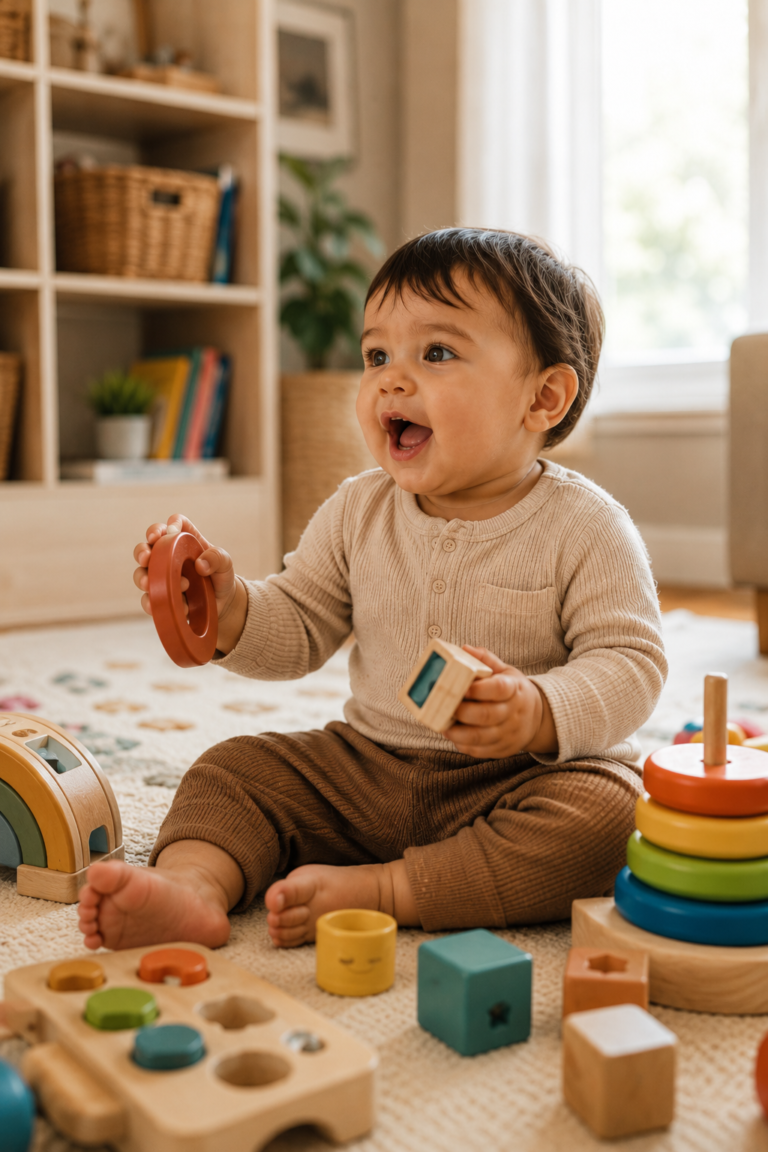
Reasons a 12-Month-Old May Not Be Babbling Yet
Hearing Differences Can Affect Babbling
A child who does not respond consistently to their name, seems unaware of environmental sounds, or rarely reacts to voices may benefit from a hearing evaluation. Hearing checks are often one of the first recommendations when babbling is limited because hearing plays such a central role in speech development.
Importantly, some babies with hearing differences still vocalize and communicate socially in other ways. Parents should avoid assuming that the presence of occasional sounds automatically rules out hearing concerns. Looking at the overall communication pattern gives a clearer picture.
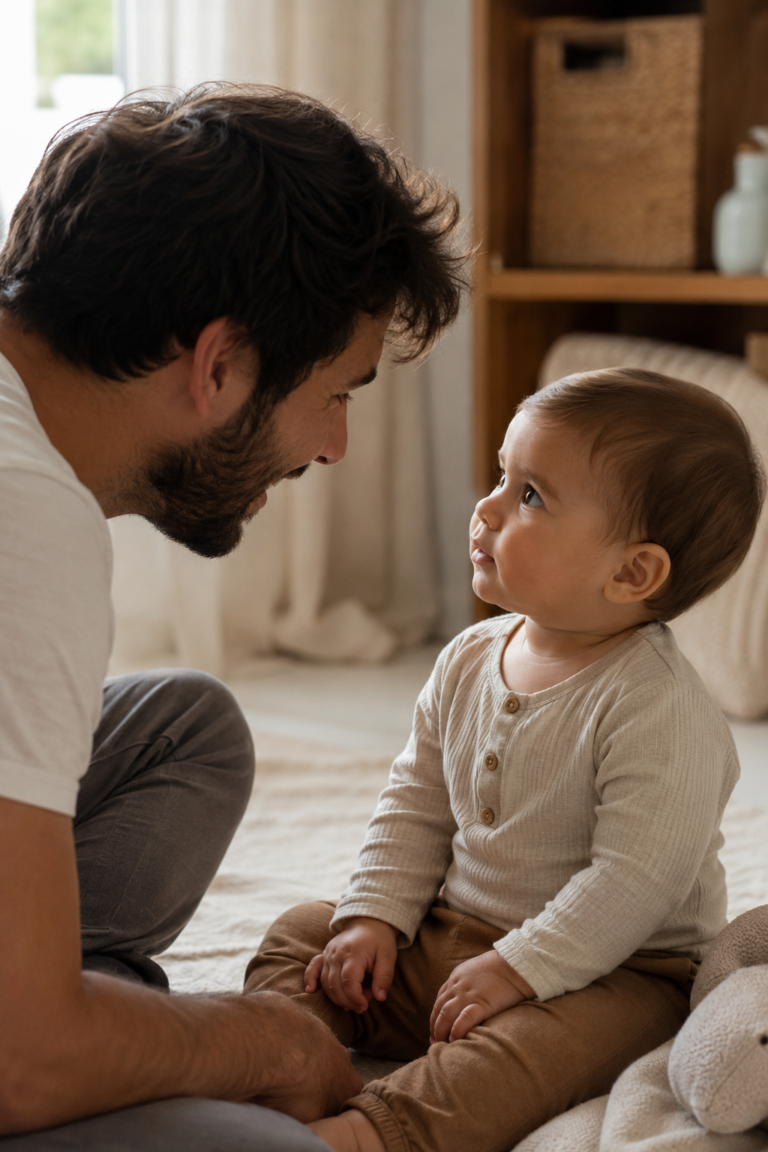
Some Babies Develop Communication Skills Differently
Temperament can also influence how vocal a baby appears. Some children are naturally observant and quieter, especially in unfamiliar environments. Parents may notice their baby vocalizes more at home than around other people or during appointments.
At the same time, persistent lack of babbling can sometimes be associated with broader developmental differences. This is why pediatricians and speech-language pathologists look at social interaction, play skills, gestures, responsiveness, and developmental history together rather than relying on a single milestone alone.
Environment and Interaction Matter Too
Modern family life can become very busy, and many parents worry they are somehow causing speech delays. In most cases, this is not about “bad parenting.” Communication development is influenced by many factors, and loving, attentive families can still have children who need additional support.
Simple everyday interaction often provides the strongest language foundation. Narrating routines, responding enthusiastically to sounds, and engaging in face-to-face play can encourage more vocal experimentation over time without turning communication into pressure or performance.
How to Encourage Babbling and Early Communication
Follow Your Baby’s Lead During Interaction
Face-to-face interaction is especially helpful because babies learn from watching mouth movements, facial expressions, and emotional reactions. Even brief moments of shared attention throughout the day can support communication growth more effectively than long periods of passive listening.
Parents do not need special flashcards, apps, or complicated exercises to encourage babbling. Warm interaction, repetition, playful imitation, and responsive conversation are often the most valuable tools during infancy.
Model Sounds Without Pressure
It helps to keep language slow, playful, and repetitive rather than constantly testing a child. Babies are more likely to engage when communication feels social and enjoyable instead of performance-based. Songs with gestures and nursery rhymes can also support rhythm, sound awareness, and turn-taking.
Parents sometimes worry about doing “enough,” but communication practice naturally fits into daily routines. Bath time, meals, stroller walks, and bedtime routines all create opportunities for meaningful interaction and language exposure.
Celebrate Small Communication Attempts
Responding enthusiastically to communication attempts teaches babies that their sounds and actions matter. Smiling, imitating sounds back, and continuing the interaction help reinforce communication as a shared experience.
Parents should also remember that progress is rarely perfectly linear. Some babies show sudden bursts of language growth after quieter periods, especially during times of rapid physical or cognitive development.
When to Seek Help or Support
Trusting Concerns While Staying Grounded
Early evaluation can provide reassurance, practical strategies, or additional support when needed. In many cases, professionals may simply recommend monitoring progress and encouraging interaction at home. In other situations, identifying concerns early can make intervention more effective and less stressful later on.
A speech-language pathologist or pediatrician will usually look at hearing, play, interaction, gestures, social engagement, and overall developmental progress together rather than focusing only on the absence of babbling itself.
Signs That May Warrant Further Evaluation
- Very limited or absent babbling by 12 months
- Little response to name or familiar voices
- Limited eye contact or social interaction
- Few gestures such as pointing, waving, or reaching
- Loss of previously used sounds or communication skills
- Frequent frustration during communication attempts
- Concerns about hearing or responsiveness to sound
Early Support Can Be Helpful and Reassuring

Many children who receive early speech and language support go on to develop strong communication skills over time. The goal is not to rush development but to create the best possible environment for communication growth during an important stage of brain development.
Most importantly, parents do not need to wait until concerns feel severe before asking questions. Trusting your observations and seeking guidance when something feels uncertain is a thoughtful and proactive step.
Frequently Asked Questions
Is it normal for a 12-month-old not to babble?
However, very limited or absent babbling at 12 months is worth discussing with a pediatrician or speech-language pathologist. Babbling is an important part of speech development, and early guidance can help determine whether additional support may be useful.
Can a baby understand language without babbling much?
Receptive language often develops before expressive speech. Understanding language is an encouraging sign, but speech-language professionals still consider babbling an important milestone when evaluating overall communication development.
Does late babbling always mean autism?
Professionals look at a broad range of developmental skills rather than one behavior in isolation. Social engagement, eye contact, gestures, play, and responsiveness all help provide a clearer developmental picture
Should I wait a few months before seeking help?
Still, there is little downside to asking questions early. Early evaluations are designed to provide information and support rather than immediate diagnosis, and many parents find reassurance in getting professional input.
What can I do at home to encourage babbling?
Simple activities like singing songs, copying sounds, pausing during play for your baby to respond, and reading interactive books can all help create more opportunities for vocal development.
Can hearing problems cause delayed babbling?
If a child does not respond consistently to sound, voices, or their name, a hearing evaluation is an important step. Identifying hearing concerns early can help support communication development more effectively.
Not Sure Where Your Child Falls?
Answer a few questions and we’ll tell you whether their development
looks on track — or whether it’s worth talking to an SLP.
A Few Final Thoughts on a 12-Month-Old Who Isn’t Babbling
Babbling is an important milestone because it supports future speech and language development, but it is only one part of a much larger communication picture. Gestures, social engagement, responsiveness, and interaction all provide valuable information about how a baby is learning to connect with the world around them.
If concerns continue, reaching out for guidance can provide clarity and reassurance rather than panic. Early conversations with pediatricians or speech-language professionals are meant to support families, answer questions, and help children thrive in ways that match their individual developmental path.
Most of all, remember that communication grows through relationships. The playful everyday moments you already share with your baby — talking, singing, smiling, cuddling, and responding — are powerful building blocks for language development over time.
Want to learn more? The American Speech-Language-Hearing Association (ASHA) provides communication milestones for babies from birth through the first year, including babbling, gestures, and early communication.