
Birth to 6 Months: What Communication Looks Like This Early
Babbling, gestures, first sounds, and the exciting early building blocks of speech.
Between 6 and 12 months, communication often starts feeling much more interactive for parents. Your baby may still not be using many clear words yet, but you’ll likely notice more babbling, more facial expressions, and more moments where it feels like they are truly trying to connect with you.
This is usually the stage when babies begin experimenting constantly with sounds, gestures, and social interaction. You may hear repetitive babbling like “bababa” or “dadada,” see your baby clap during songs, wave goodbye, or lift their arms to be picked up. Many babies also become more responsive to familiar voices, routines, and games during this stage.
As a speech therapist — and honestly as a parent too — this is one of my favorite stages to watch. Babies begin showing so much personality during these months. Even before true talking develops, they are learning how communication works through eye contact, imitation, listening, movement, and back-and-forth interaction with the people around them.
In this guide, we’ll walk through what communication development often looks like between 6 and 12 months, how babbling and gestures support early language skills, simple ways parents can encourage communication naturally, and signs that may suggest extra support could help.
Babbling Starts Becoming More Complex
Babbling also becomes much more social during this stage. Babies often vocalize directly toward caregivers, pause as if waiting for a response, or become excited when someone imitates their sounds back to them. These early back-and-forth interactions help babies learn that communication involves connection and response.
Some babies become extremely vocal during this stage, while others are quieter but still highly socially engaged. Personality differences can influence communication style early on, so speech therapists look at the overall communication picture rather than just how “talkative” a baby seems.
Babies Understand More Than Parents Realize
Even before babies can use clear words consistently, they are learning an incredible amount from the language they hear every day. Many babies between 6 and 12 months begin recognizing their name, responding to familiar voices, understanding simple routines, and reacting differently to emotional tone.
Parents are often surprised by how much babies understand before they can talk. A child who cannot say “bottle” yet may still turn excitedly when they hear the word. A baby who has no true words may already recognize favorite people, songs, pets, or routines.
This receptive language growth becomes one of the most important foundations for later speech development. Babies learn language through repeated exposure, interaction, and meaningful experiences rather than formal teaching sessions.
Social Interaction Drives Communication Growth
This is why simple games like peekaboo, pat-a-cake, waving, and singing repetitive songs are so valuable. These interactions teach babies anticipation, imitation, shared attention, and conversational turn-taking in ways that feel natural and emotionally connected.
Parents sometimes underestimate how powerful these everyday interactions really are. What feels repetitive or simple to adults is often exactly the type of communication practice babies need most during this stage.

Gestures Become a Big Part of Communication
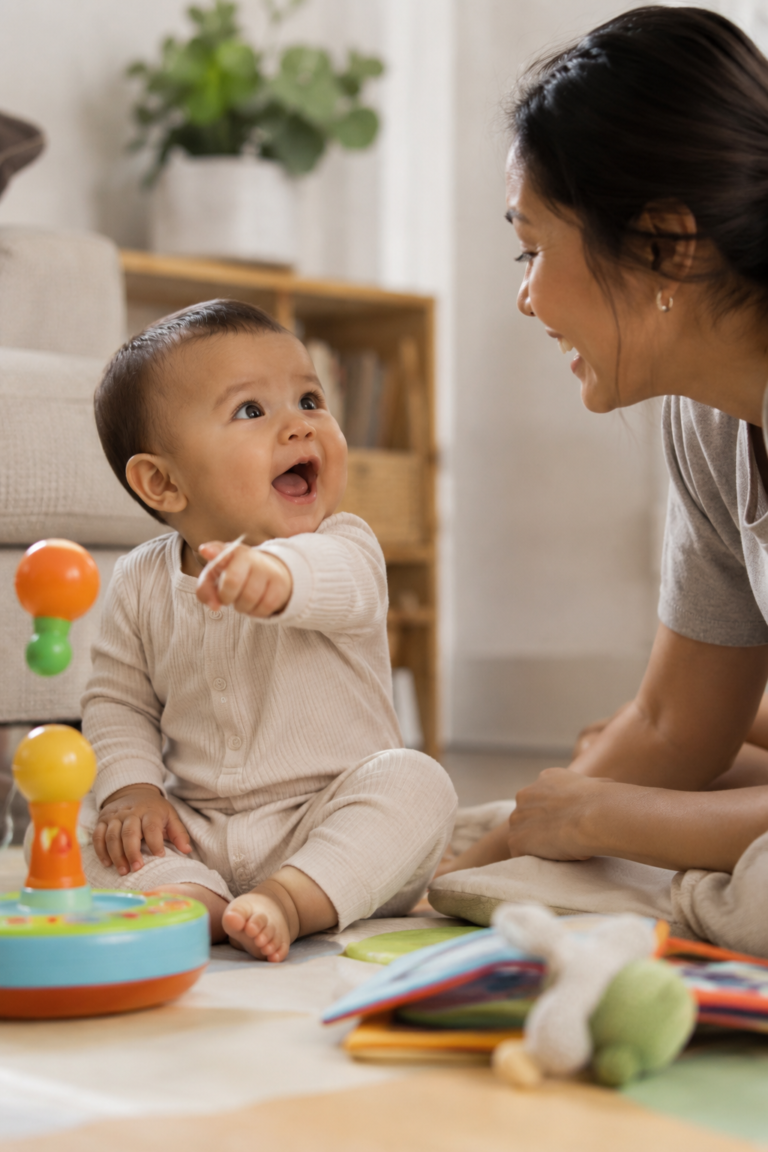
Many babies begin lifting their arms to be picked up, reaching toward desired objects, clapping during songs, waving goodbye, or turning toward familiar people when their names are mentioned. Closer to 12 months, some babies also begin pointing toward things that interest them.
Gestures are important because they show babies are learning that communication can help them share experiences, get attention, and connect socially with others.
Shared Attention Starts Developing
One of the most important communication skills during infancy is shared attention. This means your baby begins focusing on the same thing another person is focused on.
For example, your baby may look where you point, alternate between looking at you and a toy, or smile while checking your reaction during play. These moments may seem small, but they are actually teaching babies how communication works socially.
Pointing becomes especially meaningful because it reflects not just interest in an object, but a desire to share that interest with someone else. Shared attention becomes a huge building block for later language and social communication development.
Personality Differences Are Completely Normal
Speech therapists look for steady communication growth overall rather than perfectly identical milestone timing. A socially engaged baby who continues developing new interaction skills is often progressing appropriately even if development looks slightly different from another child’s timeline.
This is why looking at the whole communication picture matters far more than focusing on one isolated milestone alone.
First Sounds Slowly Become Early Words
Toward the later part of this stage, many babies begin making sounds that feel increasingly speech-like. Parents often describe this period by saying it suddenly sounds like their baby is “trying to talk.” Learn what typically happens next in 12 to 18 Months — First Words and Early Communication.
Babbling frequently becomes longer and more expressive. Some babies begin producing jargon-like strings of sounds with conversational rhythm and emotional tone, even though the words are not fully understandable yet.
This is also when some babies begin developing their first meaningful words. Simple familiar words connected to important people or routines often emerge first, although there is still a wide range of normal development at this age.
Repetition Helps Babies Learn Language
Simple phrases like “all done,” “night-night,” or “Daddy’s home” become powerful learning opportunities because babies hear them repeatedly in meaningful contexts. Reading books, singing songs, and narrating routines all help strengthen these language connections over time.
Parents often feel pressure to constantly “teach” communication, but babies usually learn best through relaxed interaction during normal daily activities.
Everyday Interaction Matters Most
Talking naturally throughout the day, responding to babbling, getting face-to-face during play, and following your baby’s interests all help support communication growth. Babies learn that sounds, gestures, and interaction have meaning when adults respond warmly and consistently.
The everyday moments matter most during this stage. Bath time songs, bedtime books, stroller conversations, and floor play interactions all help build the foundation for later speech and language development.
- Respond enthusiastically to babbling and gestures
- Talk naturally during routines throughout the day
- Read simple repetitive books together regularly
- Focus on connection and interaction over perfection
When Parents May Want Extra Guidance
Speech therapists look at the overall communication picture rather than focusing on one isolated milestone. A baby who is socially engaged, responsive, interactive, and steadily building new communication skills is often progressing well even if development looks slightly different from another child’s timeline.
At the same time, there are certain communication patterns professionals watch more closely during infancy, especially when multiple concerns appear together or progress seems very limited over time.
Signs Parents May Want to Discuss With a Professional
- Limited babbling or vocalization by later infancy
- Rarely responding to familiar voices or sounds
- Minimal eye contact during interaction
- Limited back-and-forth social engagement
- Little interest in interacting with caregivers
- Very limited use of gestures like reaching, waving, or pointing
- Loss of previously used communication skills
Early Support Can Be Extremely Helpful
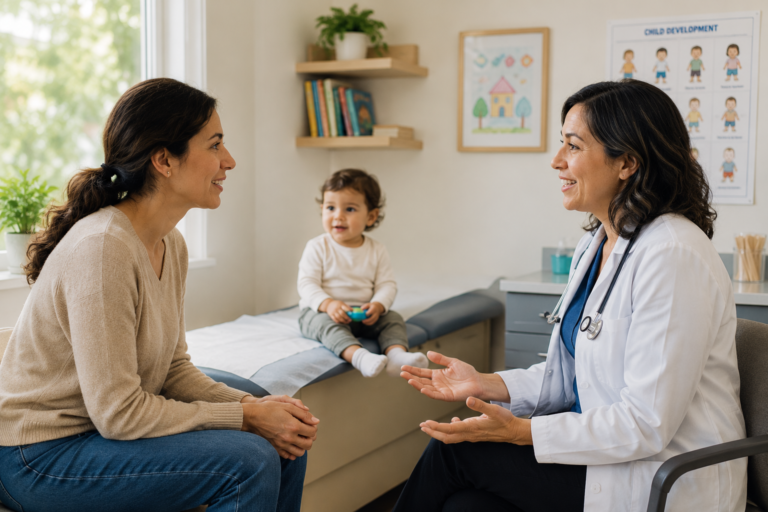
One of the biggest misconceptions about speech and language support is that parents should “wait and see” until a child is much older. In reality, infancy and toddlerhood are periods of incredibly rapid brain and communication development, which means early support can often be very effective.
Seeking guidance does not automatically mean something is seriously wrong. Sometimes parents simply need reassurance, clearer developmental expectations, or simple strategies to encourage communication more confidently at home.
Many families actually feel relief after speaking with a professional because they finally have answers, support, and a clearer understanding of what to watch moving forward. If something feels concerning to you as a parent, it is always okay to ask questions and trust your instincts.
Want to learn more? The American Speech-Language-Hearing Association (ASHA) provides communication milestones for babies 6 to 12 months, including babbling, gestures, joint attention, and early words.
Frequently Asked Questions
Is it normal for a 7-month-old to babble constantly?
When should babies start waving or pointing?
Does saying “mama” count as a first word?
What if my baby is not talking by 12 months?
How can I encourage my baby to communicate more?
Should I worry if my baby is quiet compared to other babies?
Not Sure Where Your Child Falls?
Answer a few questions and we’ll tell you whether their development
looks on track — or whether it’s worth talking to an SLP.
A Few Final Thoughts on Communication From 6 to 12 Months
This stage often feels especially meaningful for parents because communication starts becoming much more intentional. Your baby may wave when you walk into the room, babble back during “conversations,” point toward something exciting, or laugh during familiar songs and routines.
One of the most important things to remember is that communication development is about much more than talking alone. Babies build language step-by-step through relationships, repetition, responsiveness, and everyday interaction throughout the day.
As both a speech therapist and a parent, I often remind families that simple moments matter most. Reading together, singing songs, responding to babbling, and talking during daily routines all help build the foundation for later speech and language development.
And if you ever feel unsure about your child’s communication development, it is always okay to ask questions and seek support. Most of all, enjoy these early interactions — long before full conversations begin, your baby is already learning how to connect with you through communication.
Keep Learning
Visit My Child’s Development for more age-by-age speech and language milestones from birth through age 5.
As your baby approaches their first birthday, learn what to expect during the 12- to 18-month communication
milestones stage.
The American Speech-Language-Hearing Association also provides a helpful Communication Milestones: Birth to 1 Year guide for families.