
18 to 24 Month Communication Milestones: The Two-Word Stage
Between 18 and 24 months, many toddlers begin moving from single words into the exciting two-word stage. This is when little phrases like “more milk,” “go outside,” “mama up,” or “big truck” start to appear, giving parents a clearer window into what their child is thinking, wanting, and noticing.
This stage can feel joyful, funny, and sometimes confusing. One toddler may be saying dozens of words and combining them often, while another may be using gestures, sounds, and a smaller set of words to communicate. Both patterns deserve attention, but they do not always mean the same thing.
The 18 to 24 month communication milestones are not meant to be used as a strict pass-or-fail checklist. They are better understood as guideposts that help families notice how a child is understanding language, using words, combining ideas, playing, listening, and connecting socially.
In this guide, we will look at what the two-word stage usually includes, why word combinations matter, how parents can support language naturally at home, and when it may be helpful to reach out to a speech-language pathologist.
What the Two-Word Stage Looks Like in Everyday Life
Toddlers Begin Combining Ideas, Not Just Words
At this age, two-word phrases do not need to sound perfect. Many toddlers leave out small grammar words, use unclear sounds, or rely on familiar routines to make their meaning known. A phrase like “doggie run” or “my shoe” still shows meaningful language growth, even if it does not sound like a complete sentence yet.
Parents often notice this shift during daily routines. Snack time, bath time, diaper changes, getting dressed, and outdoor play all create natural reasons for toddlers to combine words. The goal is not polished speech, but flexible communication that helps the child share more than one idea at a time.
Understanding Often Grows Before Talking
This gap between understanding and talking is common. A toddler may know exactly what “get your shoes” means but still only say “shoes” or “go.” Receptive language, which is what a child understands, often supports expressive language, which is what a child says or signs.
When looking at 18 to 24 month speech development, it helps to watch the whole communication picture. Words matter, but so do gestures, imitation, play, attention, comprehension, and social connection. A child who is engaged, curious, and trying to communicate is showing important foundations for language growth.
Speech Clarity Is Still Developing
Toddlers are still learning how to coordinate their lips, tongue, jaw, breath, and voice. They may simplify words, leave off ending sounds, or use one sound for many different words. For example, “ba” might mean ball, bath, bottle, or baby depending on the situation.
The key is whether your child is gradually adding words, attempting new sounds, and using communication for more purposes. Clarity improves over time, but a child should still be building a growing vocabulary and beginning to combine words as they approach age two.
Why 18 to 24 Month Communication Milestones Matter
Two-Word Phrases Show Flexible Communication
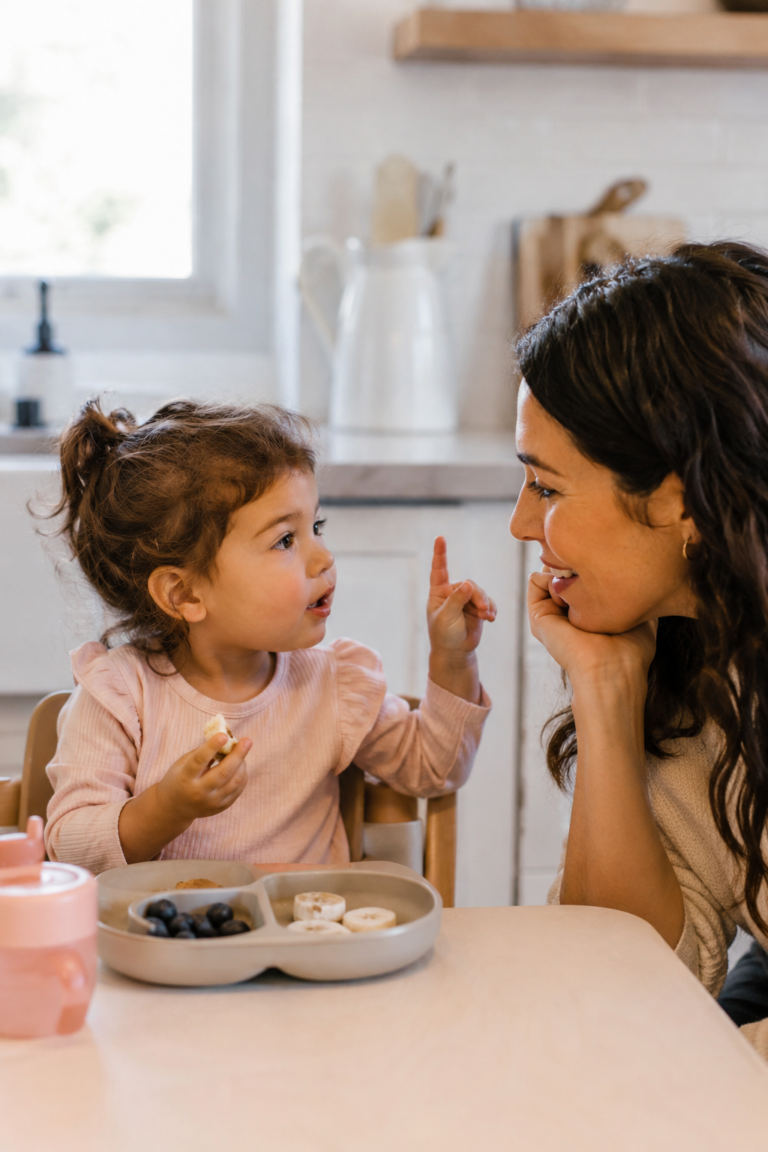
A toddler might say “more cracker” to request, “baby sleep” to comment, “no bath” to protest, or “mama help” to ask for support. These early combinations help children become more specific and less dependent on crying, pulling, or guessing games.
This is one reason speech therapists pay close attention to the two-word stage. It gives us information about vocabulary, grammar readiness, social communication, and how well a child can use language across real situations.
Vocabulary Growth Supports Word Combinations
Before toddlers combine words regularly, they usually need a growing bank of words to choose from. These words may include names for people, favorite foods, toys, animals, actions, body parts, social words, and describing words like “big,” “hot,” or “wet.”
Wondering how many words toddlers typically know at this age? See How Many Words Should My Child Have at Each Age?
A child with only a few spoken words may have fewer opportunities to combine them. That does not mean parents should panic, but it does mean vocabulary growth is an important part of watching the 18 to 24 month communication milestones.
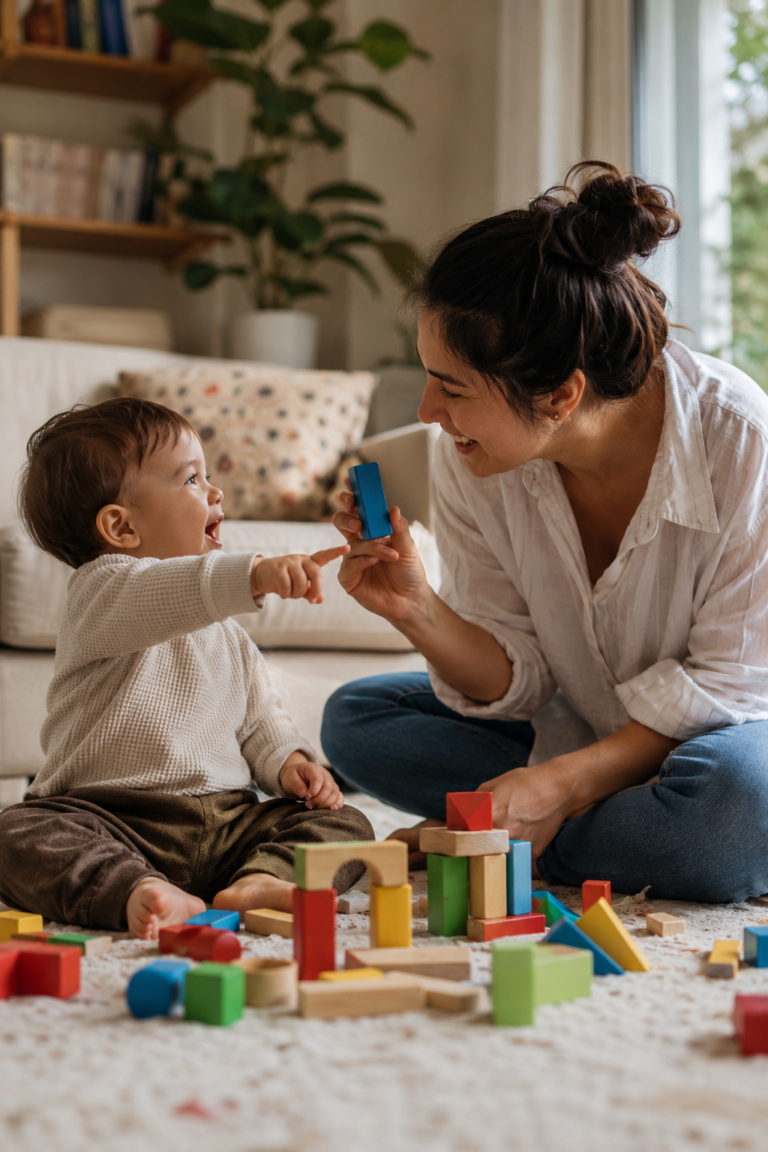
Parents can support vocabulary by naming what the child is already focused on. Rather than drilling words, try simple language during real moments: “big car,” “wash hands,” “daddy home,” or “more bubbles.” Toddlers often learn best when words are connected to something meaningful and immediate.
Gestures Still Play an Important Role
Gestures also help children connect with other people. A toddler who points to an airplane, looks back at a parent, and says “plane” is doing more than naming. They are sharing attention, inviting connection, and showing that communication is social.
During the two-word stage, gestures and words often work together. A child may point and say “that one,” reach and say “up please,” or shake their head while saying “no bed.” These mixed forms of communication are useful stepping stones toward longer phrases.
How Parents Can Support the Two-Word Stage at Home
Model Short Phrases Your Child Can Copy
This works because toddlers learn from language they can actually process. Long explanations may be loving and well intended, but short, clear phrases are often easier for a young toddler to imitate and use.
You do not need to ask your child to repeat every phrase. In fact, too much pressure can make communication feel like a performance. Calm modeling during play and routines gives your child many chances to hear useful two-word phrases naturally.
Follow Your Child’s Interests
Following your child’s lead does not mean giving up structure. It simply means noticing what has their attention and adding simple words to that moment. If they are pushing a car, you might say “car go,” “fast car,” or “car crash.”
This kind of responsive language support feels playful instead of forced. It helps your child connect words to actions, feelings, and ideas they already care about, which is exactly how early communication grows.
Create Reasons to Communicate
For example, during snack time you might hold up two options and say, “apple or cracker?” During bubbles, you might close the lid and wait for your child to request “more bubbles” or gesture for help. These moments should feel inviting, not frustrating.
The goal is to make communication useful. When toddlers learn that words, gestures, and sounds help them connect with people and influence their world, they usually become more motivated to communicate.
When to Seek Support for 18 to 24 Month Speech Development
Trust Your Observations as a Parent
Parents often notice subtle communication differences before anyone else does. You may feel that your toddler is not using as many words as expected, is not trying to imitate, rarely points, or becomes frustrated because they cannot express what they want.
It is always appropriate to ask questions. Seeking guidance does not mean something is seriously wrong. It simply means you are paying attention and giving your child support during an important window of communication development.
A speech-language pathologist can look at how your child understands language, uses words, communicates socially, plays, imitates, and interacts. This bigger picture is much more helpful than looking at word count alone.
Signs That Extra Support May Be Helpful
- Your child is close to 24 months and is not combining two words meaningfully.
- Your child uses very few spoken words or has stopped using words they previously had.
- Your child rarely points, shows objects, waves, or uses gestures to communicate.
- Your child does not seem to understand simple everyday directions.
- Your child becomes very frustrated because communication is difficult.
- Your child is difficult for familiar caregivers to understand most of the time.
- You have concerns about hearing, response to name, social connection, or play skills.
Early Support Can Be Gentle and Practical
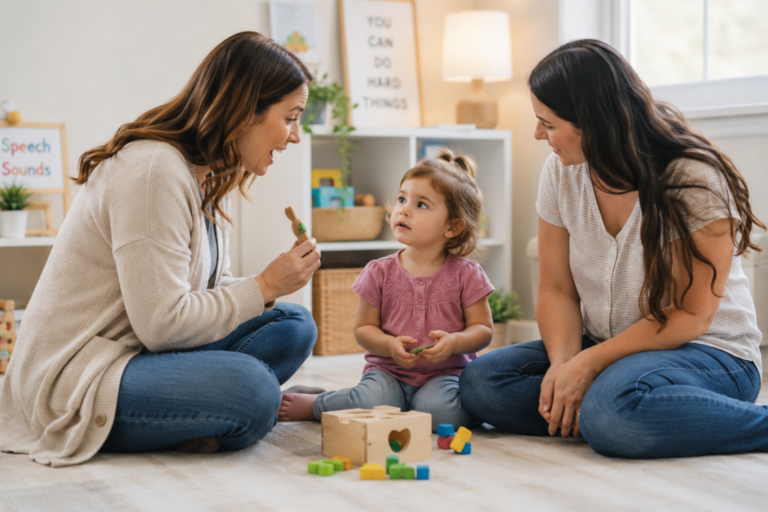
Early speech therapy for toddlers is usually play-based, parent-friendly, and focused on real life. It may include coaching caregivers on how to model language, build communication opportunities, support imitation, and reduce frustration at home.
Therapy at this age should not feel like schoolwork. Toddlers learn through connection, repetition, movement, routines, and play. A skilled speech-language pathologist helps families use those everyday moments more intentionally.
If you are unsure whether your child needs help, it is reasonable to ask. A conversation with a pediatrician, early intervention program, or speech-language pathologist can offer clarity and reassurance.
Want to learn more? The American Speech-Language-Hearing Association (ASHA) provides communication milestones for children 1 to 2 years old, including vocabulary growth, two-word combinations, and early understanding.
Frequently Asked Questions About the Two-Word Stage
Should my 18 month old be using two-word phrases?
At 18 months, it is helpful to look at whether your child is trying to say words, using gestures, understanding simple directions, and communicating for different reasons.
What counts as a two-word phrase?
Repeated chunks can still be useful, but speech therapists pay attention to whether a child can combine words flexibly in different situations.
How many words should a toddler say by 24 months?
Rather than focusing only on an exact number, it is important to notice whether your child is adding new words, using them meaningfully, and starting to put words together.
Is it okay if my toddler’s words are unclear?
What matters is whether your child is attempting words, becoming easier to understand over time, and using communication consistently with familiar people.
Can I help my toddler talk without pressuring them?
Try to keep communication warm and playful. Toddlers often talk more when they feel connected, understood, and not put on the spot.
When should I contact a speech therapist?
You do not need to wait until concerns feel severe. Early support can be reassuring, practical, and focused on helping your child communicate more easily.
Not Sure Where Your Child Falls?
Answer a few questions and we’ll tell you whether their development
looks on track — or whether it’s worth talking to an SLP.
A Few Final Thoughts on the Two-Word Stage
At the same time, development between 18 and 24 months can vary. Some toddlers are chatty and expressive, while others are quieter, more gesture-based, or slower to combine words. The full communication picture matters.
You can support your toddler by keeping language simple, playful, and connected to real moments. Daily routines, books, songs, outdoor play, and favorite toys all offer natural chances to model useful phrases.
If your child is not yet using two-word phrases or you feel concerned about their communication, reaching out for support is a caring next step. Early guidance can help your child feel more understood and help you feel more confident in how to support them.